As an important tuber crop in the south of the country, taro is often grown under the threat of pests such as pests and diseases caused by high temperatures and rainfall. Traditional artificial backpack sprayers are inefficient and unequally covered, and high-temperature operations can trigger heat. With the development of agricultural science and technology, drone protection technology has become a “new farm tool” for taro farmers, with the advantage of being efficient, accurate and environmentally friendly. This paper analyses the practical path of drones in taro plant protection from the three dimensions of technical principles, operational specifications and application advantages。
I. Technological rationale: smart systems enabling precision
The core of drone protection lies in the twin system of flight control plus variable spraying. In the case of the multi-wing drones, the planning of the cm class route is achieved through the beidou/gps differential positioning, which adjusts the flight posture in real time in conjunction with the inertial measurement unit (imu) to ensure stable suspension in complex terrain. The spraying system uses centrifugal follicidal jets, which spread the fluids to 50-200 Μm in fine mist drops, which are combined with the pressure flow to increase penetration, so that the fluids accurately cover the back of the tarp, which is the main hideout for pests such as aphids and red spiders。
Variable application techniques are key breakthroughs. Multispectral cameras on board drones can monitor taro coronal density in real time, analyse the severity of pests and pests through ai algorithms and automatically regulate jet flow. For example, in high-prevalence areas, the system increases the spray volume from the conventional 15 litres/acre to 20 litres/acre, while the health area is reduced to 10 litres/acre to achieve “supply on demand”。
Operational specifications: full process management from preparation to completion
1. Pre-operational preparation: environmental assessment and equipment debugging
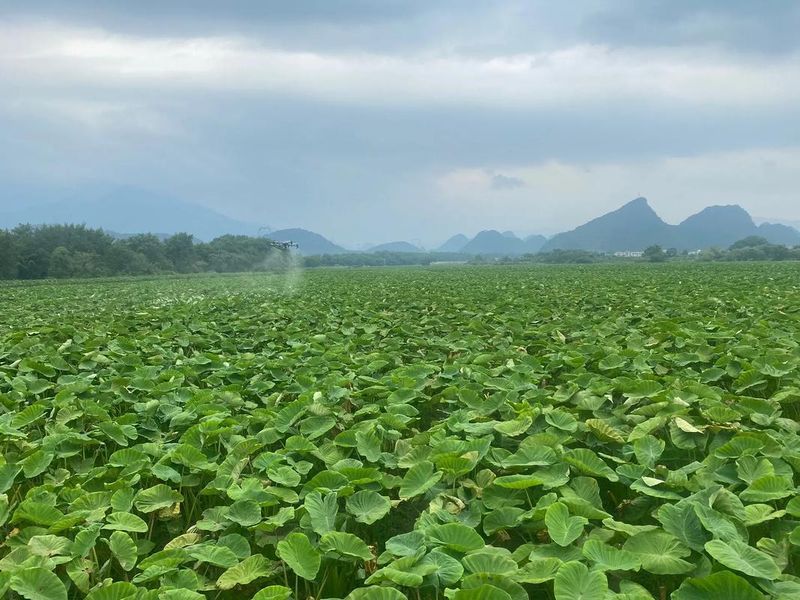
There is a need to ensure that the area of operation is free from rain, wind level 3, temperature 5-35°c. Frustration of no-fly zones such as high-pressure lines, breeding areas and so forth through electronic fencing. Growers are required to adjust their parameters over the long term in the light of taro-creasing: the height of the seed season is 2 metres and the width of the spray is 4 metres to avoid the fluid drifting to green leaves; the length of the tubing period is reduced to 1. 5 metres and the sedimentation rate of the drug is enhanced。
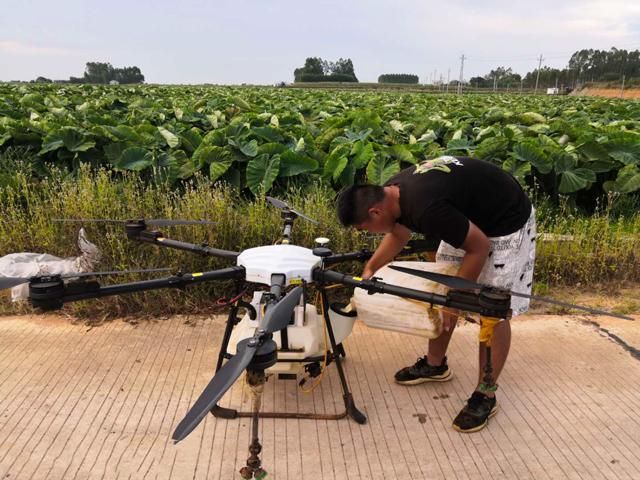
For equipment inspection, battery power, nozzle congestion and pharmacological ratio are to be confirmed. For example, in the fight against taro molluscs, 20 per cent of the copper suspension is diluted at a scale of 1:500 and special flight protection aids are added to reduce mist drops。
2. Operational control: dynamic adjustment and safety protection
Following take-off, wind direction is continuously monitored to ensure that the speed of flight does not exceed 5 m/s during a wind operation and to prevent the contamination of the operator by the pharmacological reflow. While operating on slopes such as terraces, it should fly along the contours to avoid an imbalance in spraying due to terrain differences。
Safe distance management is essential. For multiple drones to operate in concert, a distance of more than 10 metres should be maintained; ground personnel should not be less than 15 metres away from the vehicle. In the event that the drone is out of control, the power should be cut and the forced landing procedure activated immediately。
3. Post-operation maintenance: data archiving and equipment maintenance
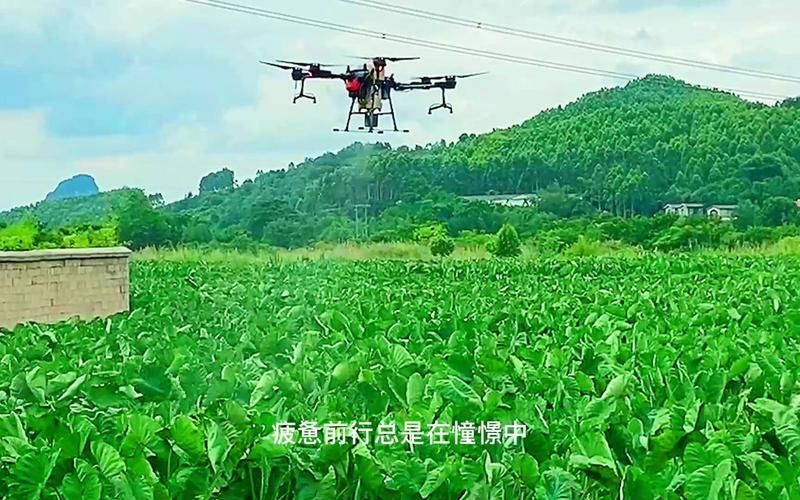
Upon completion of the operation, medical kits, filters and nozzles are cleaned to prevent corrosive equipment from residual agents. At the same time, the area of operations, the quantity of medicines used and the effects of prevention and treatment are recorded, and trends maps of pests and diseases are produced through cloud platforms to provide data support for the next season of cultivation。
Application advantages: triple efficiency, cost and ecology
1. Efficiency revolution: one-day operation exceeding 300 acres
Traditional artificial spraying can be completed only 5-10 acres per person per day, while drones can handle 300-500 acres per day. In the case of the town of guangxi guiying, amin village, a 200-acre tara field was planted, and the drone could be sprayed in one hour, a 60-fold increase in efficiency。
2. Cost optimization: 30 per cent reduction in pesticide use
Variable application techniques have increased pesticide utilization from 30 per cent to 65 per cent. The practice in the village of sandy, hunan twin county, shows that the cost of pesticides per acre has been reduced from $45 to $31 following the introduction of drones, while taro production has increased by 15 per cent as a result of the timely response。
3. Eco-friendly: human drug separation reduces the risk of poisoning
The drone operation is “human separation” and operators are not required to enter the fields to avoid exposure to highly toxic pesticides. In addition, precision spray reduction fluids are drifted to surrounding waters or non-target crops to protect the ecological environment。
Iv. Practical cases: scientific and technological results
In xuxia county, guangdong, agricultural cooperatives have introduced a drone cluster control system to govern 5,000 acres of tara fields. Through the ai-id technology, the system automatically marked re-emergence areas, dispatching 10 drones for centralized spraying and completing global control within three days, saving 12 days in a more traditional way. Ultimately, the average acre production during the season was 3,200 kg, an 18 per cent increase over the previous year。
The technology of drone protection is profoundly changing the pattern of taro cultivation. From smart systems to operational norms, from efficiency to ecological conservation, this “air farming tool” not only addresses the pains of traditional plant protection, but also provides replicable solutions for more agricultural modernization. With the deeper integration of 5g and ai technology, drone protection will move towards a new phase of full ownership and a whole-of-the-scenes scenario, and will help the taco industry to move towards high-quality development。