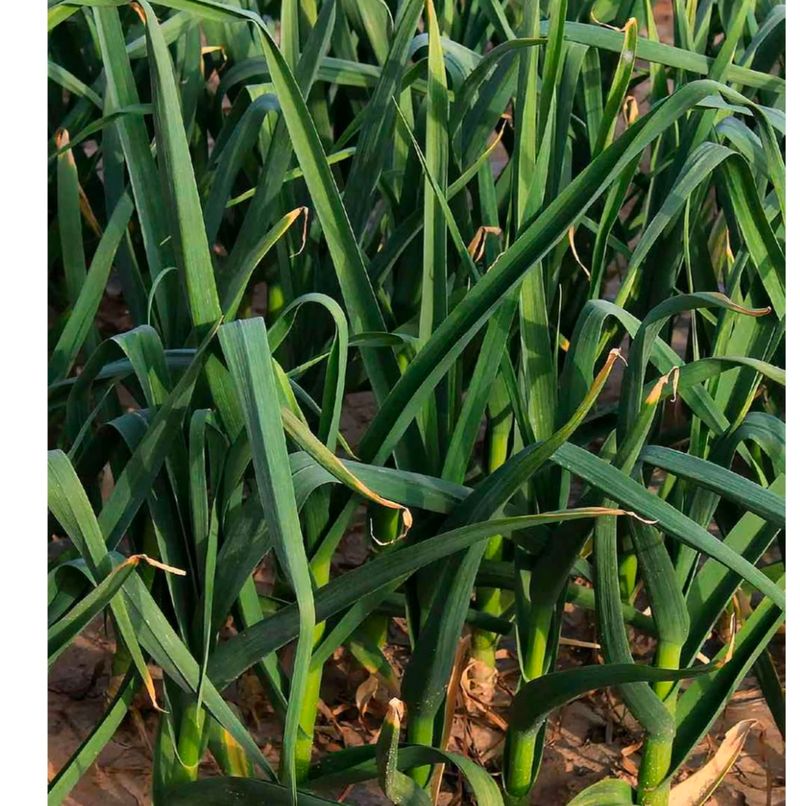
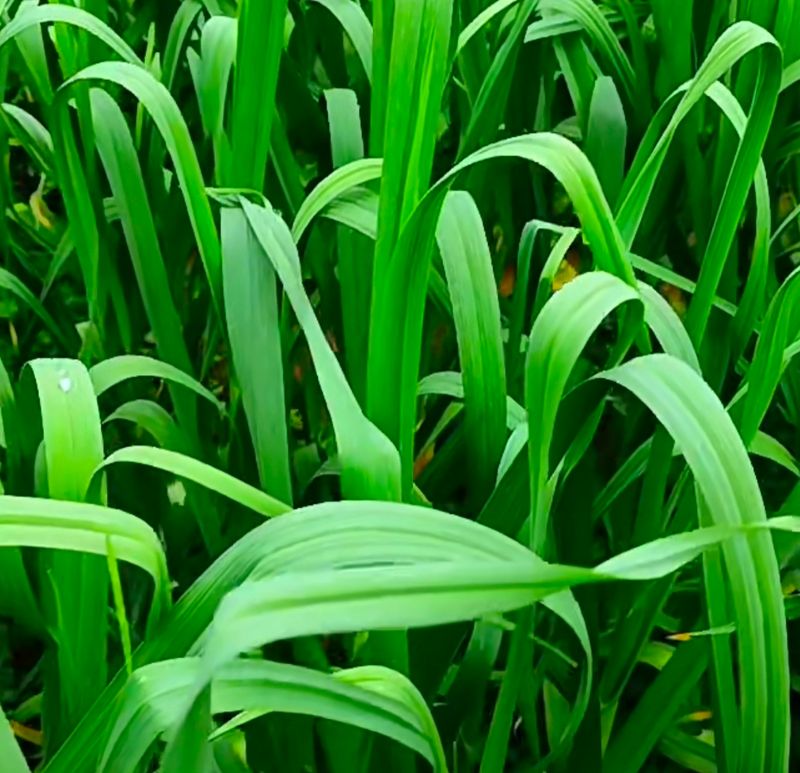
The case of garlic farmers is one in which the garlic is successfully grown and the number of seedlings is not small and the overall strength is weak. Garlic is thin and thin, leaves are light coloured, plants are poorly grown, and they don't look strong. The first reaction of many people is that the fertilizer is not up to speed with the nitrogen and that it is hoped that it will quickly lift the garlic. Once the ground is down, it becomes clear that a number of plots have run out of fat, that there has been no significant improvement in garlic seedlings and that even individual plots will continue to grow low。
Many farmers fail to understand one thing, and the growth of garlic following seeding can be divided into two categories. One is that the seedlings themselves have insufficient nutrient supplies, and that a reasonable pursuit of fertilizers can improve. The other category is the soil environment, where the plots simply add fertilizers, where nutrients are difficult to absorb by root systems, where fertilizer is not applied, where input costs are spent and no corresponding returns are seen. The rush to fatten up is simply to deal with the appearance of the surface and does not address the underlying soil hazard。
Every fall, when garlic is sowed, farmers mostly apply bottom fertilizers early, which normally have sufficient nutrients to support the growth of the previous period after the garlic seeding. If bottom fertilizer is severely underused and garlic seed is short of fat and yellow, the rate of fertilizer recovery will be faster. In reality, however, most of the weak, long-lived garlic seedlings, low bottom fertilizer use, fertilizer delivery, still poor seedlings, cannot be attributed solely to lack of fertilizer。
In the first place, we look at the widespread mishandling of farmers. Seeing that garlic is weak, it is directly selected for high nitrogen fertilizer, and it is felt that nitrogen fertilizer can be quickly seeded. In the short term, some of the garlic leaves appear to be slightly green and can last for a short period of time. The excessive use of nitrogen fertilizer leads to rapid stretching of parts of the garlic field, thinning of the garlic seedlings, reduced resistance and subsequent cooling or changes in field humidity, making it more susceptible to disease. Underground roots are not able to keep pace with the growth of the earth's plants, and garlic seed is only weak and not strong。
There are also a number of farmers who find the pursuit of fertilizers to be less than desirable, and they continue to increase their fertilization doses and re-feat the ground several times. Concentrations of fertilizers in the soil continue to rise, soil salinization increases, and the young roots of garlic are irritated, and the absorption capacity of the root is further reduced. The longer the seedlings are applied, the more they slowly fall into a vicious circle, and more time and cost will be required to adjust the plots later。
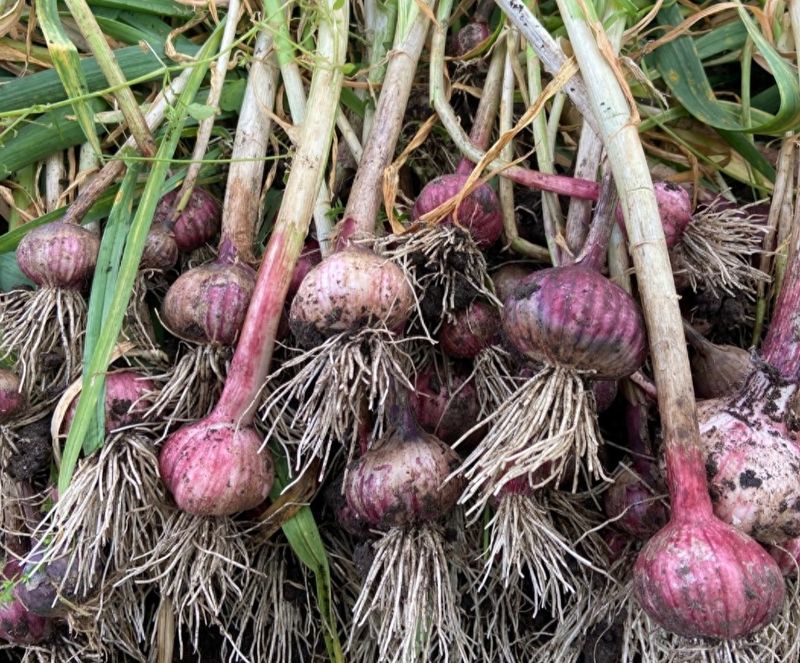
A simple field view can be made to determine whether garlic is weak or not. Coming into the plots, a few long, weak garlic seedlings are randomly pulled out, the roots are softly shivered and the root system is observed. If the roots are white, they must be sufficient in quantity, only small-planted and yellow-leaved, probably at a rate of insufficient nutrient supply, and moderate pursuit of fat can regulate the growth。
After extraction of the garlic seed, the roots are small, the roots are yellow and brown, and the new roots are rare, even if the soil surface is able to see fertilizer residues, it is largely certain that the root causes of the problem are in the soil. The roots are poorly grown, and even if more fertilizer is stored in the soil, garlic seedlings cannot be absorbed. Fertilizers remain within the earth's layer, are wasted and continuously alter the soil's environment。
There are several common types of soil problems that can lead to the weakness of garlic seedlings, with different field performances for each problem, differences in modems, and no one approach to the entire plot。
The first is the deterioration of the air-transmitting properties of the soil sheet. Garlic is grown on a continuous basis throughout the years, with very little deep tillage on the land, years of sub-cropping and a hard plough floor below the earth layer. After seeding, the garlic roots are prevented from growing down, and the roots are confined to a thin layer of dirt on the surface. The surface soil has limited capacity to conserve water, and the deep ground is not touched by the nutrient garlic seedlings。
After the water is poured, the surface of the ground is rapidly hardened, with less pore inside the soil, and it is difficult for the air to reach its roots. The garlic root system continues to suffer from aerobic deficiencies, slowing the growth of new roots and decreasing the vitality of the roots. It is reflected on the ground garlic seedlings, which are thin and slow to grow. Such plots, even if they are heavily fertilized, are stuck in the ground floors of sheeting, the roots of which are blocked and difficult to reach within the garlic seedlings。
A large number of farmers felt that by shifting the land, they could solve the problem. The subsurface ploughing can only release a dozen centimetres of the surface layer, with the ploughing ground unbroken and, in a short period of time, the plot reverts to the slab. In order to improve such plots, a deep farming industry is to be launched once every two years, reaching a depth of 25 to 30 centimetres, breaking down the ground floor of hard ploughs. Deep tilling does not require annual operation, and frequent deep tilling also disrupts the tectonic structure and is not conducive to the growth of garlic。
In the day-to-day field management, the surface sheeting of the plot after the seedlings is produced, with no choice between heavy water and irrigation. The problems are compounded when the land is flooded and the earth settles. The presence of hard shells in the surface of the soil allows for light graft, which is kept within three centimetres of depth, while the soil is properly moist, to avoid the use of tools to damage the shallow roots of the garlic layer. The graft can break the crust of the surface, increase the ventilation of the layer and help the roots recover their activity。
The second soil problem is an imbalance in soil alkalinity. Garlic is suitable for growth in neutral or timid acid soils, with soil ph maintained at 6. 0 (1)(7. 0) and root system activity best. Repeated cultivation over the years, long-term application of single fertilizers, few organic supplements, and slowly shifting soil acidity. When the plot is alkaline, many trace elements in the soil are fixed and stored in the soil, but the garlic roots are not available. The absorption of elements such as iron and zinc has been hampered, and garlic leaves have lost green and yellow, and the overall strength has not increased。
Many farmers found garlic seedlings yellow and bought micro-element fertilizers directly to the ground, ignoring the effects of soil acidity. The soil alkaline environment has not been adjusted, and the trace elements that are dropped continue to be rapidly sequestered, with low absorption efficiency and very difficult to see。
Aligning acid alkalinity, with priority on organic improvement. Fertilized farmers, commercial organic fertilizers, regularly applied to plots, slowly buffering soil acidity. Land parcels with a alkaline bias, which do not recommend a one-time release of large amounts of modulated material, are adjusted more gradually and with a much greater amount of one-time adjustment, would stimulate garlic seedlings. In the current planting season, when the soil is not available, priority can be given to field management, the use of single fertilizers can be reduced, the rate of continuous soil degradation reduced and soil improvement advanced in the next planting cycle。
Third, soil organic content is low. Many of the large plots of land are used to apply fertilizer only year after year, with very little organic fertilizer being delivered and soil organic matter declining year after year. It appears that the more fertilizer is used each year, the less the land output is expected. Soils of sufficient organic quality, soil sterilisation, stabilization of water-preservative fertility and active microbiological activity. Soils with insufficient organic content, soil fragmentation or hardness, poor fertilizer retention capacity, and nutrients that are watered are prone to seepage as water flows。
Fertilizers are applied to organically scarce soils and nutrients are kept for short periods. A portion of the nutrient is leaking underwater into the deep layer of the earth, and the garlic roots are not enough. Some of the nutrients are volatile. The proportion of people who can really be absorbed by garlic is very low. Farmers have a visual feeling that the fertilizer is still working and garlic is still growing。
It is not a one-time input of organic fertilizer to clear up an area of error, so that the plots can be right in place. The increase in soil organic matter is a slow process, with one-time large-scale application of decomposition organic fertilizer, which cannot be changed for a short period of time and can only be replenished over a long period of time. The bottom fertilizer stage is accompanied by a sufficient amount of decomposed organic fertilizers, with daily rotations to grow green fertilizers and lift the organic mass level of the plot. Garlic plots, which are already seeded, are not capable of directly landfilling large amounts of organic fertilizers and are vulnerable to damage to the seedling system. The seeding phase can only select a small amount of precipitated acid water solution, which will have the effect of temporarily conserving the root system and complete improvement will be implemented in the next season at the full-land phase。
Fourth, there is an imbalance in the soil fungus due to the heavy strangulation. A field is growing garlic on an uninterrupted basis over the years, and harmful bacteria in the soil continue to accumulate and the number of beneficial microbes is decreasing. At the early growth stage of garlic, it is vulnerable to harmful micro-organisms within the soil and is inhibited by root growth. The growth of garlic seedlings is weak and slow, and serious plots can be followed by a decomposition。
In the face of heavy tracts of garlic seedlings, the mere pursuit of fat will not solve the problem of stock imbalances. Fertilizers are not able to suppress harmful strains within the soil. All kinds of microbacterial agents are available on the market and there are preconditions for their use. Soil organic content is too low, and microbicides are applied directly, and it is very difficult for the fungi to survive and plant in the soil, with a significantly reduced effect. The combination of fungicides with co-optic acid is used in better conditions of survival and increases the effect of conservation of root systems. The rehabilitation programme, which needs to be implemented simultaneously at the entire ground level, will only be able to mitigate the effects of the seedlings and will make it difficult to eradicate the risks of the re-emergence once and for all。
Once soil-specific problems have been identified, field management will be arranged and the course of the operation will not go wrong。
Let's say that it's finished. It's really a fatty piece of land. Garlic seedlings are weak, roots are completely white and the earth is normal. Priority is given to the selection of balanced water soluble fertilizers in pursuit of fertilizer, with a small number of sub-subsequent supplements, and single fertilizer is controlled to avoid a one-time heavy application of nitrogen fertilizer. The pursuit of fats is accompanied by water, which is evenly watered, rather than heavy water. After seven to ten days of observation after the fat chase, the garlic leaf is slowly thickening and the plant is growing steadily, indicating that the treatment is in the right direction。
Soil problems were identified after screening, and the seeding phase was governed by the core principle that the seeding period should be maintained only and that no one-time complete improvement of plots should be pursued. Deep in the earth, there is no quick rooting after seedlings, and force-deep operations only hurt the existing roots of garlic, causing secondary damage。
The management of slabs after seedlings is focused on graft control of water. The water is used to control the frequency, the soil is dry and the water is immersed in the shallow layer of the earth and does not accumulate. Repression conditions for growth of the roots are set by graft to increase surface ventilation. When the garlic harvest is complete, the next season the ground will be plowed deep, the bottom of the plows will be broken and the fundamental repairs will be completed。
A seedling plot with an imbalanced alkalinity and insufficient organic matter can be applied with small doses of soluble acid water. The objective is not to provide large amounts of nutrients directly to garlic seedlings, but to improve the small range of soil environments around the root systems, activate the existing root system and help garlic seedlings absorb the existing nutrients within the soil as much as possible. Such materials are not effective enough to make garlic seedlings green and strong in just a few days. They are steady maintenance and do not have short-term blast effects。
Imbalanced plots of bacterial clusters, with priority given to the conservation of root systems during the seeding phase, reducing the probability of contamination of the roots. The well-drained fields, the permanent accumulation of water within the plots, and the wet environment accelerate the breeding of soil-hazardous bacteria. The moderate use of compliant micro-organisms for hydro-solved products to aid the reconciliation, so as to level expectations, does not count on a one-time application to solve the soil problems that have been accumulated over many years。
There is also a case of confusion in the field, where inappropriate seeding leads to a weakening of garlic. Garlic sows the soil too deep, it consumes a great deal of its own garlic nutrients, which are then consumed at the bottom and the seedlings are born weak. Most of the roots of such plots are intact, and moderate amounts of fat can help the garlic seedling to recover slowly. The problem of sowing depth is not a soil disease, it is a problem caused by seeding operations and can be followed up by fat interventions。
Many farmers tend to mix the depth of seeding and soil problems and adopt identical treatment programmes. When the ground is cleared down, garlic seedlings are dug out to observe the location of the burial, so that the two situations can be quickly distinguished, managed separately, and ineffective inputs reduced。
Day-to-day field patrols cannot wait until garlic seed is clearly weak. Every ten days or so, randomly look at garlic seedlings in the plots and observe the root state. Early detection of seedlings and early adjustment of water and fertilization programmes in the fields to avoid small-intensity drags into the size of entire plots。
The planting of garlic and the pursuit of fertilizer are only one of the tools of field management, not a panacea. Fertilizers can provide nutrients needed to grow a plant, but they do not change the soil sheeting, do not adjust soil alkalinity, do not compensate for long-lost organic matter, and do not address the risk of re-emergence. Soils are equivalent to the roots on which garlic is grown, the foundations of which are substandard and the full value of fertilizers is difficult to achieve。
In the case of farm land management, the most taboo face-to-face situations are directly remedied without digging the real incentives behind them. Seeing that garlic is weak, first a few garlic seedlings are pulled to see the root system, and it is clear whether the problem arises from insufficient seed nutrients or an abnormal soil environment. Disaggregation of incentives and re-arrangement of corresponding management tools will allow fertilizer to be spent on the ground, reducing unnecessary input losses and making plots more secure。
Each year, garlic is grown, and many farmers are used to replicating their previous fertilization experience, and they see the poor growth of their seedlings, directly following the previous fertiliser programme. Every year, the landscape changes finely, and last year's pursuit of efficient plots is likely to lead to soil hazards this year, and it is difficult to achieve the desired result by following the old approach. The conditions for each field are different, and there is no single seedling programme that can be applied to the entire plot. The long-term approach to stabilizing output is to map the physical condition of the plots and arrange for the corresponding field operations。
A number of farmers have an expectation to find a fertilizer that can quickly feed their weak garlic. There is no such fertilizer in the field. Garlic growth is gradual and soil adjustment slows down. Short-term quick-impact seedlings are mostly limited to changing the surface status of garlic seedlings, making it difficult to reconcile the floors. In pursuit of quick results, it is easier to step into the fertilizer error zone and delay long-term maintenance of the plot。
In order to stabilize output in the long term, farming households cannot focus only on the growth of a season of garlic. The soil problem can only be alleviated after this season, when the harvest is over, the floor is maintained, organic matter is replenished, deep tillage, crop rotation, and the floor is preserved step by step, and every subsequent season of garlic is stronger and the pressure on field management decreases。
The same field, soil conservation and focus only on fertilization, after two to three years, reveals a clear gap. The soil is maintained on a continuous basis, and the garlic seed is well grown and roots are well developed, with equal fertilization. The soil is declining year after year, and fertilizer is spent more than a year, while garlic seedlings are difficult to reach. The basis for the planting of land will always be the land below。
The growing and weak presence of garlic is largely felt by farmers on the ground. Would it give priority to finding fat, or would it take a look at root soil before managing it
This section is devoted to the field farming experience. The soil and climatic conditions vary from place to place。