On august 13th, lunet was crouched in a cornfield in gaoqing county, in a grain farm on august 9th. On the ground, the finger pulls the corn blades and flips the eggs. “the corn problem, the southern rust problem, the loss of production if you can't keep an eye on it.”
The “seven to eight” main period was a high onset of agricultural disasters and a critical period for the production of autumn food. The growth of maize is at the critical stage of fertility between the loudspeaker and the slurry periods, which are the most fertilized and sensitive to the external environment. There are two months before the large harvest of autumn grains. The autumn food “key one” has been fully launched。
From 16 july to 15 august, it was known as “seven to eight”. During this year's main period, high temperatures, combined droughts and floods are evident in regional and phased droughts, with a moderate preference for food and food pests。
“look at corn worms and southern rust, soybeans alert to bees, soybeans and leaf diseases.” the agriculturalist yang qinglong of the municipal digital agricultural rural development centre told journalists that if these pests were to spread, the decline would not be small。
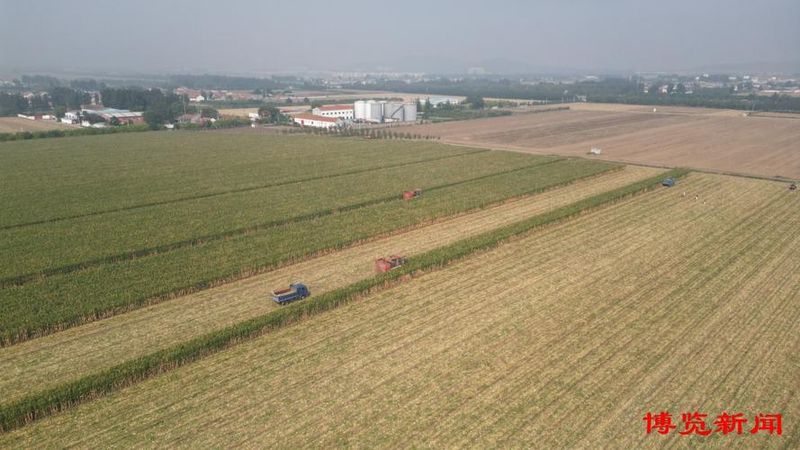
In the town of chutai in the adjoining area, the corn fields, which are growing large amounts of food, are equipped with bug-detection lamps. He said, “from mid-july until now, i've been on the ground almost every day, with corn troubles, sticky worms, aphids, and nothing to spare.” that is the heart of the 100-day battle — not just the sky, but the fields。
In the corn fields of the river yoon, the “field classroom” opened. At the end of july, agro-technical experts moved the training classes to the fields to teach food growers, around the current sapling characteristics, the technique of precision and precision control of high-yielding maize and soybean corn belt complex cultivation. “theory + field operations + interactive answers” means that farmers who attend the training are called `real of thirsty'。
“the maize slurry period is a critical period of production formation and a window period for pest control.” the municipal digital agricultural rural development centre is distilling a leaf blade of corn from its senior agroegroist to show the vermin of its back to the conjoined farmers, “it is necessary to take medicine in time to find it”
This year, the experience of the "agricultural technician trailer" accumulated by the city of lubo in the production of summer foods is continuing in the management of autumn grains. In the main food-producing areas, such as peripal, tung-tai and gao-chung, agricultural technicians have arranged a series of packages, in-situ surveys, and in-situ surveys, and have been divided into plots and child-bearing periods to guide farmers to implement the plume management measures。
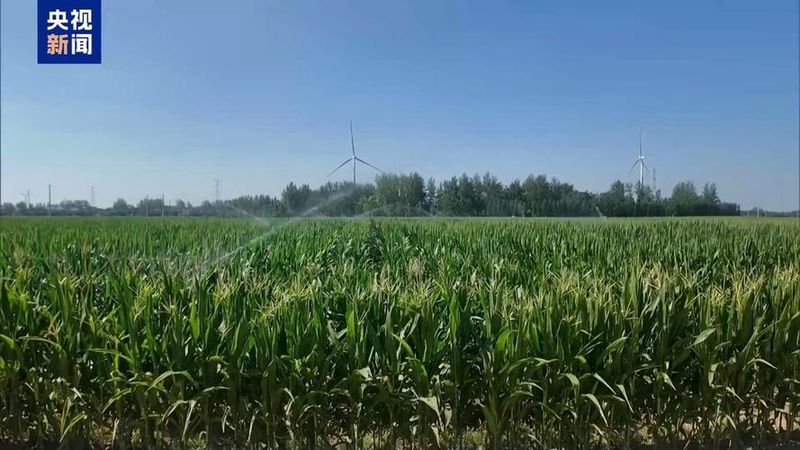
"the focus of `seven and eight' is on storm-proof, inverted, pest-proof." agricultural technicians have provided farmers with the technical requirements of “one blow-out” of autumn grains, which is used to prevent disease, insects, precalcipitating premature decay and increasing the particle weight through a single application between the cornea horns and the slurry period。
In these hundred days of sprinting, the integrated technology of dripping water fertilizers has become a “killer” for the upswing of maize. To date, the city-wide integrated water fertilizer application of food crops has reached 60. 18 million acres, water conservation has reached 30 per cent, fertilizer use has increased by 20 per cent, and food has increased by more than 100 kilograms per acre。
In the town of zhongqing, the rice grower, lee yanqiang, made a “silent drop-down and double-use integrated technology”, which was evaluated as a case of innovative and integrated applications of new technologies in shandong province, and was selected for the main agricultural push technology in shandong province. His demonstration led to the application of an integrated technology for maize fertilizers in the permafrost area to over 100,000 acres in 2026。
In the shutai district, in the face of the problem of heavy sandy wells and easily clogged drip irrigation equipment, the food grower hu jiyong, under the supervision of the technical staff of the city's digital agricultural rural development centre, installed two-tier filtering equipment and succeeded in overcoming the “blockage” problem。
The gridded data are updated in real time on the agrometeorological risk reduction platform of the municipal meteorological service. The platform, which has been rolled out to 737 agricultural technicians and 2810 large food producers, provides early warning information and field disaster preparedness techniques in advance of key agricultural time nodes and disaster weather。
“recent typhoon-exterior impact forecasts, the platform issued early warning three days in advance.” he said, "there's a difference between being prepared and not being prepared."
In addition to scientific and technical tools, emergency reserves are in place. Twenty-three agricultural aircraft emergency operational units throughout the city are on alert, and in the event of extreme weather conditions leading to a fall-down or the accumulation of water on the fields, the emergency response force will be put on alert for the first time。
“summer grain grains are only in the first half of the season, and a solid harvest in autumn is the year-round response.” the river rises up and shoots the dirt on its hands and says, "from now until the harvest, for dozens of days, the day will not be easy."
Rue-bo news hotline: 0533-3811076