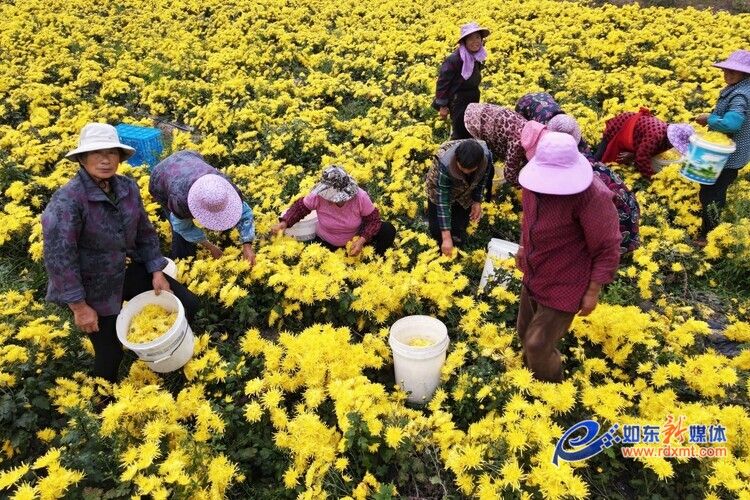
It is the root of the ranco plant, the pebbles, the pebbles, the pebbles, the pebbles, and the pebbles. After planting, two to three years of harvest, the longer the years of growth, the greater the number of saps and the higher the number of monolithics. Harvest is available four seasons a year. The newly collected stones, the fresh ones, shall be preserved, except for their roots and impurities. The dry-user, if he/she is to clean his/her roots, removes the thin membranes, drys them up or drys them; he/she may also heat them slightly in the open water, then dry them or dry them, i. E., dry them. In addition, there are a few small varieties of platinum, such as iron platinum, which can be specially processed, i. E., drying with a rock plume of about 8 cm length, smoothing it down to softness with a stench fire, rubbing it away, twisting it into a spiral or spring, drying it several times, and then drying it several times, with the commodities known as earring pebbles and musk。
[original]
1. Golden quartz, with long years of adjoining grass. Cumson, straight, 30-50cm tall. 1-1. 3 cm in diameter, yellow green, multi-section, 2. 5-3. 5 cm in length. Equestrines, constant 3-5, born at the upper end of the truncheon; foliages, long circle or long circle cape, 6-12 cm long, 1. 5-2. 5 cm wide, front end, 2 circular fractures, parallel veins of the foliage, usually 9 strips, staves held in staves, 1. 5-2. 7 cm long. No leaves. The total bouquet is formed from the stem, usually with two to three flowers; the ovulation, small, membrane, large, plume, with a diameter of 6 to 8 cm in diameter; the cucumber and petal white, with a light red end on the end; the lumbar 3, with a single lumbar, with a long circle, with a length of 3. 5 to 4. 5 cm, and a width of 1. 2 to 1. 5 cm; the ovule, with a long circle or an ellipse, with a length of approximately 2 to 2. 5 cm, with a lip, with a cylindly pyre, with a length of 4 to 4. 5 cm, with a width of 3 to 3. 5 cm, with a short claw on the front, with a tailing of the base, with two sides covered with a dark purple spot in the centre of the immediate foundation; the luminous column, with a length of 6 to 7 mm, with about 12 mm in length; and the rosical, with a bouge, room 2, with a flower, 4 plums, with a wax, and a wax. Cream fruit. Period may-june。
Plumbstone, multi-year edifice. Tube cylinder, 10-45 cm high, 2-7 mm diameter, slightly fine base. Leaf paper, long circle pins or tongues, 4-6 cm long, 1. 2-1. 8 cm wide, with a sharp tip and a twirl on the front; no handle; and twirl holding in the truncheon and opening the mouth. Single, light rose colours; small blades; medium osteoporosis with a long circle of 1. 7-1. 9 cm in length, approximately 6 mm wide, with a blunt front, with a side oscillation longer than a medium oscillation, but smaller and sharper; short, blunt; diaphragm, broad, equal to a medium osteoporus, with a blunt front, with more or less teeth on the edge; near oscillations of the lips, percolation of the lips, dents of the lips, short hairs, three threads straight from the foundation to the end, flow in the shape of the edges; and short rials. Period of april-may。
3. Iron platinum, multi-year adsorbent grass, bush, cylindrical, as high as 35 cm and 2-4 mm thick. There are times when roots take root in the upper section, new plants are grown, dry and grey. Leaf paper, long circle cape, 4-7 cm long, 1-1. 5 cm wide, with a slight stroke of the front end, and a light purple on the edge and in the middle of the veins; the sheath of the leaf, which is purple, is open and leaves a loop gap with the leaf. The total bouquet is often born on the upper end of a leafless tub, 2-4 cm long, bending back and bending back, often with three flowers; the total bouquet is approximately 1 cm long; the raisins dry membrane, light white, 5-7 mm long; the raisins are yellow green, about 1. 8 cm long; the raisins and petals are similar to the petals, with long circle pins, approximately 4 mm wide, with a sharp edge, with a periphery prism triangle on the side, about 1 cm wide in the base, with a sharp edge; the cyst is visible; the porcetex of the lip, is slightly shorter than the raisy, is not fractured or is not visible, and has a lump in the edge of the base, with an a sharp precipity, with an edge wave; and the lips are spattered with a purple spot。
A tatter of rock and tectonic grass. Tube cylinder, 50-200 cm high, thick 5-15 mm. A slight bend of the upper part, 3-4 cm in length. Leaf thin paper, pins or long circle pins, with a forward tip; filaments of leaf, with a long dry pattern; and stairwells open for cups. Foliage-free; umbrella line near-total, with 2-4(6) flowers; bouquets small, membrane; bouquets yellow, with a little meat; twilight pellets long, 1. 5-1. 8, approximately 1 cm wide, with a blunt front; twigs near sickle on the side, slightly longer than the twig; twigs short; twilight pelvis longed eggs, clearly wider than twigs, with a tendency to have teeth on the front edges; pips long and long, with two twilights, two twilight ts on the lip plate, two twigs of blood, two blades from the base to the centre and a short flow on the edge. May-september。
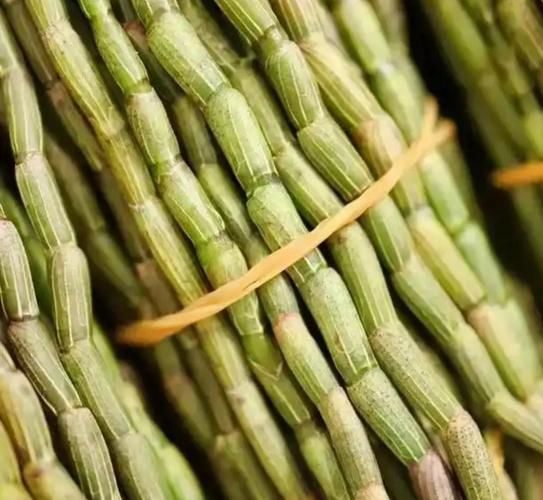
5. The vervain vervain, which has been in existence for many years. The stem is straight, close to the cylindrical column, sometimes with a hammer-shaped upper part of the base, gradually fined upwards, usually about 60 cm high, 2-20 mm thick, and a mask trough. Two rows of leaf, close to horizontal stretch, long circle or ellipse, 8-15. 5 cm long, 2-3. 6 cm wide, sharp first. The bouquet is leafless; the total is about 15 cm long and the total is usually 6-12 cm long; the bouquets are thin and slightly in font form; the grafts are total, membranes are about 5 m long; the bouquets are small, about 3 m long; the bouquets are yellow; the fragrances are long, with short claws, the surfaces on the lips are thick and soft, and the near base has a kidney purple patch, with a re-flow of the edges and a four-to-five-month period。
"ecosystem."
Resource distribution
Sex
Gyan; twilight
Artillery
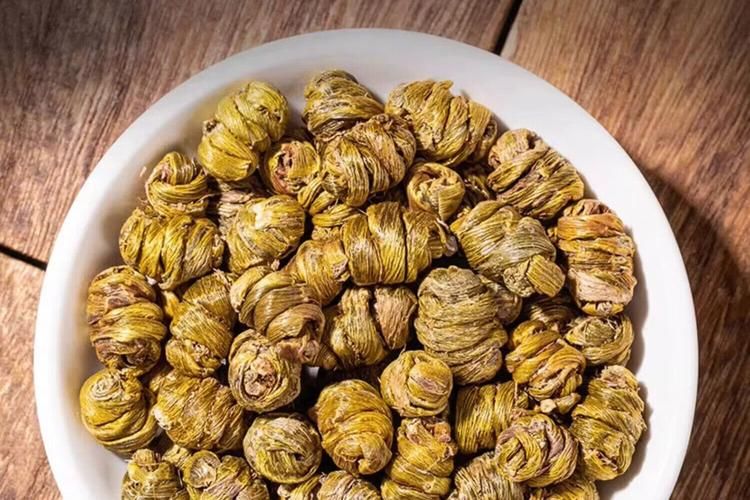
This product is usually divided into gold, yellow grass, small yellow grass, earring and fresh rock, depending on the type of product and method of processing。
1 gold stone
It's a processing product for the plant. The dry tubers are about 20 to 45 centimetres long, with a diameter of about 1 to 1. 5 centimetres, with a cylindrical column in the base, a flat column in the centre and upper, a small bend to the right and left of the stem, and a golden and green surface, with glitter, glare, visible, brown, and sometimes a small increase in the verse, which is about 2. 5 to 3 centimetres in length and is shorter up. It is light and thick, it is broken, it's white, it's dark, it's small. Frozen, bitter, chewing tape sticky. And those who are long, yellow, thick and bright。
2 yellowgrass rock
(b) processing products such as platinum, plum, plum, plum, plum, etc. Dry tubers typically have a length of 30 cm or more, with a diameter of about 3-5 mm, a cylindrical, slightly bent, a golden surface with a little green, glazed, deep guttered, visible, 2 to 3. 5 cm in length. A thick, cross-sectioned circle with most angles on the edges, forming gears and spreading white spots. Frozen, bitter, chewing a little sticky. And the smooth, golden, and secret。
Three little grass and stone
It's a processing product for pomegranates, raviolis, and pomegranates. The dry tubers are generally below 30 cm in length, with a diameter of about 2 to 2 mm, convoluted discs in clusters, with a fine vertical texture on the surface, gold and a little green on the surface, with a glitter, with a swath of about 1 to 1. 5 cm in length, with a contours of fractures and a little pink. It's good for the curls, the knots, the gold, the pink, the chewing of the fragrance。
4 earring stones
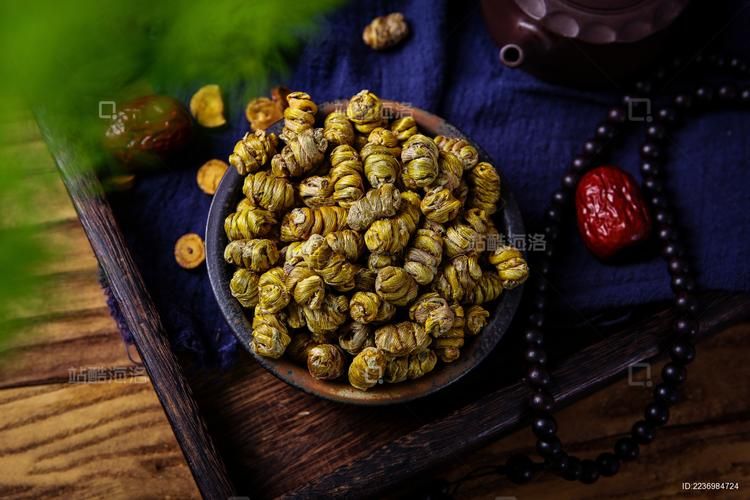
Also known as maple dome. The tubers of the quarries are specially processed for various plants。
Five stones
The gold-shaped pebble plume is a slightly flat cylindrical cylindrical column with a thin base, approximately 1 to 1. 5 centimetres in diameter, yellow on the surface, smooth on the surface, elastic, visible on the section, with brown rings on the section, and a gray membranes on the base, approximately a half of the length of the section。
Yellow grass-type sprouts are cylindrical and fat. Most commonly:
The above-mentioned quarries are produced mainly in sichuan, guizhou, guangxi, guangdong, yunnan and hubei. In addition, the lands of anhui, hunan, jiangxi, fujian, zhejiang, shaanxi and henan are also produced。