In the “3900s” season, low temperatures in the beijing region, according to the national meteorological service, the climate has fluctuated markedly throughout the city since the winter, with the average temperature in the city now about 5°c higher than the annual average, but still within the limits of the la niña phenomenon, with the potential for extreme and gradual cooling. In order to guarantee the supply of vegetables during new year's eve, spring festival and winter olympics, beijing agricultural technology specialists have been engaged in disaster weather management, strengthening field management of vegetable production and ensuring a steady supply of the winter “basket”。
Temperature weather response
Scrap repair and tightening. (c) the timely repair of gaps in the shantytown film by means of thermal or glue patches, while tightening the mosaics and membranes anchors in order to avoid the tearing of the shantybee by wind。
Fire and safety. The power is cut before the wind, so as not to cause bodily harm as a result of the breaking of wires, fire from short circuits and so forth, to avoid smoking in the vicinity of combustibles and in the vicinity of installations, and to ensure safe production。
Keep the walls warm. For greenhouses with ventilation windows on the back wall, vents are filled and sealed, and for greenhouses below 60 cm thick of the wall, the temperature protection is increased by the use of cornbrushing, soil preparation, or the erection of thermometers on the outside of the wall。
Emergency warming. The preparation in advance of the corresponding emergency heating products or equipment, such as heaters, heaters, baths, high-power incandescent lamps, electric heating, heating blocks, etc., must be reasonably used by the producer in accordance with the conditions of the greenhouse。
Snow response
We'll get the shed reinforced and the snow removed. The detection of possible safety hazards prior to snowfall is eliminated, and in the case of old greenhouses or deforming greenhouses with deformed skeletons, reinforced by poles to avoid snow crushing the greenhouses. Old balms can be covered by snow in order to facilitate the timely removal of snow when snow stops, while avoiding problems such as increased heat coefficients and corrosive difficulties due to wetting。
Low-temperature oligarchy management in the snow. The first is the application of temporary temperature protection measures, which can be applied to ablutions, hot stoves, “hotbow” burning blocks, etc., to ensure that the minimum temperature in the shed is not less than 8°c. The second is the correct disclosure of the cotton cover, which, although the snowlight is weak, must also be exposed during the day, which must be covered at night at night. The cotton should be covered at night, five days later, with shorter periods of light, before and after noon, after two to three hours, when the cotton cover must be covered at night. Third is the minimization of farming operations, which, apart from deformation and the harvesting of merchandise fruit, do not involve farming operations such as watering, fatting, pharmacizing and whole branches。
After the snow, we'll manage warm water and water. One is the sunshine sunshine. When the cotton cover is removed, half of it should be removed with a roller, and all of it should be removed after 3 p. M. So that the plant can gradually adapt to the light. The second is post-snow plant prevention. Reduction of the pathogen by removing the disease, timely removal of the leaves and the fruit when the disease is detected, and prevention by using highly toxic biological pesticides, with fumigants preferred to prevent increased humidity in the shed. Thirdly, the management of water fertilizers is being strengthened. With the recovery of growing plants, the supply of water fertilizer has gradually increased and is dominated by low concentrations of fertilizers (low ecs), thus contributing to a rapid recovery of production after winter。
We'll do the gardening
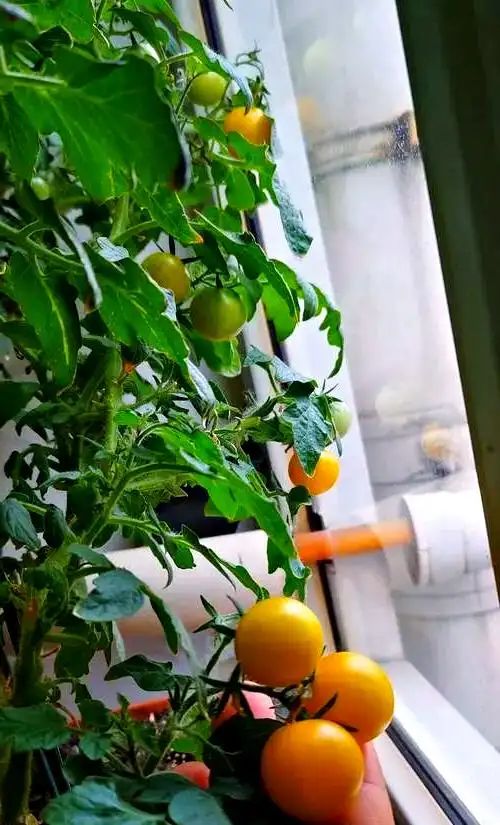
The solar greenhouses harvest vegetables in the autumn and winter and the hot crops such as tomatoes, cucumbers, peppers, sips and eggplants are at an advanced stage of growth. They should be ploughed in due course, and must be ploughed up to grow a leaf, so as to sow or plant cold-resistant vegetables, lettuce, etc., and increase the marketing of vegetables。
In the winter and spring, we're running the fruit and vegetable field
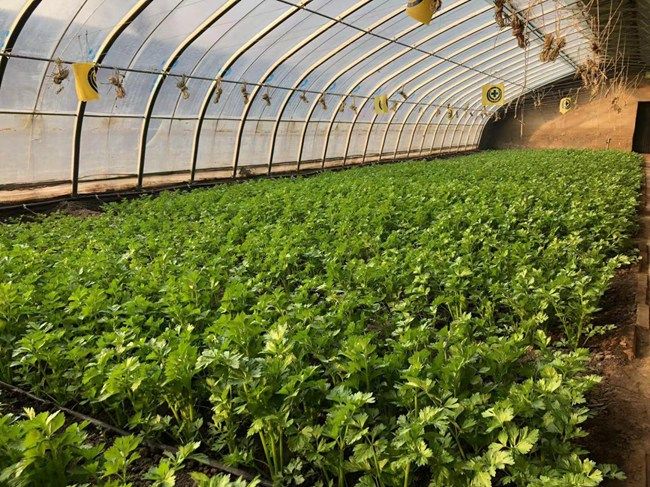
Regulate temperature, humidity and light. The temperature and humidity management of the facility is performed. The first is to ensure temperature, with indoor temperatures at 25-30°c for hot vegetables such as tomatoes, cucumbers and peppers and at least 10°c at night, and above 15°c for cold-resistant crops such as celery and pickles; at 8°c at night and at 10°c at night. The second is to control indoor humidity through venting, which is 50-70 per cent during the day and suitable for no exposure at night. Thirdly, it is necessary to wipe the shampoo with diligence and to increase the light rate. It is possible to install a light patch, which can be used for three to five hours per day after temperature protection, to extend the time of light, to open 10 to 12 hours in the shade, and to increase the light co-operation, thereby facilitating the planting of plants and fruit。
Plantation and fruit management
High-scaved crops, such as cucumbers and eggplants, should be removed in a timely manner from the old leaves, sick leaves, deformed fruit and side branches, tomatoes should retain functional leaves of about 16 pieces and be removed in full from the leaves below the ears of white ripe fruit, tomatoes should be kept in 35 to 40 leaves, peppers should be guaranteed to be above 40 pieces, cucumbers should be maintained with 12-15 pieces of functional leaves and not below 1. 5 metres at the level of fall. Crops such as tomatoes may be selected with safe plant growth regulators to assist with pollination, the removal of surplus buds and surplus fruit and the timely harvesting of them during the optimal period of the commodity。
Fertilizer management
Water and fertilization is carried out using one-size-fits-all methods, with a total of 10-15 days of fertilizing guacamole vegetables, 10-15 cubic metres of acre irrigation, 5-8 kg/acre dripping of potassium water; fast-leave vegetables, which do not need fattening and are irrigated flexibly according to weather and crop growth; and other types of vegetables, such as kale, garlic and radish, which are fertilized with water drops 2-3 times at 5-8 kg/acre at a time during the formation of their organs。
The greenhouses are cold and ready to plant and plant
The season of planting and planting is marked by the production of oil, artemisinin, spinach, lettuce, cabbage, cabbage and cherries. To apply fully decomposed, thin organic fertilizer of 1500-2000 kg, finely finely so as to level the ground, flat, flat and straight, the surface soil is lax and there is no dark or darker soil。
Artemis, spinach, cherry carrots and cabbage should be grown in a direct seeding manner, so that they are spread evenly after watering the bottom water, the soil is thick, and a layer of the membrane can be planted to protect temperature and humidity and be removed in time for 50 per cent of the seeding. Field management should be strengthened after seedlings have been produced to promote plant growth, early harvests should increase market availability and supply markets during spring and late seasons。
Getting ready for the birth control in winter and spring
Vegetable production in the beijing region, which is covered by the spring bouquets and the early spring membranes, was generally established between late march and early april. The planting time is determined by the age of the suitable calendar, with the planting of peppers and eggplants in mid-january, tomatoes and cucumbers in mid-february, broccoli, cabbage and so forth in mid-january and lettuce in late january. Suh-jin, conan-goose