The northern winter worm is a species of herbs, known as herbicides and herbs, a medicinal fungus, which is different from herbs in winter, and whose main medicinal ingredients are herbicides, herbacid acids and sugars, all of which are higher than herbs and are more readily artificially grown than herbs。
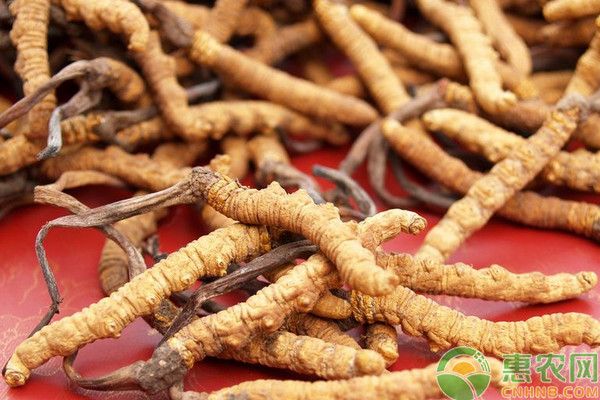
There are currently two main models of artificial cultivation of the northern winter worm, one of which is based on live saplings; and one of which is based on the use of rice, wheat and other substitutes. This paper summarizes the method used to plant the summer worm for the northern winter in order to achieve the scale production of the summer grass for the northern winter。
1 places of cultivation and seasonal selection
North winter worm summer grass cultivation sites require clean and clean surroundings and water and electricity. The culture room may choose to use an empty house or shed with a good ventilation and proper light. In order to make full use of space, a 30cm width of each shelf will be constructed, allowing for two 750 ml canisters to be mounted in a recoiled manner; a layer of about 50 cm is not well-placed; the shelf length will be suitable for efficient use of space, normally not exceeding 1. 5 m per shelf; and each shelf will have a maximum of 5 floors。
According to natural temperatures, the spring and autumn seasons in the northern part of the country are an appropriate planting season. Spring february-march, autumn august-september. Equipment such as air conditioners, wetteners, etc. Can be cultivated throughout the year。
2 bacteria selection and production
2. 1 bacillus selection
The rapid degradation of the northern winter worm summer herbs species, which are routinely preserved for three to six months, with more than three to four generations passing, leads to serious degradation of the bacterial species, leading to instability in cultivation, so that the mother species used in production are generally purchased from authoritative research institutions, and are re-purchased after three generations of increased cultivation. Bacteria obtained through the separation of sub-entity organizations cannot be used at will to avoid significant risks and even irreversible losses to production. Bacillus that meet the requirements for planting are bacterium-based growth, clean white colours, clean edges, white pneumatic filaments without visible fuzzy, and fungi-free bacteria, which are highly resistant, clean and productive. Characteristics of the species of summer herbs that are commonly used in the northern winter worm are shown in table 1。
Table 1 characteristics of the strains of the northern winter in the summer plant

2. 2 production of fungi
Scalable production is best done with liquid bacteria to ensure rapid inoculation and non-infection of the fungus, with advantages such as large and even inoculations, after-scrutinization, and circulatory occupation. Liquid bacteria can be purchased directly from a regular manufacturer prior to production, or can be produced by purchasing parent species from authoritative research institutions。
2. 2. 1 formulation of nutrients
2% glucose, 0. 5% protein, 3% soluble starch, 0. 2% potassium phosphate, 0. 2% magnesium sulphate, vb1 10mg, 100ml water. Take 100 ml water, boil it and then add soluble matter, and then slowly convert soluble starch into paste, and eventually use 5% sodium hydroxide to ph to 6. 5. Packed with 500 ml canisters, with trophic fluids of 100 ml, 10 or so glass beads for the shaker bottles, and enough for sterilisation of 25-30 min by 123 °c。
2. 2. 2 inoculation and development of liquid strains
Following the cooling of the trophic fluid, mother-to-child inoculation is used in sterile cases. The mother of each tube is generally vaccinated against 8-10 bottles of liquid bacteria. After vaccination, liquid bacteria are placed in a 20-25 °c luminous environment, where 24 ~ 48 h is still bred, then moved to a shake-bed concussion culture, where the spin-off-bed is generally rotated to 130 ~ 140 r/min, 7 d and around, it can be seen that the 2 mm diameter of the fungus ball is evenly packed with nutrients. Liquid bacteria cannot be placed too long, so good bacteria are best used in 7-10d。
3. Cultivation management
3. 1 cultivation and composition
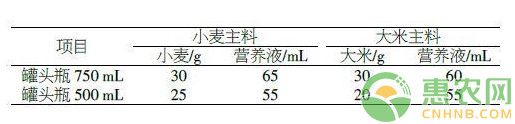
The basic ingredients of the culture base are rice, wheat, yeasts, etc., and the addition of animal nutrients such as silk powder, egg polish and milk powder can improve the production and quality of summer grass in the northern winter. Plant production can start with solids of 30-25 g and trophic fluids of 60-65 ml in each planting bottle (cans, specification 750 ml or 500 ml). The ingredients and bottles are shown in tables 2 and 3。
Table 2

Note: add 20 mg each to vb1 and vb6。
Table 3 bottled per bottled plant for the northern winter worm
3. 2 bottled and sterile
When bottled, it is sealed with 0. 05 mm thick polypropylene plastic film, and bound with rubber rings or ropes. High pressure vapour sterilisation at 123 °c, time 1 h; constant pressure vapour sterilisation at 100 °c, time 8 h. Particle of rice is not bad but soft to breathe after the gestation. In the event of excessive moisture, the culture base is too wet, and the fungus is not easily eaten through the whole culture base, causing bacterial contamination. If too dry, the fungus grow slowly, the small climate in the bottle is dry, the fungus is thin and it is difficult to remove grass。
3. 3 inoculation and fungi management
Under sterile conditions, the amphibians are opened and liquid bacterial strains are evenly sprayed on the culture base with disinfected inoculation guns, with a vaccination rate of 10-15 ml. Upon inoculation, under conditions of 20-22°c, and in the event of avoidance of light, the bottle is placed up and raised to 24~48h, and placed on a training shelf, pending the emergence and planting of the filament. Otherwise, culture fluids, culture foundations or bacterial fluids will fall to one side and are not available at a later stage. The fungus management period begins when the fungus is sprouted。
Because of the photogenic nature of the summer grass of the northern winter worm, the mouth of the bottle is set in the direction of the light source, which is usually placed on the outside side of the mouth, with a five-storey fungus bottle placed on each shelf, and a solar light is added to the light. In the early stages, indoor temperatures should be maintained at 15 ~ 18 °c, which can reduce bacterial contamination; when 15 ~20 d of mycelium silk is full, the temperature is adjusted to 20 ~ 23 °c to continue cultivation. At this stage, humidity is maintained between 65% and 70%, with ventilation to ensure that indoor air is fresh. There is no need for light during the growth of mycelium, and it is observed that when mycelium is full of permeable nutrients, light is required to stimulate the reproductive growth of mycelium from trophic reproduction, but not too early to affect grass production。
3. 4 conversion management
Through 15-20d, white silk is covered with filaments, and small rises in culture-based surfaces (aerobic filaments) require increased light to promote change. During the day, using natural dispersing light, with a light strength of 100 ~ 200 lx, the light is not enough to be supplemented by a solar light, with a daily light time of not less than 10 h, at a temperature of 21 ~ 23 °c, with a relative humidity of 75%, while a needle piercing about 10 small holes on the closed membrane for gas exchange, 5 ~7 d allows the presence of a rice particle base on the culture base and conversion to orange yellow. Attention is drawn to the need to stop artificial light after the turnover has been completed, and successive notes of light make it difficult for the sub-season to grow。
3. 5 grass management
Temperature control is between 18 ~ 22 °c and cannot exceed 28 °c, otherwise sub-seasons cannot be formed; increased temperature differential irritation, room temperature control is between 18 ~ 22 °c during the day, room temperature is down to 8 ~ 10 °c at night, low temperature irritates 6 ~ 10 h per day. Ventilation occurs 2 to 3 times a day at 30 to 60 centimetres per day, with high weedage, increased breathing and an appropriate length of ventilation; the relative humidity of the air is between 80 and 90 per cent, with light above 12h per day and a strength of 200 to 500 lx. If the ventilation is poor and the light is strong, the original base is classified, and the bacteria are formed in serious cases and do not have a hyena。
3. 6 harvest processing
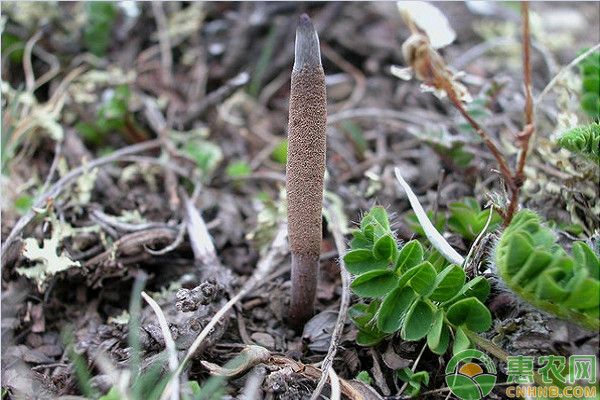
After about 15d, the subseasons grow surfaces, at an altitude of 2 ~ 8 cm, with a diameter of 2 ~ 5 mm, and when the whole subseamer is orange or orange, the top of the subseasons appear to have torn apart and the surface is visible that yellow powders indicate maturity and can be collected. After harvesting, water is cut at 3-4 d and nutrients are injected into bottles, 10-20 d followed by a second batch. After harvest, they are usually dried except for fresh sales。
4. Quality standards for north winter worm summer grass
4. 1 fresh
The sub-entity is relatively similar in length, clean, yellow and yellow, and evenly distributed, with no white fungus on the surface and no other colours than yellow, and tops. If a white fungus is present on the surface, it is an aging, and colours other than gold and yellow indicate infection with the fungus, which is a bad product。
4. 2 finished goods
Shape characteristics: solid, fine, even length, single end, low rate of fragmentation, top priority. Colours: golden, orange, even colours, top colour, brown, black uneatable. Smells: the northern winter worm has a unique smell, the heavier the smell, the higher the quality. Water content: within 12 per cent of water content, the method used is to squeez the entity with a hand, with an unbroken feeling。
That's all we've got today. A farmer's friend who wants to grow herbs in the northern winter can come to the network first to learn how to cultivate