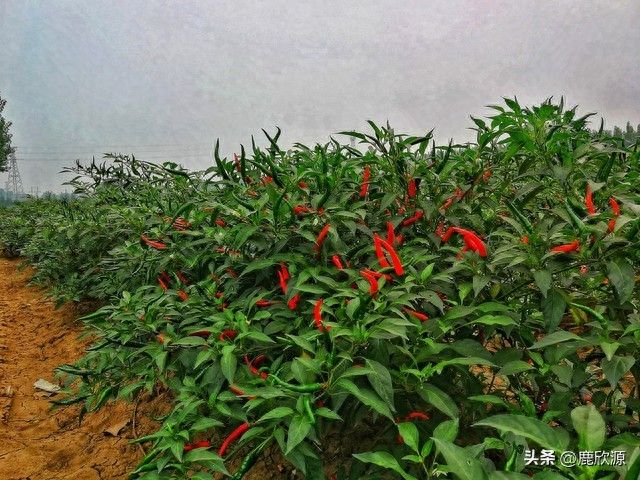
In august, the temperature was so high and so low that there were a lot of hot peppers in gardens and gardens, and they watched the leaves grow so dazzling that the leaves were covered with fruit and fruit. A lot of old people are wondering that spring is full, and when it comes to summer and autumn, there are few flowers, there are no fruit, the old ones are small, the new ones can't sit。
The old rural saying: if you don't cut the chili in august, you'll have to put a circle in the fall. It means that in august, when they didn't get a full cut, the peppers were grown, and their nutrients were spent on the long, crazy branches, and when the fall cooled, they had only a few peppers, and their production was much lower。
Many people grow chili, who only water and fertilizer, are unable to spare scissors, suffer when they see a branch and let it grow. The leaves are infested, there is no light in the interior, there is light in the air, there is a serious drop in the flowers, and the disease goes on and on。
The month of august is the critical period for the birth of chili nuts, whether growing in the field or in the balconies of the balconies, rationally triming, removing the ineffectual branches, feeding back to the flow of the branches, and after the autumn the peppers are full of branches, with a bowl of a basket of them. Today, hand in hand and hand in hand to make it clear that ordinary farmers can do it once and for all。
First of august, the chili will not be trimmed
Many people feel that leaves are strong for co-operation, and the more branches, the more pepper, the more it is。
First, the leaves are too thick and the interior is so closed. Paprika is a radiant crop, with the inside branch not tanning the sun, with only long leaves that don't sit on fruit, and water and nutrients consumed in white。
Second, there's bad ventilation, sickness. In august, there was a high temperature and rain, a layer of leaves piled up, and the humidity could not spread out. Anthrax, disease, foliage outbreaks and leaves fell。
Third, nutrient diversion is severe. Large amounts of nutrients have been looted from the long side branches, flowers have not been supplied, flowers have fallen off, and peppers are not very long。
Fourth, plant failure. The branches are overconsumption, overstretching, aging before autumn, and stopping at a later stage。
Whether the field is planted or the balcony is made of pepper, the august cut is not blind, not as bright as possible, and the core principles are: go out, stay out, remove the old branch and keep the outcome branch。
Two hands, hands, hands, hands, hands, hands. Go
One, cut the bottom, yellow, sick
The paprika plant, which is close to the ground, has grown old and yellow throughout the summer, with reduced capacity to produce nutrients, and is prone to soil contamination and disease。
Operation: the removal of all the leaves of the primary stem within 20 centimetres of the ground。
Be careful: do not emptied all the leaves at once, keep a small amount of healthy leaves and avoid sunbath burning. The old leaves removed should not be left under the peppers, and the vegetable garden should be brought out for intensive treatment to reduce disease residues。
Two, cut off the empty insider branch of the invalid
The inner branch is the middle of the pepper plant, drilled inside the branch, without seeing the thin side branch of the sun. These branches are long and small, with little flowering of long leaves and very difficult to sit on。
Operations: direct removal of internal growth, overlapping, small and thin inner chamber branches。
Retain the branches of robust results that stretch out and have ample light. Open space in the middle of the plant, ventilated light, and the sun can shine inside the tree and reduce the fallout. This is particularly important in the case of pelvis peppers, which have limited space and which can be squeezed directly into nutrients。
Three. Cut the long, crazy oil branch
What's an oil branch? It's the paprika that emerges, grows fast, a section rises high and leaves rarely bloom. The branches are thick, and the madness grows upwards, taking most of the nutrients。
Many farmhouses have to be cut, and more can be achieved by thinking about the branches. On the contrary, the oil branches do not wear peppers, and they drain the whole of them。
Operations: this type of student branch is either cut directly from the base; if the branch has a small amount of buds, it can be moderately capped, inhibiting the continuation of the madness and forcing the short-effect side branch。
4. Discovery of deformity and rigidity and conservation of nutrients
There are little peppers in the trees that are so long, so long, and the bugs bite. These fruits have been hanging on them and they continue to consume nutrients。
Operation: remove the figs, bugs, deformed peppers and concentrate on feeding healthy flowers, so that new flowers can come out。
No cuts. A lot of people cut it wrong and cut it
1. Do not cut the branches of the health outcomes and extend out the strong branches with flowers
2. Do not clean all the functional green leaves, which are nutritional plants and leave enough leaves
3. Do not trim under the midday sun, and the wounds are prone to drying up with tan
4. Cutting should not be a one-time retweeting and sorting out to avoid plant stress and premature decay。
Best time to trim: choose the sunny afternoon evening cut. The cut was followed by one night to heal the wound, avoiding the rain weather, which made the wounds susceptible to infection with the disease and led to rotting rods。
Three, three, three, three, three. Three, three, three, three
It's just unmanageable. Cutting is only the first step. Following up, peppers go wild。
One, after trimmed, catch up with the fat
After being trimmed, the plant has to produce new branches of results, not just urea and oxytocin。
Ground planting: small amounts of potassium compound fertilizer can be applied in shallow ditches, or decomposed farmers ' fertilizers can contribute to the splitting of buds。
Battery peppers: fertilized with diluted water, fertilized and infrequently distributed。
A ban: in august, high temperatures and a one-time wave of nitrogen fertilizers can easily lead again to long leaves without chili。
Two. Leaf paste fattening
After trimmed, the wound was healed two or three days later, potassium phosphate was sprayed, a bucket of water to potassium phosphate of 50 grams was sprayed on the back side of the leaf, 7-10 days once, twice in a row。
The supplementing of the phosphorus potassium nutrients promotes the proliferation of flowers, reduces the drop of flowers, and the chillies sit steady and are not easily lost。
3. Water protection against disease
Cuts open the leaves and the field is ventilated, but in august the temperature and humidity remained high. The water is always dry and wet, the plant does not accumulate water in the basin, and it is rained and drained in time。
Cuts leave wounds, the disease is easily invasive, and care is taken to prevent anthrax after the rains, while in august, the smoked and drilled fruitworms have high hairs and are prepared in a timely manner to protect the young fruit。
Iv. Additional mini-technologies for potted peppers
The balconies plant peppers with limited space, limited roots and easier to grow. With the exception of the cutting above, the branches are too long, and they are moderately high to keep them from moving up。
The flower basin must ensure that there is sufficient light, that there is not enough light, and that, when the cut is in place, there are few flowers。
The old farmer's chili cut:
In august, peppers were to be taken from the whole of it
All the weak branches of the inner chamber shall be removed and the oil bars shall be cut off
The wounds are trimmed in the middle of the sun, and the poachers are filled with potassium。
A lot of people grow chili, and spring is a productive spring, and by august it started to lose production, either because of bad varieties, or because of insufficient fertilizers, or because of the foliage, which consumes the nutrients. Seize this critical window period in august, trim the whole branch, leave the nutrients to the result branch, and plant and plant acupuncture till the frost falls。
Interactive topics
Will your chili be able to trim the whole branch in august? How many chili seats do you have in the fall? Welcome to the comment section about your chili trick
Disclaimer: this is an empirical experience in the field of folk farming, and there are differences in the variety of climate-soil peppers. Please read the product instructions strictly with the application of fertilizers in conjunction with the actual operation of the home plot。