On 6 february, the united states government announced a major readjustment in its military sales strategy to prioritize united states arms sales, moving from a decades-long “first-to-first-come” approach to high defence spending and strategic priorities. According to several experts interviewed by globe times journalists, this move by the united states would not only allow military-industrial enterprises to make more profits, but also serve as a means of blackmailing allies. Under this principle, the united states is the most likely to sell weapons equipment, first of all aircraft, then missiles, and then army weapons such as artillery and tanks。
The president of the united states of america, trump, signed an executive decree on 6 june proposing the establishment of a “united states priority arms transfer strategy”. Under this strategy, the united states will give priority to its allies who invest in their own defence capabilities, play an important role or position in its plans and operations, and contribute to its economic security。
Zhang juncai, a military expert, stated to globe times journalist on 9 september that the united states had made a major adjustment in its military sales strategy to pursue a “united states priority” strategy to strengthen its defence industry base through military sales, giving priority to the interests of the united states. On the one hand, the “breeding” capacity of united states military engineers has been enhanced through military sales to squeeze ally interests and to make more profits for the united states. On the other hand, it stimulates allies to increase their military budget to 2-5 per cent of GDP, or even more, by allowing allies to serve united states geostrategic purposes。
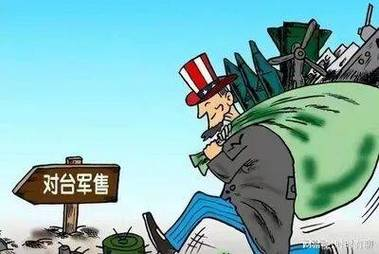
The zhang jun society analyses that while the united states military sales strategy appears to have undergone significant adjustments, there is a principle that remains unchanged — the united states will not sell the most advanced weapons equipment to its allies and partners to maintain the intergenerational gap between united states arms and equipment and other countries and to maintain absolute technological advantages, such as f-22 invisible fighter jets and b-2 invisible strategic bombers. “the three regions of asia and the pacific, europe and the middle east may be the main direction in which the united states dumps its weapons.”
An unnamed military expert stated to globe times journalist on 9 january that in the newly established military trade rules, the united states no longer followed the order of signing orders against the countries or territories concerned, but rather the principle of the united states preference. For example, the united states military allies and defence partners, which occupy an important place in the united states military strategic system, will give priority to delivery, and the categories of weapons and equipment involved will be broader and more advanced。
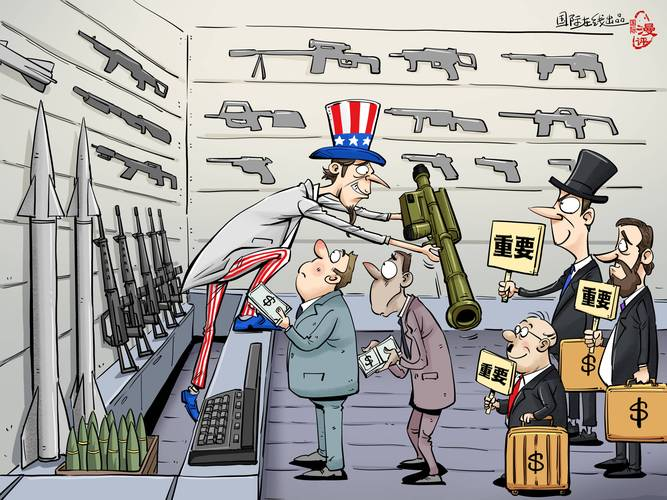
“the united states will give priority to the sale of highly profitable weapons and equipment and may have more conditions attached to the sale.” the above-mentioned expert analysis suggests that many united states allies, in order to obtain priority in the purchase of weapons and equipment from the united states, would therefore like to please the united states, for example, by increasing military spending or by giving greater benefits to the united states in cooperation with other projects, which would thus have more leadership and voice in many matters。
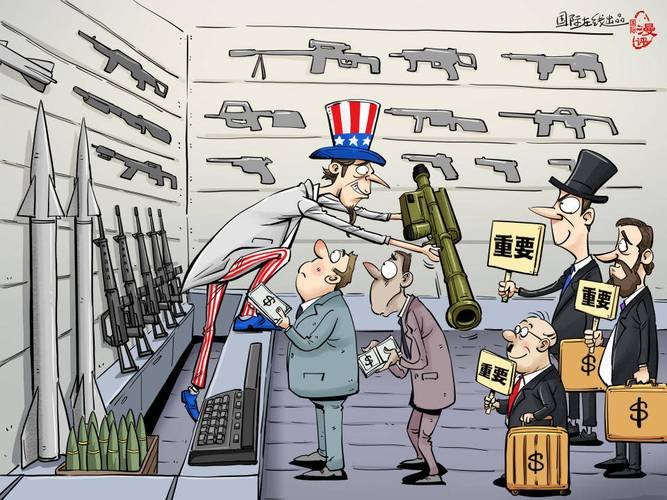
A similar view was expressed by the military expert, song zhongping, during an interview with the global times on 9 september. In his view, trump took the opportunity to set up a system of “rewards and sanctions” for the purpose of the united states by providing arms supplies to states or allies that did not do so and by cutting off the sources of weapons。
The above-mentioned unnamed military expert cited as an example the united states foreign military-solded star product f-35 invisible fighter jets: “the united states and its allies are a totally unequal relationship in the arms and equipment trade, and the united states not only sets rules but changes them at any time. For example, in the course of the specific operation of the f-35 fighter jet project, the united states will determine when and how many aircraft will be delivered, depending on whether the partner or ally is in line with the united states at other levels.”
According to song's analysis, the list of arms and equipment involved may cover the entire family at the operational level and cover a wide range of areas, including land, sea and air。
“in terms of the capabilities of the u. S. Military-industrial enterprises, the most likely weapons items to be sold are first the type of aircraft, then missiles, and then army weapons such as artillery, tanks and naval-related weapons.” zhang juncai indicated that the new united states navy warships would not be easily sold。
In recent days, a framework agreement between the united states military industrialization corporation and the united states department of defense has been signed to significantly increase the production capacity of the ax cruise missiles (both land and sea), advanced medium-range air and air missiles and standard series missiles。
In response, song zhongping stated that the “patriotic” air defence systems, the “sad” anti-missile system and the “standard-3” series of interceptors were all equipment that the united states had actively expanded its military sales market abroad and sold heavily. Aim-120 medium-range air missiles will be classified as priority export models. In addition, advanced aircraft, such as f-35 and f-15, will be at the core of the united states focus on marketing to international markets。
In zhang's view, advanced munitions such as army tactical missile systems, multi-tank anti-tank missiles and war ax cruise missiles may be of the type pushed by the united states and include multiple drones, cruise missiles, main battle tanks, artillery, etc。