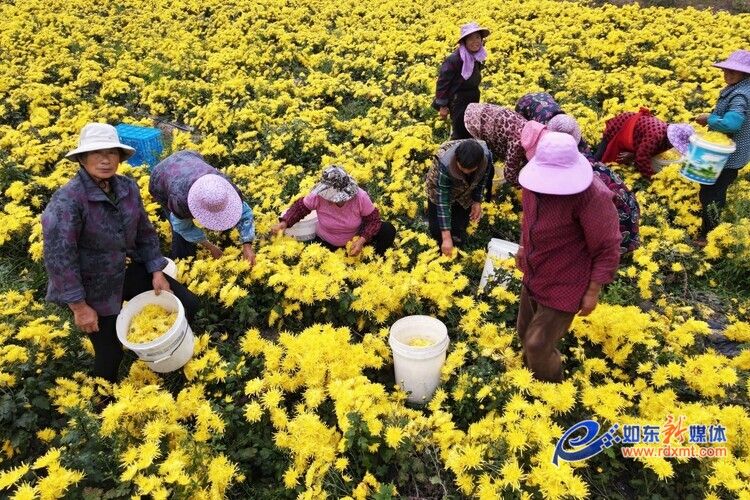
In the early autumn of september 5th (journalist zhang hua cai), tea mushrooms in the northern mountains of xinhua and fukuzhou began to harvest. In the early morning hours, he entered the kibaku village tea co-operative plantation in the town of jianyang, province of fujian province, where he used to plant the mushrooms. In the mushroom shed, a tea mushroom popping out of a stick, the workers are busy picking mature tea mushrooms, and the whole planting base is filled with the joy of harvest。
“most recently, the weather has been better, the tea mushrooms have grown fast, and they grow overnight after they are picked during the day.” the head of the tea mountain fungi cooperative in teabu village, seo tsingyan, said that fresh tea mushrooms could be produced around 20,000 pounds a day during the period of the planting base and that, on average, more than 40 workers were required to pick and bake tea mushrooms every day。
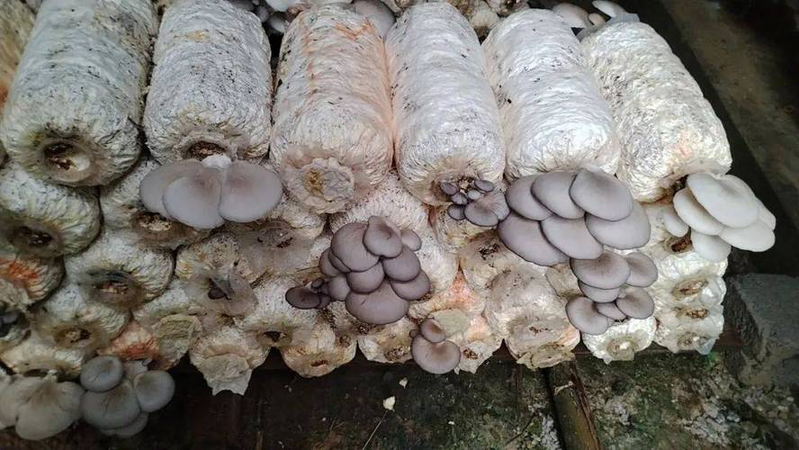
“many people in the village had previously grown tea mushrooms, but most of them were family-based and decentralized, not only on a small scale and at a low price, but also on a large scale.” six years ago, when the villagers planted tea mushrooms at a price, the idea of starting a cooperative was born out of the merchants: a concentration of mushrooms, production of more and better tea mushrooms and higher prices。
Agricultural technicians were hired to provide technical support for the production of mushroom drums using mechanized production, distributed to farmers for management, and then sold together. After years of effort, the size of the tea mountain fung cooperatives has grown. To date, the cooperative has absorbed 108 members, and the annual number of tea mushroom drums has increased from less than 4 million in 2014 to today's 15 million bags, with an annual value of over $70 million。
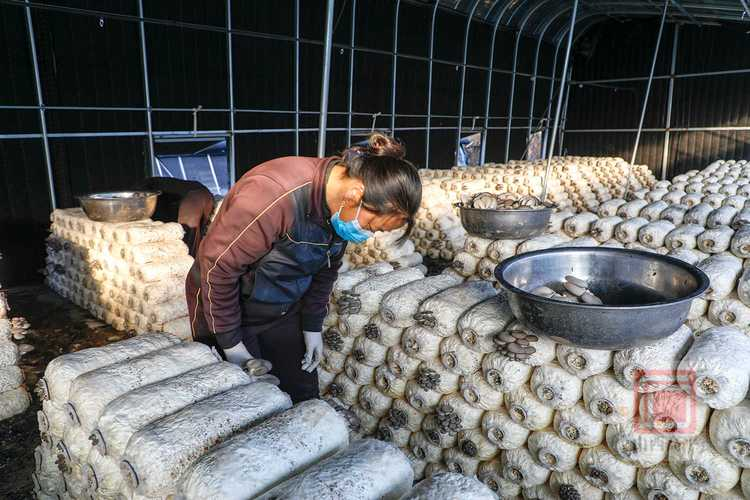
The growth of the tea and mushroom industry has led to a strong rise in local incomes. "we're here early in the morning, working for more than six hours, earning more than 100 a day." in recent years, he and his wife have gone to the cooperative's planting grounds to work part-time, with an increase of nearly $10,000 per year。
“the trade in tea mushrooms over the years is worth over $50 per kilogram.” at the beginning of the year, ryin ping, a poor family who had built the kiosk of tea and mushroom sweets, decided to expand the cultivation of her own tea and mushrooms from 20,000 to 30,000 bags. “getting out of poverty with hard work and hard work.” he said。
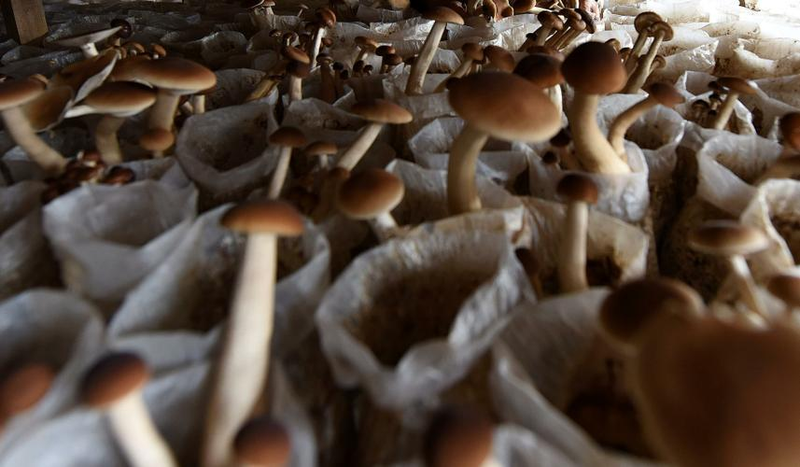
There are not a few poor people, such as wang rei creek and ryingping, who have emerged from poverty through the tea and mushroom industry。
“the food-breeding industry, represented by tea mushrooms, has become an important source of income for the population of the town, with more than 40 of the 158 poor families in the town growing tea mushrooms, with an annual increase of nearly $5,000.” mr. Liu xiaohua, a member of the political and legal committee, said that the next step was to promote local niche agricultural products through the use of electric power platforms, which would lead to more farmers becoming rich. (concluded)