See agricultural wealth information
Wild boar farming has received increasing attention in recent years, with wild boar resistance, a high rate of thin meat, good meat quality, lower farm costs, greater efficiency and prospects for development, all better than pigs. Prices have skyrocketed, with wild boar market prices now rising from $30 per kilogram in 2005 to more than 40 per kilogram, and higher prices of $56 per kilogram in shanghai and elsewhere。
I. Rational construction
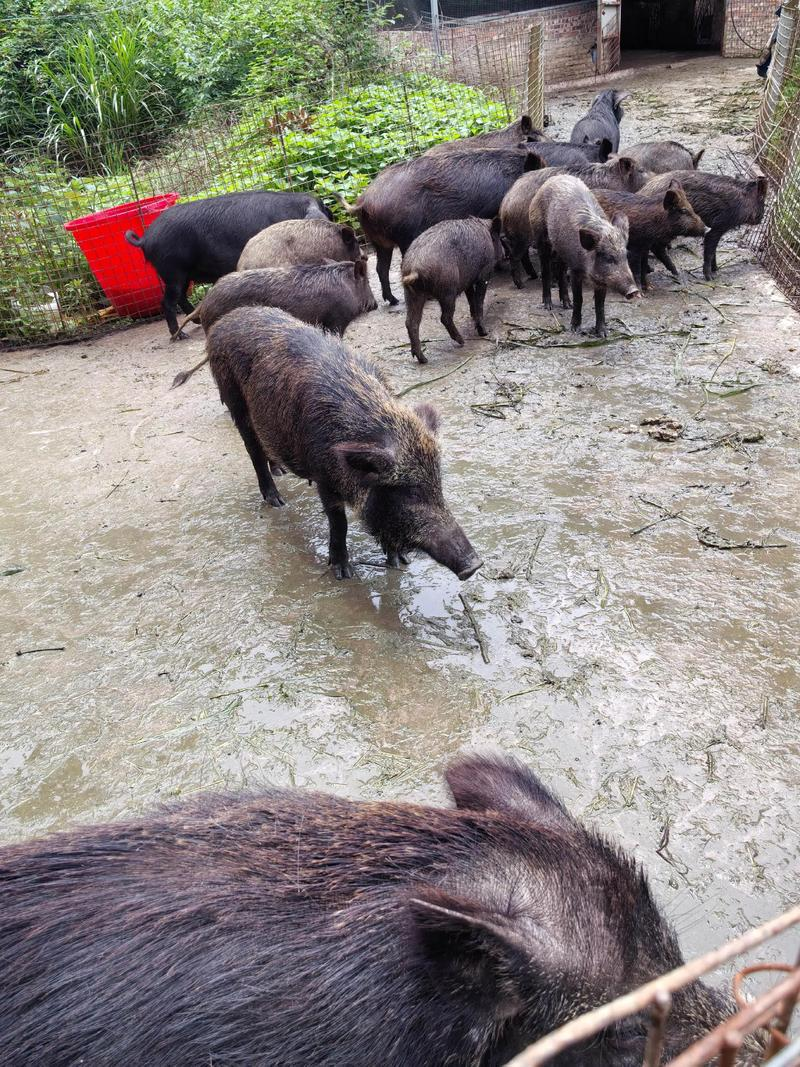
Wild boar houses are best chosen in higher ground areas to facilitate drainage. They can also be farmed when their old house is tallened and modified. The new boar coop is typically made up of an inner room and a playground, requiring cement to be laid, light and ventilation. The inner room is for boars to sleep, eat, about 3 metres long, about 2. 5 metres wide, cooped up with sheds to build a general pighouse style, with an height of 1 to 2 automatic drinking water units for pigs and big pigs to drink and to build roofs. The stadium is free of roofs, which provide boars with defecation, exercise and tan, and is approximately 3 metres long and 2. 5 metres wide, with a drain of dung attached to the wall, covered with concrete and built at an altitude of 1. 7 to 1. 8 metres. The boar coop's house should be equipped with an additional room in the inner room for the heating of pigs. A 1-metre wide passage is left between the inner room and the stadium in order to facilitate the free access of the boars, and the gates generally remain in front of the inner room。
Scientific selection
Special boars, depending on the mix, contain 100 per cent, 75 per cent, 50 per cent, and 25 per cent of the pure boars of various degrees of purity. Depending on the level of breeding and market feedback, 75 per cent of the special boars of purity should be preferred. If they have a higher degree of purity, they are produced very slowly, have fewer children and are hard to raise, while special boars, such as 50 per cent, 25 per cent of which are less pure, are external, resistant to disease, coarse feed, thinness, nutrients, etc., are not much different from domestic pigs and have no value. At the same time, because of the variety of hybrids and the choice of breeding methods, the resistance to disease and the number of children born to 75 per cent of the special wild boars are very different. The average number of children born to special boars is 6-8, while the number of children born to special wild boars of high-yielding families is 12-14, up to 17, 2. 5 times higher than the average boar. Also raising boars may be several times less effective. Farmers must be careful about the selection of seeds and be particularly alert to the ills of many outlaws。
Iii. Production technology
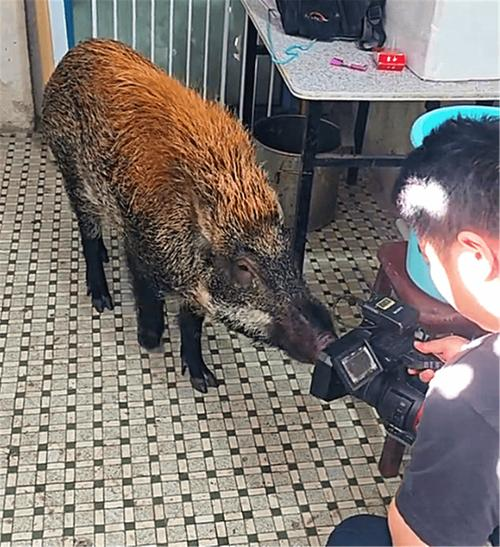
Wild boars are suitable for breeding at the age of 5 to 6 months and weigh 40 to 60 kg. The principle of early and late motherhood is generally applied when a female has an emergency. When the wild boars have an affair, the external genitals are clearly red and the external genitals are turned from red to dark purple, from swelling to wrinkled, or they hold their hips with their hands, and they stand still for the best time for breeding. It takes about 10 to 20 minutes for male and female wild boars to plant. Based on the experience of breeding, it is advisable to combine, i. E. Repeat the mating after an interval of 6-8 hours. This will result in a significant increase in the fertility rate of pigs. When seeding takes place, it tends to be done more in the form of driving boars into public boar houses, which makes it easier for boars to grow faster and more successful because they are not familiar with the new environment. Once the mating has been confirmed, the female boar is driven back to her pighouse. After 20 days, it is observed that the female boars are still in heat and that the normal boars have a frequency of 16-18 days, which, if not, proves that the boars are mating successfully。
Specialized wild boars tend to eat less than two to three times a day, and are fed to the best foods, and to the best foods, all kinds of weeds, leaves, plant roots, crop straws, etc. Can be used as feed for boars. Wild boars, in particular, enjoy green and green feed, such as red potato vines, green corn, potatoes, leaves and their own pastures, which can account for more than 50 per cent of the daily food, and can produce strong boars with a small amount of refined feed. Predium feed is typically composed of energy feed and bean cakes, such as corn, sorghum, barley, rice, sweet potatoes, grain seeds, peanut cakes, cotton seed bread, bone powder, fish powder, and some nutrient supplements such as vitamins, amino acids, minerals and micronutrients。
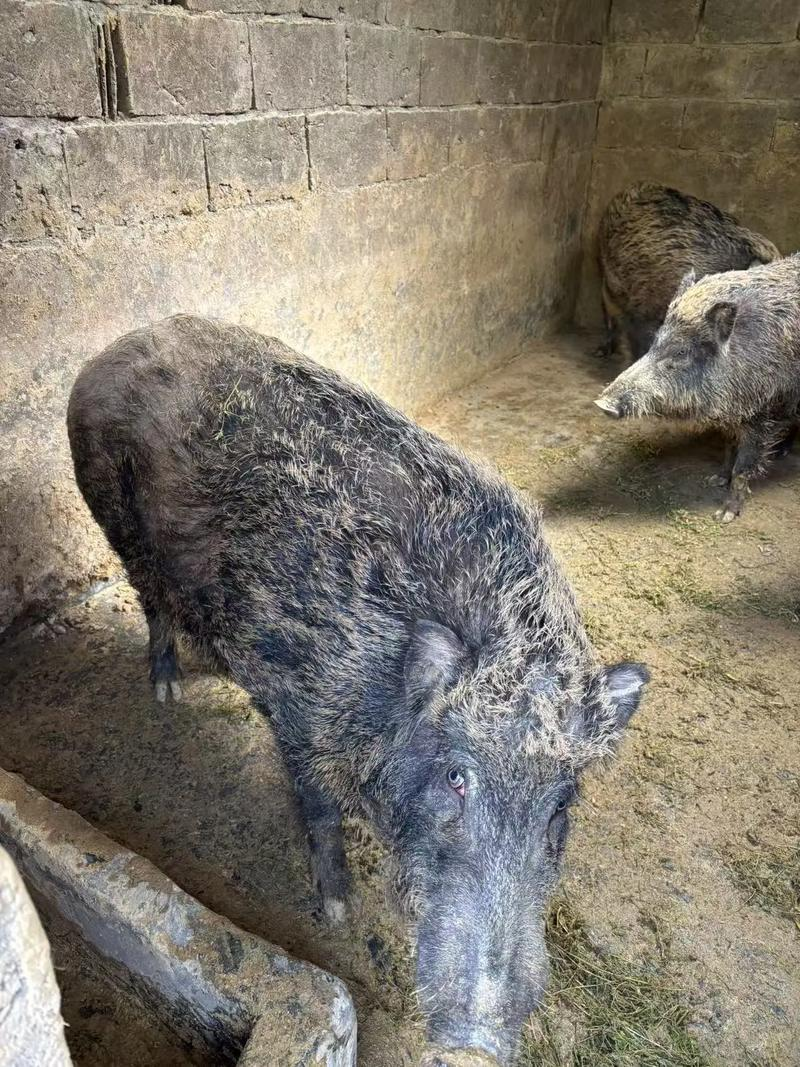
A reference feed formulation for big and medium boars: 41 per cent corn powder, 15 per cent beryllium skin, 10 per cent peanut beryllium powder, 3 per cent fish powder, 15 per cent cormorant, 2 per cent shell powder, 1 per cent growth promotion agent, 0. 5 per cent trace element, 0. 5 per cent salt, 12 per cent soybeans and 20 μg。
Studying