In july of this year, the “sweet cane” practical team of the university college of agriculture and forestry fujian (the first branch of the national centre for research on sugar cane engineering and technology) reached the southern sugar cane community. From a research and development base for detoxification seedlings to 10,000 acres of demonstration cane fields, from co-villages on both sides of the coast to modern industrial parks, the team members explored the innovative path of “sweet business” to a sugar cane connection。
When it comes to xiamen and onda yomura, the first reaction is “gang cane”. In tanyangmura, the practical team met with the legendary secretary, who introduced the team to the “high-quality sugar cane that has been grown by the villagers of tanyangmura since a hundred years ago, with fertile soil and abundant groundwater, as a “one village product”. But they are not satisfied with farming, and they explore the path to integrated development of the agro-engineering industry — inviting taiwan village resuscitators, students of the academy of fine arts, etc., to work together to create the image of “gang cane” and extract the sugar cane spirit, which is “sweetly and sweet inside.”。
Under the leadership of the secretary-general, the practical team walked into the cane fields to learn more about local sugar cane varieties and techniques, as well as problems encountered. In the course of the study, practitioners also identified a number of problems, such as “the emergence of a unique geographical and cultural brand of sugar cane in the field, but there is still a greater blindness in the current management of cultivation, so that in the future it will be possible to further upgrade the sugar cane in the field with a view to providing new dynamics for rural revitalization”, according to wang quanda, a teacher at fujian university of agriculture and forestry, the national centre for engineering technology in sugar cane。
In the course of the visit, the practitioners also learned that tanyangmura and yoyomura in yunin county, taiwan, share not only the same name but also common customs. On the eve of the evening, yoyomura, together, cut down sugar cane offerings, and relatives on both sides of the strait shared their affections by video link. “a sugar cane connects the common living practices of people on both sides of the straits, and symbolizes the common quest of people on both sides for a sweet life.” the practicalist, li gin, lamented。
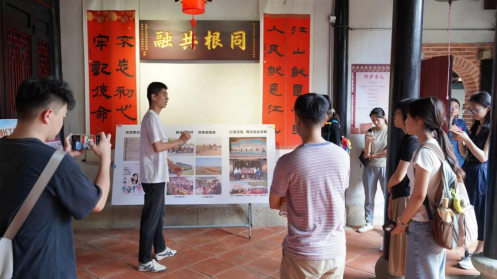
The village executives told the practitioners about yokomura and taiwan's sugar cane love
As the most important sugar cane production base in fukushima, the cane and sugar industries on both sides of the straits are important links. After zheng successfully recovered taiwan at the beginning of mingming, sent people to fujian to study sugar technology, and after the reunification of hongxi taiwan, fujian emigrated heavily to farm taiwan, bringing with it the traditional experience of sugar cane cultivation in fujian, until after the 1980s when the university of agriculture in fujian led the introduction and selection of the “new taiwan sugar” series, which had accounted for 85 per cent of the country's sugar cane cultivation for 15 years, and promoted the country's fourth improvement and replacement of sugar cane varieties。
One sugar cane bears witness to exchanges and exchanges between the two sides. The practitioners listened to a presentation by lee peace research associate at the subtropic institute of the agricultural institute of fujian province, and walked into the sterile workshop of the starkian industries company in kanzhou. Scrutinizing, 0. 2 mm of symbiotic tissues with foliage — this “cell surgery” is the starting point for the birth of seedlings from sugar cane detoxification. “traditional seedlings have a rate of over 30 per cent, while detoxification techniques keep them below 5 per cent.” general manager chen longhua pointed to smart group training workshops: high-pressure fungicide pots built on sterile lines, tidal irrigation systems supplied water on demand, led spectra precision regulated seedling growth. On the central control screen, thousands of cultured seedlings beat in real time. Today, with the help of technology, the state has become an important production base for the country's sugar cane detoxification seedlings, from which a batch of sugar cane seedlings have moved to the whole country, spreading the sweet genes around the world。
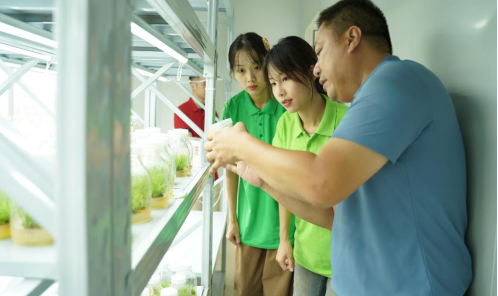
Mr. Lee, tell the practitioners how sugar cane cane detoxifiers grow
Three thousand acres of green cane fields in the modern industrial park of youngchun, and the old farmer's forest opened up a bar of detoxin cane: “the sugar is two degrees higher! The sugar was sold before, and now the cooperative collects an extra $5,000 per acre.” he pointed to a group of college students who were live by the field: "the son went home to open a sugar cane tea shop and tourists were buying it!"
The general manager, suven feng, calculates the “integrated account”: “cane rice rouse” is a disease that breaks the acre yield by 8,000 dollars; “the field + view + brigade” has generated a premium — research and study on the wetland of peach creek, allowing the acre production to leap from 4,000 to 12,000 yuan; and deep-processed products, such as sugar cane juice and green dishes, have tripled their profits. "a sugar cane's `drying', growing in the country's economy."
As a well-known diaspora, young-chun has over 1. 5 million expatriates. “a hundred years ago, chinese nationals returned from areas such as the philippines to grow sugar cane to become rich in poverty, and now, under the leadership of our national centre for research in sugar cane engineering and technology, we are once again on the fast-track of technology and moving towards a sweeter life”. The team was briefed by soven feng, general manager of the national agricultural model park of youngchun。
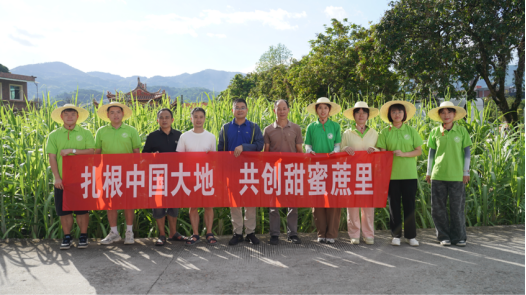
The practicals are studying at the national modern industrial park in youngchun county
Five days of travel, eight industrial bases in three municipalities — a “sweet trip” — allowed young students to touch the pulse of rural renewal. In yongchun county, the hand of a sugar cane farmer laughs: "the detoxification seedlings cost an extra $5,000 per acre, and the son is back home to open a sugar cane tea shop!" the “one cane together” wall, painted by young people on both sides of the straits, was painted at the tanyang village cultural park. Outside the window, the cane sea is pouring into the antenna. The green which spreads is the nihil of the ancient estates, and the sweet poetry written by youth and the country. Li jin wei, yang zhisheng, chen jianxing, wen, both like guo lu xin, monsu