Since the third quarter of this year, the price of our raw pigs has fallen significantly. Starting in october, the price of our raw pigs began to fall, and the price of pigs rose gradually in november, which is good news for a large number of pig farms. According to the information received, the recent recovery in pork prices was due mainly to consumption pull and the basic aspect of relatively relaxed market supply has not changed. What deployments have been made by the state to stabilize the production order of the pig in the face of price fluctuations? How can farmers benefit from efficiency gains and losses
Farm (household) losses were mitigated
It should be arranged in order to produce pigs
As a result of concerted efforts, the production of raw pigs has fully recovered by the second quarter of this year, and the average price of the country's out-posted pigs has declined from june to september this year to below the cost line. Four quarters of the season have entered the pork-consumption season, and market prices have recovered. In october, the average losses were 349 and 335 yuan, respectively, in the case of unbundled and large-scale pigs, which was 42. 2 per cent and 49. 8 per cent less than in the case of the september rings, and the losses were mitigated。
According to ministry of agriculture and rural affairs monitoring, in the fourth week of november, the national average price of live pigs was $18. 21 per kg, an increase of 2. 2 per cent over the previous week and a decrease of 38. 4 per cent compared to the same period last year. The national average price of pork was $28. 62 per kg, an increase of 1. 9 per cent over the previous week and a decrease of 37. 6 per cent. The national average price of pigs is 27. 58 yuan/kg, an increase of 2. 6 per cent over the previous week and a decrease of 66. 3 per cent over the same period. In november, the national average price for live pigs was already above the cost line of about $16, and some farmers have come out of their losses and become profitable。

“the increase in the price of this round of pigs is a restorative increase, mainly due to the surge in demand for pork consumption at the end of the year, which is at a more reasonable level in terms of current absolute prices.” the deputy director of the livestock and veterinary department of the ministry of agriculture and rural development, xin guchuchang, explained that the basic aspect of the market supply had not changed, with the number of pigs born in june and july having increased by 39 per cent and 33 per cent, respectively, and the timing of the entry of pigs born in those two months corresponded to the following new year's and spring festivals, with two sections of the pork supply being guaranteed。
At the farm level, according to the ministry of agriculture and rural development, the number of new pigs and pigs per month has increased steadily since march. These pigs will be on the market after six months, and it is expected that the number of fat pigs on the market will increase significantly from the fourth quarter of this year to the first quarter of next year, and that the relative oversupply of raw pigs will continue for some time. In october, the capacity of the whole country to keep pigs is still 6 per cent higher than normal holdings and is not expected to be adjusted to a reasonable level until early next year。
It is understood that, in order to prevent a major drop in pig production, starting in june, the ministry of agriculture and rural development has been issuing intensive warning messages on the growth of excess pig production, directing farms (houses) to accelerate the phase-out of low-yielding pigs and organizing the production of pigs. In august, the ministry of agriculture and rural affairs, the national development reform commission, the ministry of finance, the ministry of the environment, the ministry of commerce and the superintendent of silver insurance issued the opinions on promoting the sustainable and healthy development of the fertilizer industry, in an effort to stabilize the production order. Since then, policies have been put in place in hebei, liaoning, shandong, henan, hubei and yunnan provinces, which have made a strong contribution to the stable and healthy development of the pig production industry through hard-on-the-studies in the areas of credit, insurance, farm land, environmental protection, slaughter processing, pork stock regulation and management of the production capacity of mother pigs。

In september, the ministry of agriculture and rural development issued the implementation programme for the management of productive fertilizers (temporary) to strengthen monitoring and early warning, to regulate the production capacity of large-scale pig production, to function as a guarantor of policy regulation, to secure basic production capacity and to prevent large fluctuations in pig production. According to monitoring by the ministry of agriculture and rural development, at the end of october 2021, there were 4,348,000 corks, equivalent to 106 per cent of normal holdings, in yellow areas. As a next step, the ministry of agriculture and rural development will keep a close eye on changes in the stock holdings of the fertile pigs in all parts of the country, in accordance with the requirements of the programme for the regulation of the production of raw pigs, issue timely early warning, implement hierarchical control responsibilities and link up and down to stabilize the production of the raw pigs. Local policies such as land use, environmental protection, credit and insurance are to be sustained and stable, in particular to prevent loans from being drawn up and cancelled, and to assist farmers who are experiencing serious difficulties in running farms。
Chen guanghua, deputy director of the livestock and veterinary department of the ministry of agriculture and rural development, recommended that a large number of farms (households) should organize the production of pigs in an orderly manner, so that the current upturn in the price of pigs would not lead to blind pressure on the market, let alone rush to expand capacity and avoid greater losses in the later stages。
Face the balance of gains and losses
Efficiency gains should focus on improving the health of pigs degrees
Although the price of pigs has recently recovered, pig farms (households) still face a tight balance of earnings and losses over the coming period. Small and medium-sized farms (households) need to take measures to ensure that they operate properly and are profitable compared to large-scale pig farming enterprises, which are more stable in terms of costs, management and marketing。
In the view of pang yu, the head of the round pig farm in the tsang yu district of the capital city of shandong province, the efficiency of production can only be guaranteed. “in the period when the price of the pig went down significantly, we organized the herd and eliminated the low-yielding sows and stopped the damage. In the first place, the pig farm had eliminated 80 " foodless " pigs, not the number of them, but the quality. At the same time, preventive measures should be strengthened so that pigs are less ill and less dead, and their health can be assured in order to reduce costs.” pang yu jing told journalists that, with the recovery in the price of raw pigs in november, the twig field is now well balanced and gradually beginning to profit。
“as a result of long-term practice, i believe that the health of pigs is critical to the reduction of the efficiency gains, and that small and medium-sized pig farms should maximize their health.” wan hee-kyung, associate professor at the chinese university of agriculture and chairman of the board of directors of piggy farming co. Ltd., beijing。
In times of low pig prices, further improvements in the production performance of pigs are needed to keep them low and low. Production performance in pig farms is measured mainly by three important indicators, namely, sow psy, feed utilization and weight increase, all of which are closely related to the health of the herd。
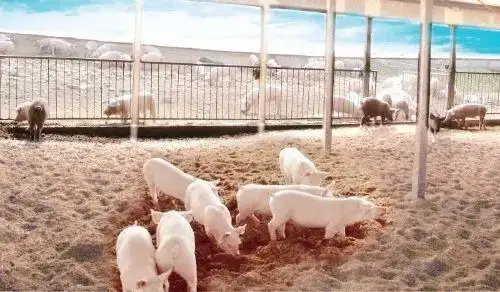
The hogs from the qinquan bay pighouse are moving on the mats of the pighouse
Huan-hee gave journalists an example: a pig lying on his stomach when she was lying down, and if the lawn was damp and cold, she would get cold, which would give rise to physical and psychological stresses such as digestive disorders, anxiety, etc., and affect the production level of the pig. At this point, only a layer of dry grass is needed on the ground, and the health of the herd has increased and production levels have increased。
So how do we improve the health of the pigs
Man-hee explained that the well-being of pigs is the basis for small- and medium-scale farming of their own kind, and that it is necessary to build a highly reproductive herd with a reasonable age structure. Productive capacity can only be achieved in a favourable environment, taking into account a variety of factors, including temperature, humidity, light, noise, breeding density and the number of pathogens。
Specifically, it is necessary to give pigs more room for movement, to keep the circle dry, to improve water leakage through leak-proof water-saving devices, to improve the abdominal temperature of pigs through gaskets, to ensure rational ventilation and to improve the air quality of the coil. In the area of disinfection, it would be preferable to have a full load of pigs in and out, so that the risk of disease can be minimized by sterilizing with fire temperatures behind empty bars。
If there is no way to improve the health of the pigs, then a quantitative assessment of the health of the pigs can be made by a professional body and the actual health of the pigs can be clarified before targeted improvements are made. For example, the blood and saliva of pigs are tested to understand the nutritional, metabolic, immunosuppression levels of pigs. At the same time, production and growth performance are monitored, and the sow psy seeks to be greater than 20, with a mass weight of less than 3. 3. 3. 3 :1 and a total of 120 kg rearing days less than 180 days。
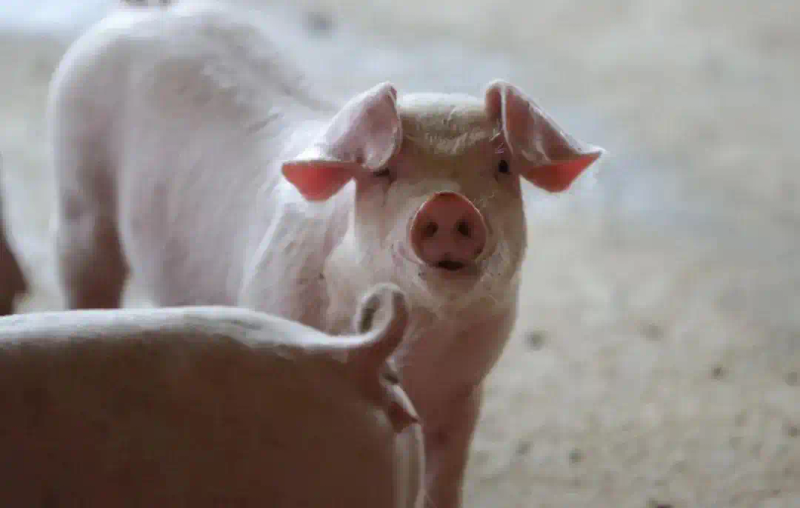
The performance of the quan bay pig farm has been improved effectively by maximizing the health of the herd in all areas. The average annual productivity of pigs in domestic pig farms is about 18, and in spring bay, 22. 8; feed utilization and weight increase are also about 10 per cent higher than in the general pig farm. According to man-hee, while increasing the health of the pig herd would be more expensive in terms of facilities and manpower, its continued health and high productivity would increase its return on investment by more than 15 per cent compared to the average pig farm, which is currently generally profitable in 2021。
In addition, efficiency gains in small- and medium-scale pigworks can focus on savings in spending that could be converted into savings, such as fodder, veterinary drugs, water and electricity, so that feed costs can be as high as possible; lower the hidden costs of pig herd stress, wear and tear, and frequent replacement of people; increase revenue pathways through the production of organic fertilizers, brand meat, etc.; and reduce labour costs by acquiring smart and automated equipment and rational use of alternative materials, such as impurities。