In cold winters, people always want to warm themselves with their mouths. The market price of lamb has increased for nine weeks in a booming season, compounded by increased consumer demand for domestic meat and fresh meat, and the tight supply and demand of sheep due to strong demand for industrial development。
According to the sheep branch of the chinese livestock association, the price of lamb is expected to experience a small reversal after the spring festival. Our sheep are now undergoing a transition to scale, new production will significantly improve the domestic supply of lamb after two to three years, and future domestic markets for sheep will continue to dominate domestic ownership。
The national average price of lamb increased by nine weeks
Since winter, the price of lamb has continued to climb, entering december, and in many areas the price per pound of lamb has turned to the “4” word. From 27 to 29 december, journalists from the new kyoto newspaper visited a number of supermarkets and lamb stalls in beijing, noting that the price of common lamb meat was more than 42 yuan/cm-44 yuan/cm, while the price of fine meat from brands such as ramadan was close to 66 yuan/cm。
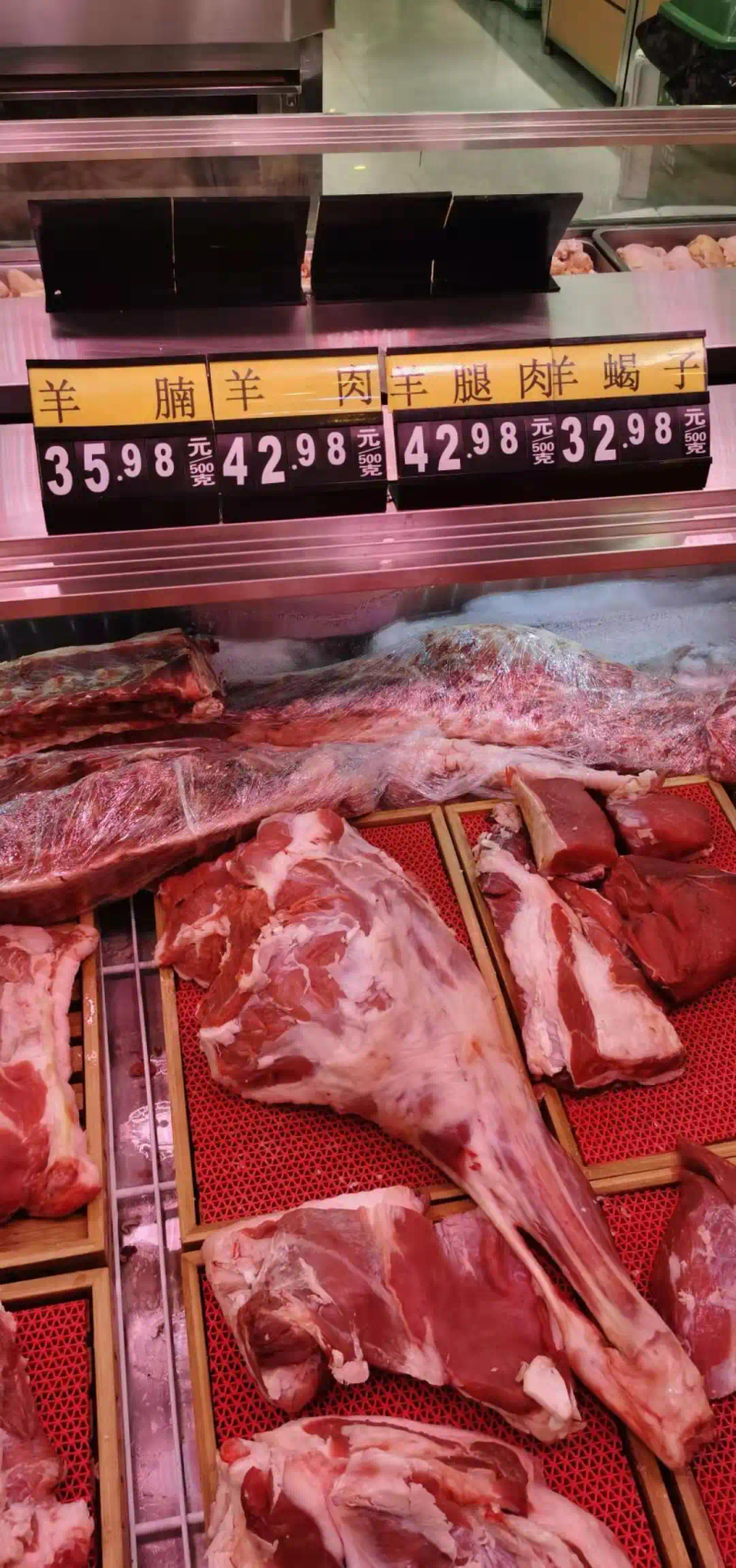
He's at a young-hui supermarket in beijing. Mr. Zhao, a customer of soup, said to the reporter of the new kyoto newspaper, “it's been over 40 cents a pound for more than a month without buying lamb, and it's going up a lot”. “this month's lamb prices have increased considerably, and it was possible to increase by 5 centimetres a day during the previous few weeks, and it is estimated that they will not fall before the spring festival”, said a lamb vendor at the new loongar shop
For almost 30 years, mawei, a market-based merchant, has been involved in the wholesale distribution of lamb, and he told the news reporter that the wholesale price of fresh meat, such as beijing leg meat, is currently over $80/kg, an increase of about $10 from last month, “almost the highest in recent years”. Although winter is a good season for the consumption of lamb, mavey's sales are at this stage smaller than in previous years owing to high prices。
On 29 december, the ministry of agriculture and rural affairs released targeted monitoring data on market and collection points in 500 counties throughout the country during the fourth week of december. In conjunction with the news reporter statistics of the new kyoto newspaper, the national average price of lamb has increased from nine weeks to $83. 93 per kg in the fourth week of october, 3. 25 per cent more than the price in the third week of october, 4. 6 per cent more than the previous week。
At the same time, during week 51 of 2020 (18-25 december), wholesale prices for lamb have increased by 6 weeks to $73. 51 per kilogram, an increase of about 6. 85 per cent over week 45, or 8. 1 per cent。
As to when the price of lamb could be retrenched, the president of the sheep branch of the chinese livestock association, du lixin, analysed the news reporter of the new kyoto newspaper and, according to traditional market patterns, there would be a slight reversal of the price of lamb after the festival. In the long run, the markets for lamb and live sheep will continue to operate at high levels over the next two to three years。
Our sheep industry is moving towards scale
Why does the price of lamb continue to rise? Du lixin stated that the increase in the price of lamb was largely influenced by multiple factors. First, winter is a boom in traditional meat consumption and pre-winter price fluctuations are normal. At the same time, the pull of the consumer market is one of the reasons, especially since this year's epidemic has led to a slowdown in imports of lamb, and consumers are more interested in the domestic production of lamb。
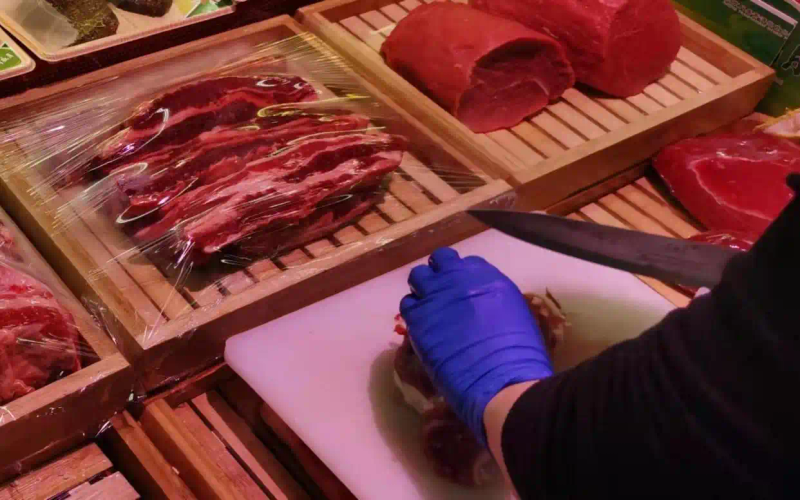
Maverick is aware of changes in domestic demand for meat. He indicated that many customers had previously chosen to import frozen meat elsewhere, but that the increase in cold chain controls had resulted in a marked increase in the number of people buying fresh meat. According to the news reporter shinjing, a large number of small-scale food chains are in emergency supply and are constantly seeking domestic meat suppliers。
Rising demand can offer more opportunities for home-grown lamb, but also more challenges to supply capacity. According to douri, another reason for the increase in prices in the markets for live sheep and lamb is the fact that, over the past three to five years, the pace of the transformation of the source ends of our sheep industry has accelerated, the construction of new large-scale sheep farms has led to strong demand for sheep and increased demand for and demand for sheep。
According to douri's new understanding, the stock of domestic sheep has been growing. In the past, sheep farming in our country was dominated by small and medium-sized enterprises, and in recent years the number of small and medium-sized enterprises has gradually increased, with capital attention. After 2015, sheep-scaled breeding of sheep and sheep-based species was gradually taking place, but the number of enterprises remained low for the whole industry。
According to the specialized edition of skywatch, there are currently over 360,000 sheep farming and sheep breeding-related enterprises in the country, with gansu being the largest, followed by hebei, shanxi, inner mongolia and henan. Of these, enterprises with registered capital of less than $1 million accounted for about 40 per cent, with only 3. 63 per cent over $10 million. Since the beginning of 2020, more than 57,000 sheep farming and sheep breeding-related enterprises have been established, up from 41,000 in 2019. In 2020, 12. 32 per cent of new enterprises had a registered capital of less than 1 million yuan, 18. 62 per cent had a registered capital of between 1 million and 5 million yuan, and 6. 41 per cent had a registered capital of over 5 million yuan。
According to douri, while the number of scalding enterprises is growing, most of them have just joined and are still at the stage of expansion and pre-development, without releasing capacity in the end markets. It is expected that after two to three years, the new production capacity generated by these enterprises will result in a significant improvement in domestic meat supplies。
As a small-scale enterprise with 100,000 lake sheep reserves, the dry-storage industry has indicated to the new kyoto press that the development of the sheep industry has yet to be explored and that it will take time. “a sheep and pigs are different, with only about two children, so scale production does not immediately lead to a significant increase in production.” in addition, there may be different developments if the farms in which the sheep industry is located have more policy support than the pastoral areas。
In the eyes of dulli, our sheep industry has great potential for development, the domestic-scale stockbreeding model is not available in most livestock-raising countries around the world, and the main future supply of domestic sheep markets remains domestic ownership. But opportunities and challenges go hand in hand, and there are still some issues to be addressed in the development of our sheep industry. For example, in the area of breeding of varieties, greater research and efforts should be made to produce new varieties and varieties suitable for the country's industrial development in a relatively short period of time; in the area of business models, efforts should be made to promote the development of family pastures, cooperatives and corporate-farmer models, to increase the proportion of industrial modernization and to accelerate the transformation of the way in which meat is produced。
In the processing of lamb meat, rational control of the processing capacity for slaughtering, development of research and development of deep-processed and ready-to-eat products, and new demand for lamb products from consumer groups are to be met; in the quality of the product, the construction of traceability systems is to be accelerated and quality safety levels are to be improved; and in brand-making, the branding is to be expanded to include branding of high-quality and high-quality lamb in the market, ensuring that consumers can eat the real national quality of lamb。
A reporter from the new kyoto newspaper, wang si jin
Editor lee yan, proofreading yang shelley