The lamb has traditionally been an important food item for winter supplements, as the saying goes: “the winter meat racers take part”。
With the onset of winter, the market demand for lamb has increased and the price of lamb has been rising. According to the data, wholesale prices for lamb have already gone past the $80 mark and increased for nine weeks。
We're back
It's worth a lot of meat
In recent days, the tides that have swept across the country have given a full sense of the power of winter. It's cold, it's cold, it's cold, it's cold, it's cold。
As temperatures continue to decline, lambs begin to enter the consumption season and prices continue to rise。
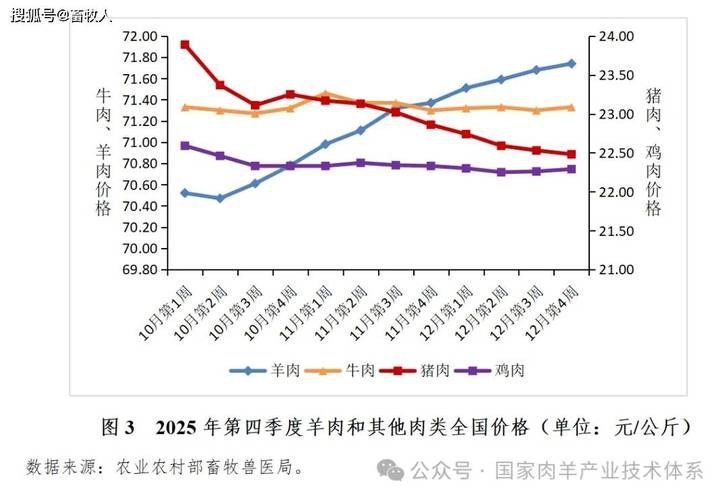
According to site monitoring by the ministry of agriculture and rural affairs of market and collection points in 500 counties throughout the country, the average national price of lamb in the fourth week of december 2020 was $83. 93 per kilogram, an increase of 0. 8 per cent over the previous week and 4. 6 per cent over the same period. This has been the ninth week in a row。
As a matter of fact, the price of lamb is already high。
Data from the ministry of agriculture and rural development show that the average national price of lamb began to rise slowly at 78. 10 yuan/kg in the 24th week of 2020 (10 june of the data collection date), and has so far accumulated an increase of 7. 5 per cent。
Wholesale price increases have also led to retail terminal price hikes。
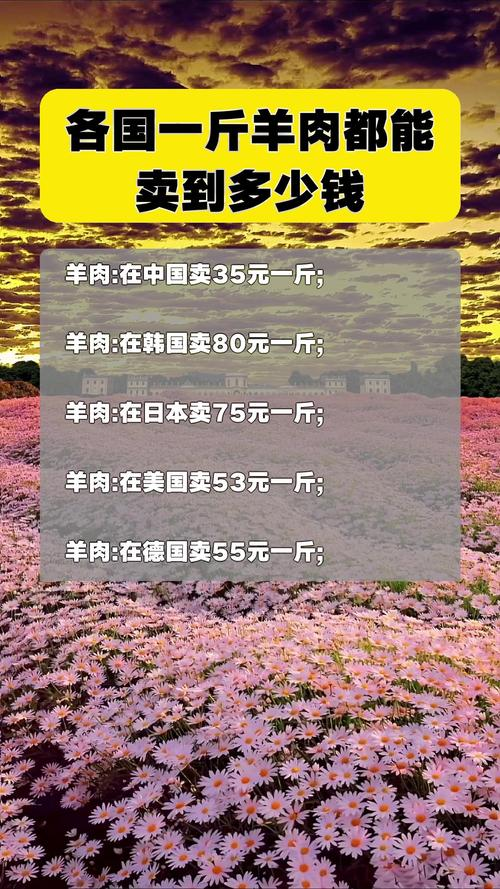
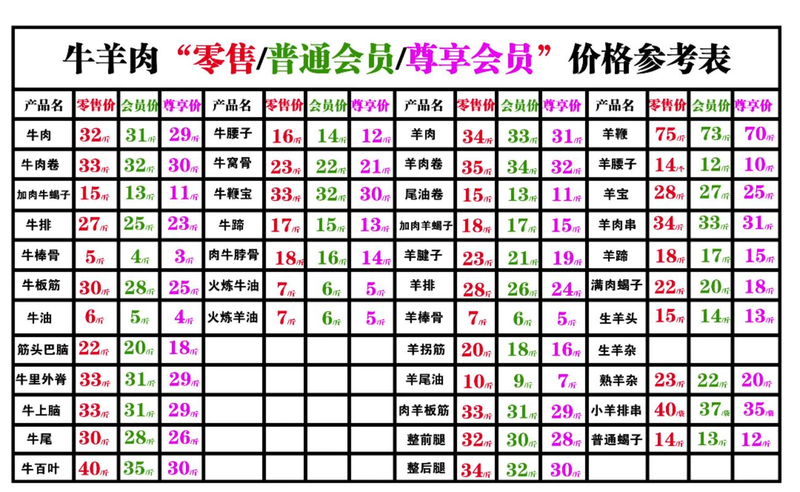
At the lamb sales counter at a large fresh market in beijing, the sellers indicated that the price of lamb leg meat was 60 pounds, while the price of lamb meat slices was 55 pounds, while the price of saloon meat rolls was close to 65 pounds. “the price of lamb in this winter is 10 to 15 per cent higher than in previous years.”
The head of a lamb slaughtering business in hebei stated that after winter, their company had increased its slaughter by 50 per cent, but still failed to meet the demand for orders。
Skycat data show that domestic lamb sales have increased significantly by 108 per cent since last year, with a significant increase in the share of meat。
Liu riedan, the new-founder of beijing, told china news weekly that winter had traditionally been a season of sheep consumption, with over 200 sheep sold a day。
In addition to high prices, there is an important phenomenon in the sheep-consumption market this winter, namely, the overwhelming dominance of domestic lamb。
The fresh purchase manager of a large supermarket chain in beijing told china newsweek that, of the lamb they had supplied at the supermarket in previous years, imported lamb in half and domestic lamb in half, but this winter was almost entirely domestic meat。
Data show that australian lamb exports declined by 24 per cent in november 2020. China is the largest export destination for australian lamb, accounting for 24 per cent of total exports。
Demand-for-supply pushes higher prices
With regard to this price increase, there is still a general perception in industry that supply and demand imbalances are responsible。
According to liu rueda, winter was already a hot season for meat consumption and demand had increased dramatically. Moreover, after last year's outbreak, imports of lamb were subject to strict controls and the volume declined significantly。
“the cost of importing lamb is about one third lower than that of domestic meat, which has a significant impact on the stability of domestic meat prices and is a lever to suppress the rise in domestic prices for fresh meat. Now that domestic sales are booming and imports are tightening, prices will naturally increase more sharply than in previous years.”
According to the national statistical office, the size of the catering market has steadily recovered in the third quarter of last year, with a marked increase in seasonal consumption of lamb as the autumn winter cools. In addition, australia and new zealand's two overseas sheep-producing areas were restricted by the outbreak, consumption grew faster than supply, and sales of lamb continued to increase in the market under tight supply patterns。
Zhang li zheng, a professor at the faculty of agriculture and rural development of the people's university of china, told china newsweek that the main reason for the increase in the price of sheep was the shortage of sheep。
On the one hand, the price of meat and sheep has been low in previous years, and many farmers have had to write on their own productive capacity, which has been reduced. On the other hand, in recent years, the impact of state policies has led to the emergence of subsistence restrictions in parts of the country and declining levels of living。
According to data from the national statistics institute, the number of sheep in the country was 1,935,000 in the first half of the year, a decrease of 4. 26 million, or 3. 2 per cent, compared with the same period of the previous year, and 1. 97 million tons of meat produced, or 50,000 tons, or 2. 5 per cent. At the end of the second quarter, there were 3. 162 million national sheep reserves, an increase of 0. 2 per cent over the same period and 3. 4 per cent over the ring。
“in addition to the effect of the rising price of pork on relocation purchases, the price of lamb has been high all the way to the ship,” zhang liang indicated。
Rising farming costs are also a factor that cannot be overlooked。
According to the analysis of the chinese news weekly, the price of maize has been rising since last year, from $2,000 to $2,800 per ton of maize and from $1050 to $1,600 per ton of grass. At the same time, the demand of the state to shift sheep from grazing to feeding increases the need for materials such as maize and increases the cost of farming. “the increase in the cost of farming is naturally reflected in the price of final consumption.”
It's not easy to lower the price of lamb
So, when will this price increase in goat meat end
Based on the sales of previous years, the prices of lamb are expected to fall after the spring festival。
However, according to zhang li, the price of lamb has not yet risen “to the top” because the underlying problems of supply and demand have not been resolved。
The same view was shared by lee, who believed that prices would rise by 5 to 8 per cent. “the shortfall in lamb is currently about 400,000 tons.”
The most immediate way to flatten the price of lamb is to increase domestic meat production. However, in zhang liang's view, increasing the production of lamb in the short term is more difficult for two main reasons。
First, since 2011, we have implemented a policy of retrofitting grassland ecology, a policy of ban on grazing and the balancing of herbs, and a ban on overloading. In agricultural areas, the size of meat and sheep farming is also difficult to expand more rapidly due to factors such as farm land, finance, rising costs and environmental protection。
In recent years, for example, syllin golle in inner mongolia, structural reforms on the supply side of animal husbandry have been deepened, with the implementation of the “sheep reduction” strategy tailored to local conditions. Statistics show that the total sheep storage column has been negative for four years in a row, reducing its pressure to 1. 1 million, a decrease of 3. 36 million compared to 2016。
The second is to raise sheep, unlike pigs, where one or three children are born, and where the effects of size are not evident. While the number of large enterprises is growing, most of them have just joined and are still at the stage of expansion and pre-development, and it will take some time before the real release of production capacity takes place。
Data from the survey show that there are currently 334,000 sheep-related enterprises in the country, with gansu and hebei ranking 333,000 and the top two provinces, respectively. By november 2020, 55,000 new entries had been registered, an increase of 66. 7 per cent over the previous year。
It is important to note, however, that the industry is still dominated by diasporas and smes. A total of 62 per cent of the total industry registered capital was less than 1 million, which further slowed down the growth of the stock。
The increase in domestic meat supply is not sufficient to meet rising consumer demand, coupled with the long life cycle of meat and lamb production and low reproduction rates, and the inability to quickly supply markets, so imports are the only means of filling the meat supply and demand gap。
However, zhang liang has indicated that less than 10 per cent of the domestic total is imported and that, in the future, our production of lamb remains dominated by the autonomous production of domestic enterprises。
Inheritance of lee indicates whether, in the past, the import of sheep, which was dominated by imports of sheep, can directly import live sheep and breed sheep to compensate for the shortfall in storage。
The recent increase in the price of lamb has been observed, with a large number of waiters preparing to start raising sheep. However, in the view of industry, the profitability of sheep depends more on the level of business management operations than on prices。
Zhang zhenggang, head of the orthodox pastoral co. Ltd. In the autonomous district of funining, stated that the entry to the board was simple but that the threshold was high. The cost of raising meat and sheep is long and costly, especially in the wake of the epidemic, and the cost of feed increases further. Reducing costs requires scaling up, but this places considerable pressure on the cash flow of enterprises。