With the development of the knowledge economy, knowledge has become one of the most important assets of enterprises. However, the value of knowledge is not naturally generated and needs to be transformed through knowledge management tools. This paper will explore how knowledge can be translated into the core competitiveness of enterprises in terms of knowledge management concepts, objectives, methodologies, etc。
I. The concept of knowledge management
Knowledge management refers to the promotion of the creation, dissemination and application of knowledge through a range of activities such as effective organization, acquisition, storage, sharing and application of knowledge, leading to enterprise innovation, growth and competitive advantage. At its core, it translates knowledge into value and enhances the performance and effectiveness of enterprises。
Ii. The purpose of knowledge management
The purpose of km is threefold:
Improving the competitiveness of enterprises
Knowledge management can help enterprises to quickly access and utilize external and internal knowledge resources and improve their innovation capacity and market responsiveness, thereby enhancing their competitiveness。
2. Reducing corporate risk
Knowledge management can help enterprises to predict and identify risks effectively, reduce losses and risks to enterprises and develop effective decision-making programmes to improve the quality and efficiency of their decision-making。
3. Improving staff performance
Knowledge management helps staff quickly acquire and apply knowledge and improves staff efficiency and performance, thereby increasing the effectiveness of the enterprise and staff satisfaction。
Iii. Methodologies for knowledge management
Knowledge management consists mainly of the following approaches:
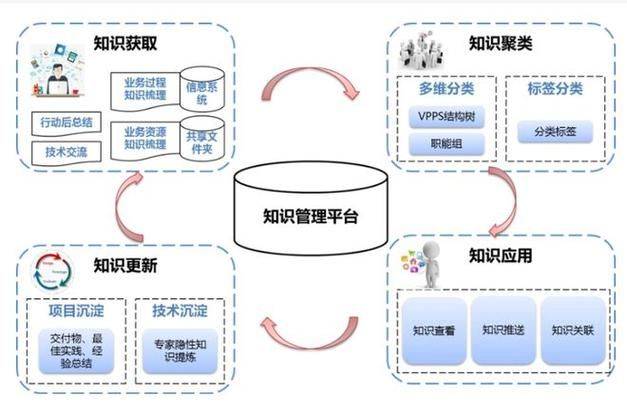
Knowledge acquisition
Knowledge acquisition refers to access to external and internal knowledge resources, such as market research, client feedback, expert advice, staff training, etc。
2. Knowledge storage
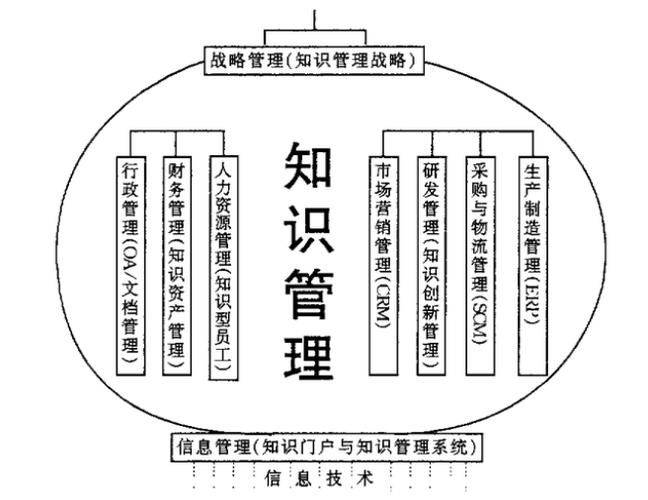
Knowledge storage refers to the sorting, sorting, archiving and protection of acquired knowledge resources, such as knowledge banks, document management systems, patent pools, etc。
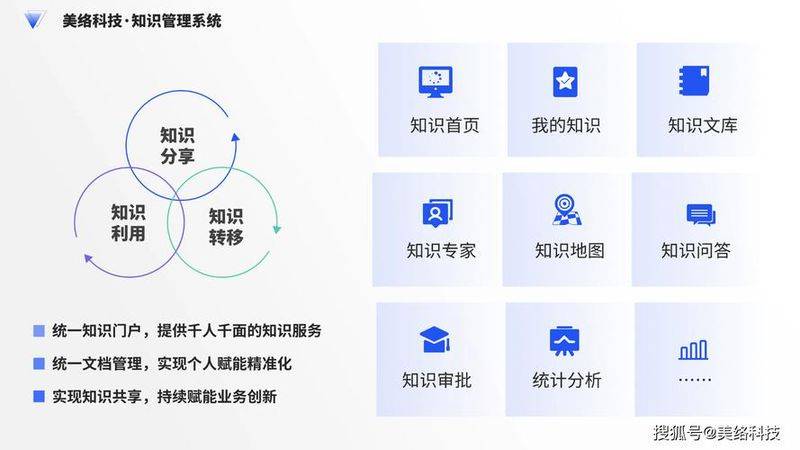
3. Knowledge sharing
Knowledge sharing refers to the sharing and dissemination of stored knowledge resources through internal and external platforms, such as team discussions, knowledge sharing, community exchanges, etc。
4. Knowledge application
Knowledge application refers to the application of shared knowledge resources to the actual business of an enterprise, such as marketing, product design, process improvement, etc., thereby creating value and efficiency。
Key success factors in knowledge management
The success of km requires several key elements:
Leadership support
Business leadership needs to focus on knowledge management, integrate it into corporate strategic planning and provide adequate resources and support。
Culture culture
Businesses need to create a culture of openness, sharing, innovation, encourage active staff participation in knowledge management activities, and raise staff knowledge and innovation awareness。
3. Technical support
Enterprises need to introduce and apply advanced information technology and knowledge management tools, such as artificial intelligence, big data, intelligent searches, etc., to improve the efficiency and accuracy of knowledge management。
Training and motivation
Enterprises need to provide relevant training and incentive mechanisms for employees, such as knowledge-sharing incentives, expert appraisals, promotion opportunities, etc., to enhance their knowledge-building and application。
Knowledge management is an important tool for enterprises to improve their core competitiveness and value creation. Through effective knowledge acquisition, storage, sharing and application, knowledge can be translated into core assets and market competitiveness of enterprises. Therefore, enterprises need to focus on knowledge management, develop sound knowledge management systems and continuously strengthen their knowledge-building and application capacities。
Askbot intelligence knowledge management profile: askbot is based on the capability of chatgpt and a vertical model developed through pb-level employee support for data training, enabling smart reading and understanding learning of enterprise documents, building smart knowledge centres for enterprises, staff searching for knowledge with smart questions and answers at all times, and using ai to activate enterprise “sleeping” knowledge. >https://www. Askbot. Cn/kms