Carbon neutrality refers to anthropogenic emissions of carbon dioxide that are artificially occurring and absorbed by natural processes. Research shows that about 40 billion tons of carbon dioxide are currently emitted globally each year, 14 per cent from land use and 86 per cent from fossil fuel use. This means that carbon neutrality requires a transformation of fossil-led energy systems and the construction of new non-carbon energy structures dominated by wind, light, water, nuclear, etc。
Carbon-neutralized and hard-pressed energy does not exclude fossil energy sources. To reduce carbon emissions from fossil energy use, scientists are exploring cleaner use technologies. At the same time, alternative fossil energy sources such as hydrogen and electricity are being studied in the areas of transport, industry and so on, supporting the reduction of carbon emissions。
Clean fossil energy use
Access to chemicals while minimizing co2 emissions
According to statistics, non-carbon energy accounts for only 15 per cent of our primary energy consumption, while the other 85 per cent is mainly coal, oil and gas. Coal accounts for nearly 60 per cent of primary energy consumption。
The share of coal in primary energy consumption in our country has continued to decline in recent years, but coal remains important in the energy structure for some time to come. In this context, there is a need to study the clean use of coal to reduce co2 emissions, and coal-chemicals are considered a path。
At this stage, there are two main uses of coal in china, namely, the use of large quantities of energy for direct combustion of electricity, and the preparation of chemicals as raw materials, including coal-chemicals. Because of the high demand for chemicals and the impossibility of relying exclusively on petrochemicals for their production, the use of coal for conversion is more realistic and reliable。
Coal is used as a feedstock for the preparation of chemicals, depending on the reaction of the carbon, hydrogen and oxygen elements. Thus, the structure of coal and the reaction process determine that its combustion must produce carbon dioxide. It has been estimated that about 3 tons of carbon dioxide is emitted from the burning of 1 ton of coal, and that coal-chemical projects tend to be water-intensive, and that the gasification, synthesis and subsequent product purification, separation, etc., are indispensable。
Is there a way to achieve coal conversion without significant co2 emissions? In this direction, scientists are exploring new chemical responses。
Letters and explanations explain that petrochemicals transform large molecules into small molecules by catalyzing, distilling, disassembly, etc., resulting in products such as olefins and aromatic hydrocarbons. This process would not require much water or excessive co2 emissions, and would allow oil molecules to “dry clean”. In terms of molecular structure, the difference between coal and oil is not significant and is mainly in the reaction process. If coal can be converted in one way or another, large molecules in coal can be “cut off” directly, like petroleum refining, and the products required can be obtained with less water and less carbon。
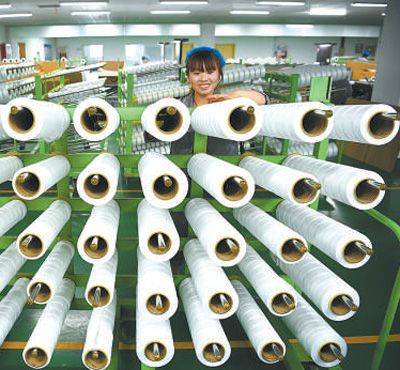
Ningxia coal co. Ltd., national energy group, 4 million tons of deep-processed aromatics from the coal oil project
Fossil energy is a valuable resource for a country, but direct combustion results in higher co2 emissions. Scientists are working to make fossil energy more used as raw materials and thus into products。
For example, “dry oil extraction” has led to the innovation of more precise oil refining methods by researchers, and some “molecule refining” technologies have greatly improved the efficiency of the use of oil resources. It was assumed that 80 per cent of future crude oil could become olefins, aromatic hydrocarbons and thus produce synthetic plastics, rubber, fibres, etc., as chemical materials for industrial production to reduce direct combustion of oil。
Promote hydrogen energy scale applications
Research on efficient, accessible and low-cost access to “green hydrogen”
The concept of “precision cutting” of coal molecules and the clean use of coal can only be achieved with the help of “green hydrogen” without advanced and efficient catalysts and without the traditional aerobic aerobic aerobics。
Hydrogen does not exist in nature and requires manual acquisition, storage, conversion and application. The term “green hydrogen” refers to the generation of electricity from renewable sources, such as wind, photovoltaic and other sources of energy, and the decomposition of hydrogen by clean electricity. This is considered to be the main way to acquire hydrogen energy in the future. However, the cost of electrolytic hydrogen is higher, with only 4 per cent of the approximately 50 million tons of hydrogen consumed annually worldwide coming from electrolytic water and not all of the electricity used from renewable sources. Most hydrogen comes from fossil energy sources, where coal is the cheapest. But coal-based hydrogen emissions are inevitable。
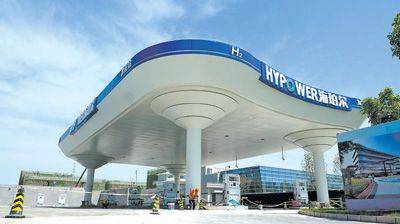
Beijing international hydrogen energy demonstration area
Researchers are developing efficient, accessible and low-cost access to “green hydrogen”. For example, the development of large-scale, low-energy and high-stable new electrolytic hydrogen technologies reduces energy consumption and costs through innovative materials and processes. Experts believe that if people had access to “green hydrogen” more economically, a better chain of hydrogen energy industries could be developed in the future, promoting the use of hydrogen in various industries and eventually even creating a new system independent of oil, gas and electricity。
The value of hydrogen goes far beyond the clean use of the powered coal. The letter and the belief that hydrogen can be used efficiently and without pollution and can be associated with a variety of energy sources can be considered key to achieving carbon neutrality and targets. Today's energy systems are fossil energy sources that generate electricity, liquid fuels and reach end-users. Hydrogen energy will be at the core of the future energy architecture with electricity to provide energy for end-users。
Hydrogen fuel cell technology is higher than internal combustion engines in energy release efficiency, and hydrogen has the potential to replace gasoline, with wide-ranging applications in the field of transport. For example, traditional steel refining methods, which provide the heat needed for the reduction of reaction, mainly through coke combustion, and produce a reduction of carbon monoxide, reducing iron ore to iron and then iron to steel, produce large amounts of carbon dioxide throughout the process; hydrogen-capable steel uses hydrogen instead of carbon monoxide as a reduction agent, which is produced by water, thus significantly reducing carbon dioxide emissions from steel refining. The “hydrocoal” is expected to lead to a green transformation of the steel industry。
Storage and transport are challenges that must be overcome if hydrogen is to be used on a large scale, in addition to the need to reduce preparation costs. In response to this pain, our scientists have explored the “liquid sunlight methanol” technology route, which combines “green hydrogen” with carbon dioxide to produce liquid methanol. Storage of renewable energy sources such as solar energy in methanol provides a new model for renewable energy storage and transport. This would not only solve the problem of hydrogen gas storage, but also moderate carbon dioxide. In addition, carbon dioxide and water derived from the decomposition of methanol after its use are the carriers of the next cycle。
Lee qian, a member of the chinese academy of sciences and minister of solar energy research at the dalian institute of chemical physics of the chinese academy of sciences, described the completion of the first global scale demonstration of solar-based “liquid sunlight methanol” synthesis technology, which is being promoted in the industrial applications of 100,000 tons。
Supporting renewable energy networking
Exploration of large, secure and stable energy storage technologies
Our solar energy resources are abundant. According to expert estimates, all rural roofs in our country are equipped with photovoltaics, with an initial estimate of 2 billion kilowatts. This means that 3 trillion kilowatt-hours of electricity can be generated a year, representing about 20 per cent of the total national electricity demand in the future。
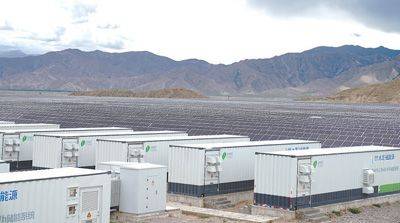
Photovoltaic + storage power station in jiangdang, japan, tibet autonomous region
To achieve carbon neutrality, new non-carbon energy structures must be constructed, dominated by wind, light, water, etc. However, renewable energy, represented by wind, light, etc., has short panels such as volatilities and intermittentity of power generation, which, if scaled up, can affect the stable functioning of the grid. To support large-scale networking, renewable energy must be combined with effective storage. As key to energy storage conversion, storage systems can improve the safety, flexibility and adaptability of multiple energy systems。
On the power side, the experts described energy storage technologies as a combination of power-fired power units to achieve modulus and to calm new energy-generation fluctuations; on the side of the grid, energy-storage technologies to support modulus of the grid and to ensure safety in the operation of the grid in the event of system failure or anomaly; and on the side of the user, energy-storage technologies to achieve the integrated supply of the user's cold, thermal electrical, etc。
There are also some deficiencies in large-scale energy storage technologies. In addition to higher costs, safety is a bottleneck for the energy industry. In response, the scientific and industrial communities are exploring high-capacity, safe and stable energy storage technologies. For example, on energy storage materials, there is a shift towards low-cost, high-energy intensity, high-cyclical stability and long-cycle storage; on energy storage devices, there is a shift away from attention to single-body equipment efficiency, cost, to high-quality supply and storage coordination to meet differential needs。
Industry experts indicated that in recent years, new types of energy storage technologies have continued to break new ground, and that some scenarios have been tried to achieve demonstration applications, including hydrogen storage technologies, electromagnetic and fly-wheel storage. There are different pathways to energy storage technologies and suitable scenarios, and further research is needed in the future to take into account the combination of technological maturity and matchability。
According to the chinese engineering academy, from carbon peaks to carbon neutrality, the developed countries generally spend 45 to 70 years, and we have only set aside 30 years, which are more difficult and challenging, but also an opportunity for development。
“`carbon-neutral' will be a major transformation of the economy and society, a major transformation across a wide range of areas, and who is ahead of technology and who will gain advantage in future international competition.” the college of middle schools has also expressed the need for our country to actively study and plan, to plan and to organize the system in order to gain industrial leadership with technological sophistication。