The construction industry in 2025 had a contradictory atmosphere. When the market for first-level builders' certificates generally shows a tendency to “supply more than demand” and the theory of a general decline in costs spreads among practitioners, the recruitment market is undergoing a different scenario. At a time when most builders are worried about the “depreciation” of their certificates, three special groups of builders have gone up in reverse and their salaries have not declined — scarce professional holders, “certificate + experience” composites, and deep farmers in regional markets。
This bipolar situation opens up a truth that is masked by aggregate data: the business shuffles are not an uneven decline, but a profound re-engineering and redistribution of values。
Rare professional holders — high value in narrow doors, protected by policy and technology river
At a time when the market for certificates in traditional professions such as buildings and municipalities is becoming increasingly competitive, several cold-minded professions have shown remarkable value resilience in silence. Market-based data for 2025 show that mining and rail works are valued at 140,000 to 150,000 yuan/year and port and shipping works at 120,000 to 140,000 yuan/year. By 2026, the first-level builder's certificate in the direction of mining had even created jobs with an annual salary of between 360,000 and 450,000 jobs on the job market, the only special requirement being the “hard end”。
Behind this phenomenon of “frequentity” is a moat of multiple barriers。
High technical barriers are the most prominent features of these professions. The construction environment for mining works is different from the normal construction site — underground operations, closed space, dust, gas, flooding, poaching — and these risks are not occasional incidents but daily challenges on mining sites. The same is true for ports and sea lanes, where deep water operations, complex hydrogeological conditions, and special construction processes form natural technological thresholds。
Barriers to access further limit supply. According to statistics, the pass rate for the civil aviation, railway, mining, port and communications professions is only 2 to 3 per cent, the lowest in the 10 major professions. This extremely low pass rate has led directly to the scarcity of the total number of holders and to a marked rigidity of supply。
Sustained stability on the demand side provides long-term support for these professions. The state's long-term strategic investment in transport-intensive countries, energy security and critical infrastructure has secured the construction needs of railways, ports and mines. The technical complexity and professionalism of these areas have forced enterprises to rely on builders with genuine professional qualifications。
It is worth noting that these professions also face the dilemma of “nearly fewer people willing to actually go down”. Many of them passed, preferring to hang on and not go off in person, resulting in a real shortage of talent available for mining projects. This imbalance in supply and demand further boosts the market value of scarce professional holders。
“certificate + experience” composite talent — field-based spring, from “paper qualification” to “process capacity” valuation migration
In august 2024, a special governance circular issued by the ministry of housing and social welfare completely changed the rules of the game. The circular on the conduct of specialized certifications for professional technicians in the field of construction and construction explicitly provides for a comprehensive check of professional technicians in conjunction with information on social security contributions, housing contributions, etc., with a focus on checking discrepancies between the registered and social security contributions and housing contributions。
The landing of this policy means that the era of “separation of witnesses” is coming to an end, and enterprises are forced to move from the “rent” model to a genuine appointment of holders. The shift in market demand, on the other hand, directly triggered an unprecedented thirst for “certificate + experience” composite talent。
The shift in capacity dimensions is reshaping the value assessment system for architects. In the past, the certificate itself could bring a premium; it was now for architects with real experience in the full management of large-scale projects, the epc project, new energy projects or new technology applications to gain market popularity。
The data show that first-level builders in municipal public works can be paid 20-35 k/month, which is more than 30 per cent higher than conventional construction. In the area of new energy engineering, there is an acute need for level-i builders (mechanical, construction) for photovoltaic, wind and storage projects, with project managers generally paid at 25-40 k/month, compared with traditional building project managers at 15-25 k/month。
The epc master contract model has become more widespread and places greater demands on the architect's “integrated management capacity”. The epc project, which has a full chain capability of “design + procurement + construction”, requires that the builder be able to balance price and contract management skills. The salaries of such personnel can exceed 30 k/month and are promoted more rapidly。
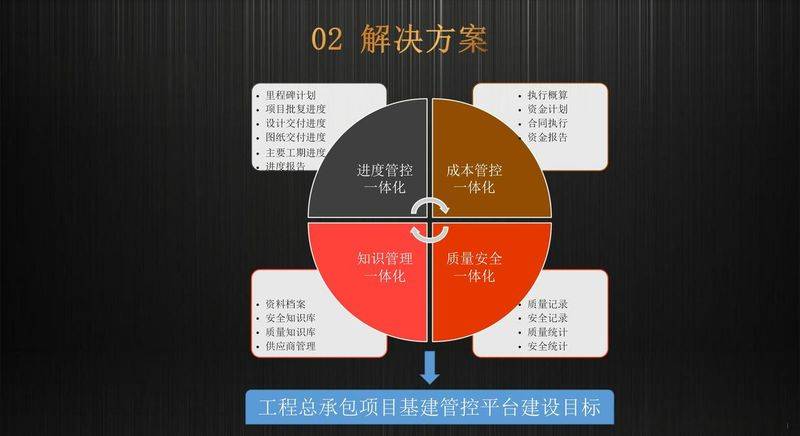
The policy's rigidity, together with the market's demand for real capacity, has contributed to a profound shift in the builder's value assessment — from mere “ownership of certificates” to “capable of translating the value of certificates into the actual control of the project”. The real-world builders who can truly “reducing efficiency gains” and “risk management” in projects have become “frequent needs” for enterprises to cope with intense competition and complex projects。
The advantages of the barriers of deep-seated farmers in the regional market, the “handwire”, and the soft power of the resource network
The regional character of the construction industry gives a third category of builders an irreplaceable competitive advantage. This type of “deep farmers in regional markets” is not a simple concept of geographical location, but rather of construction industry experts who are embedded in specific economic circles, core cities, and who integrate expertise and localized resources in depth。
The support of market data clearly demonstrates the concentration of regional markets. In the case of jiangsu, in 2025, the total value of construction in the province was rmb 3. 43 trillion, with a total value of rmb 20 years in the country's first place; the construction sector increased by rmb 943. 3 billion, or 6. 6 per cent of the province's GDP; and there were about 3 million construction workers in the province who were included in the management of real names. These data show that the construction industry in some areas has enormous market capacity, which provides vast development space for regional deep farmers。
Barriers to the territorialization of resources are a central advantage of such builders. Expertise in local building codes, approval processes, bidding practices can efficiently drive project progress; have stable local subcontractors, suppliers, design houses and government channels of communication, with a strong resource allocation capacity; and are familiar with regional engineering characteristics and technical standards, enabling construction programmes to be tailored to local conditions - – these seemingly nuanced capacities come together, creating “territorialization barriers” that cannot be quickly replicated by outsiders。
The precision of market opportunities is another advantage for regional deep farmers. Closely aligned with regional development priorities, such as urban renewal, new city construction and upgrading of transport hubs, priority is given to quality project information and opportunities. Jiangsu's "some measures to accelerate the transformation and upgrading of the construction sectors of the province" in 2026 explicitly provided for the promotion of the construction sector, the organization of outreach activities outside the province and the consolidation of the construction market outside the province. This regional development orientation has created more opportunities for local builders to cultivate。

It is noteworthy that this regional deep-drop strategy is particularly important for small and medium-sized construction enterprises. Small and medium-sized construction enterprises do not have the strength to undertake a nationalized layout, focus on a few regions, and allocate more resources than large enterprises in the target regions, but can instead create a local advantage of “more less”。
Trends and self-positioning
In the context of the widespread “inflation” of certificates, the true anchor of value has shifted quietly — from “certificate possession” to “unreplaceable professional depth”, “operational capacity to solve complex problems” and “unreplicable territorialized resources”. This tendency towards fragmentation reveals the profound changes that are taking place in the system of merit evaluation of the construction industry。
Policy rigidity, market demand saturation, personal job coordinates - these three elements together determine the true value of the present certificate. There are no absolute best options, but only decisions that are best suited to the path of individual development. The trend is clear: the value of certificates is being tied more closely to “virtual capacity”, “professional scarcity” and “policy depth”。
For licensees, repositioning needs to take place according to their own conditions: deep cultivation of scarce professions, construction of technical moats, consolidation of operational experience and capacity-building, or establishment of regional markets and establishment of resource ecological networks。
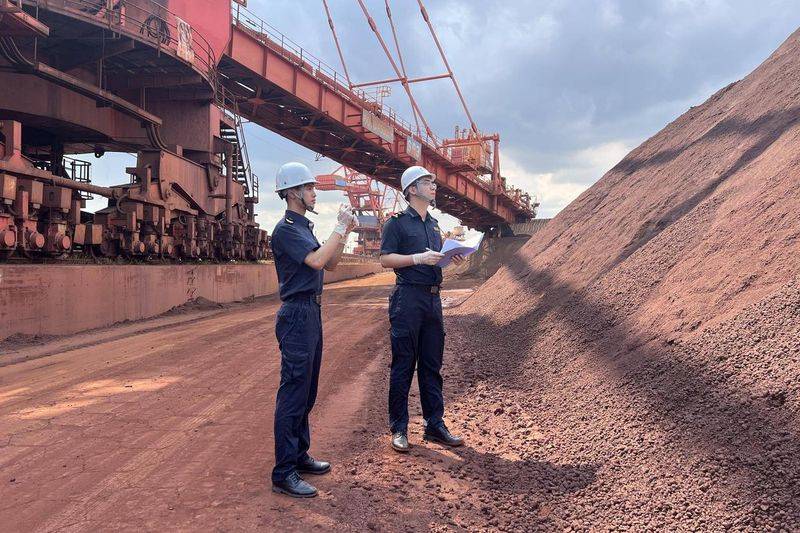
The logic of professional choice for candidates needs to be re-evaluated: traditional majors such as buildings, municipalities, and so on, although there are a large number of witnesses, are also the most competitive in the market; on the contrary, ports and professions such as shipping lanes, railway works and mining engineering, although they are difficult and have a low pass rate, but market demand is stable and supply is small。
For enterprises, the talent strategy needs to be adjusted accordingly: from simply pursuing the number of certificates to focusing on real capacity matching, from national distribution networks to regional deep cultivation and from price competition to value creation。
The restructuring of the industry continues. Do you belong to the three categories of survivors? Or, where are you working