"hey, what's going on?" in 10 seconds, the chinese response was synchronized into arabic, and the original language barriers fell off, and the tourists laughed: "it's a big deal!" this is the vivid note of the “digital policing” carried out by public security at the villa. With the increasing number of visitors to the canal area, language barriers were once “blocks” for police work abroad, and the emergence of these smart glasses made communication without borders a reality。
The ai smart glasses of public security are a “light quantitative vehicle” that combines technology and combat. The core bright spots are full: support for a two-way, real-time translation of more than 50 languages, automatic identification of languages, no cumbersome operation - – voice awakening or side touching can be activated and civilian police eyes remain focused on the scene without affecting the law enforcement and service rhythm. From visa advice in the entry and exit halls to street guidelines in the scenery area, it makes the police involved more sensitive and law enforcement more precise。
Putting down a policy with digital police ecology
It's the foundation of technology
“if you want to do good, you must first use your means.” in 2023, the ministry of public security and the ministry of science and technology jointly issued a circular for the deployment of a three-year action plan to advance science and technology. The national public security directorate's seminar further anchored its direction and made systematic deployments for the ongoing deepening of the application of artificial intelligence development and for the operational deployment of intelligent equipment。
In keeping with the spirit of the national strategy and conference, hangzhou has focused on intellectual policing as a key initiative to improve the effectiveness of urban governance and has continued to promote the integration of science and technology into public security. As an important position for police innovation in hangzhou, public security at the archipelago is closely guided by the central direction of “the scientific and technical police force, the advanced equipment,” using smart devices such as eyeglasses as a “front-line point” for the construction of digital policing, to structure the digital police ecology in a systematic way, so that the multi-scenes police technological revolution can take root on the ground of the archipelago。
To work together in a coordinated way
Exporting grass-roots police clusters
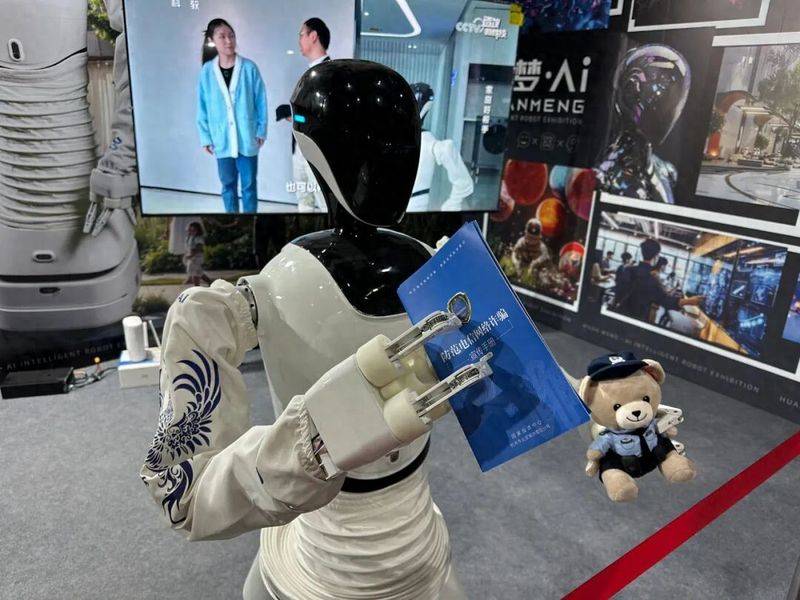
Public security at the villa did not stop at the integrator of single-point equipment, but rather built the digital police ecology with systematic thinking. From ai alerts for smart surveillance, analysis of data from intelligent platforms, to real-time movement of mobile terminals, and extension of personal service lines, scientific and technological elements are deeply integrated into the entire police landscape, such as household registration, case detection, traffic tracking and emergency services. At the beginning of march of this year, long xiao yi came online at the changqing police station, an ai vigilante based on advanced large-scale data models and algorithms, able to perform a range of functions such as legal advice, anti-fraud empowerment, mediation of conflicts, and policy advocacy, which have been praised by various media outlets。
A multi-modular early warning capability for all police personnel
Activate big data field effects
Through the removal of data barriers and the consolidation of technical resources, public security officials in the villa have transformed the top-level design of the “technologies” into visible and felt governance results: more accurate and efficient law enforcement, more accessible services and stronger security lines. With the overall goal of “wide perception, early warning forecasting, dynamic command, precision control”, the directorate is focused on opportunities for the development of mega-linguistic and multi-modular models, with continuous networking and outreach. Focus on the core elements of focus, focus areas, focus periods, innovation, using the “1+1+n” architecture, with a view to improving the capacity to monitor multimodular applications, including smart-building, the optimization of video-tool sets and visual early warning models, enabling grass-roots public security to be effective and reshaping the operational mechanisms of line teams。
Wisdom empowers grass-roots teams to achieve efficiency gains
Deep-seated first-line police resource allocation
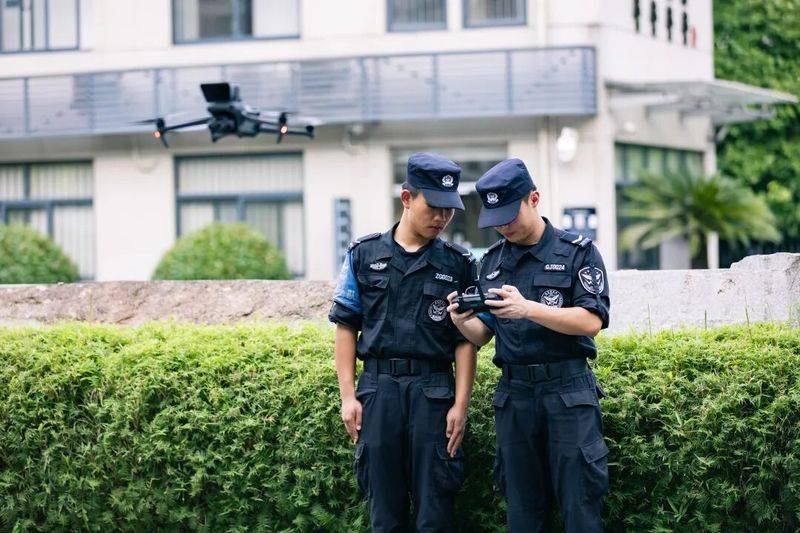
An integrated platform for the management of police missions is being explored, a fully digitized police interface mechanism is being modified, alerts are being targeted to the security forces in the immediate vicinity, and the police are being streamlined and optimized. Initiation of the application of the smart management cabinet of the law enforcement instrument, flexible binding of the law enforcement recorder, including through face recognition, automating data collection, creating a four-dimensional interface and addressing management challenges. The advanced smart equipment visualization terminal explores, real-time viewing of the state of use of the alert equipment, while automated equipment assignment alerts are conducted on a case-by-case basis, with more efficient and standardized day-to-day police equipment management and maintenance through intelligent application assistance。
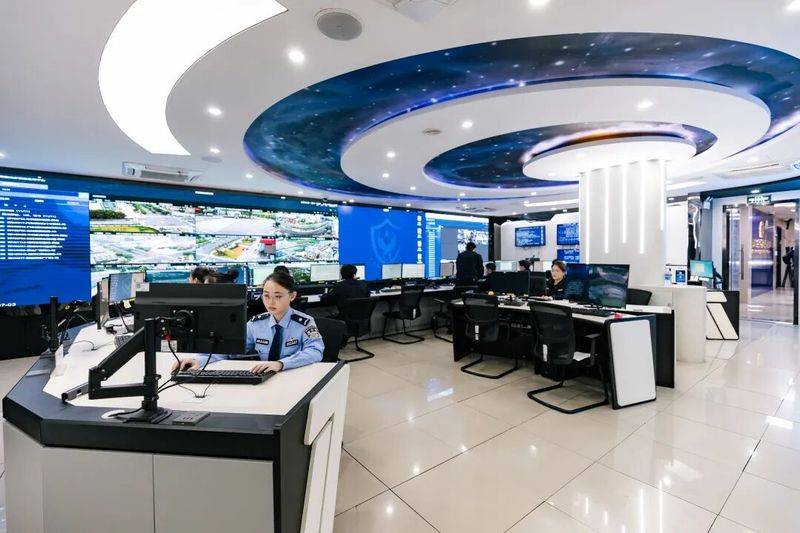
“we need to make science and technology truly the core underpinning the effectiveness of the police and the protection of the lives of the people — not only to create a science and technology-policing environment that covers multiple scenes, but also to give the public a sense of the sense of security and ease that science and technology brings, so that `technologies' are not abstract concepts, but are seen as `quicker, safer'.” according to the head of the public security department of the villa。
In the flood of scientific and technological innovation, public security at the archipelago remains firmly on track. The steadyness of new technology equipment applications has facilitated the transition of intelligent policing from empiricalism to data intellectuals and from manual teamwork to intelligence. Supported by new technology, the directorate will continue to enhance the effectiveness of the modern police system, enhance its operational capability and protect the region's high-quality economic and social development with high levels of security