Starting in 2017, the ministry of industry and communications began to require the three main operators to introduce speed-down fees, then to eliminate telephone roaming fees, traffic roaming fees, and to reduce the cost of food packages and traffic charges。
In particular, after 2019, the three major operators increased their cost reduction, reducing the cost of open-ended packages to $19, and even introducing a low-to-us$ 5 large-flow package, which doubled in the 4g set and reduced the external flow of the package to $0. 03/m。
With regard to china's movement, it has also made significant cost-cutting efforts, such as double meals for users at constant cost and doubling the flow; it has also made a huge donation of traffic to users to allow users to use broadband free of charge or at a low cost, even in the case of extra meals, a minimum of $10. 10g for mobile users。

Unsurprisingly, the three main operators have introduced speed-downs, but in the first half of 2019, according to the financial reports published by the three operators, these were speed-downs, with china’s mobile profits falling significantly, by over 14 per cent, while the profit from telecommunications connectivity increased significantly。
In the first half of 2019, it was known that the profits from connection were rmb 6. 880 billion, an increase of 16. 32 per cent over the same period, and that telecommunications accounted for rmb 13. 909 billion, an increase of 2. 5 per cent over the same period, meaning that in the first half of the year, it earned about rmb 120 million per day。
It is surprising to users that china’s profits from moving around in the first half of 2019 have increased while the profits from telecommunications are rising。
Because of the cost-cutting, users should spend less and enjoy a lot of services, and operators should have lower earnings and profits, but the reality is that there is a sharp increase in the profits of connected telecommunications and a sharp decline in movement。
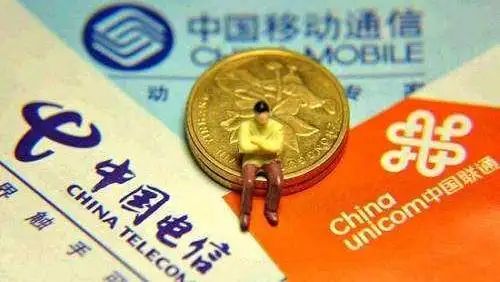
In this case, the chinese track has its reasons。
First of all, there are a lot of low-cost internet packages for telecommunications. Food
After all, users receive a monthly fee of up to $3 and daily rent flows of up to $1g and up to $2 per day, but, because of the individual cost, users consume it as a whole。
It's like qingtao, which takes only $19 a month, but users use 1g traffic every day, so it's $49 a month, plus the cost of the call, and it's $50 a month。
That is, because of the low unit price, which leads to an increase in user consumption, if the flow is still $30/g, the user will naturally not consume that much。
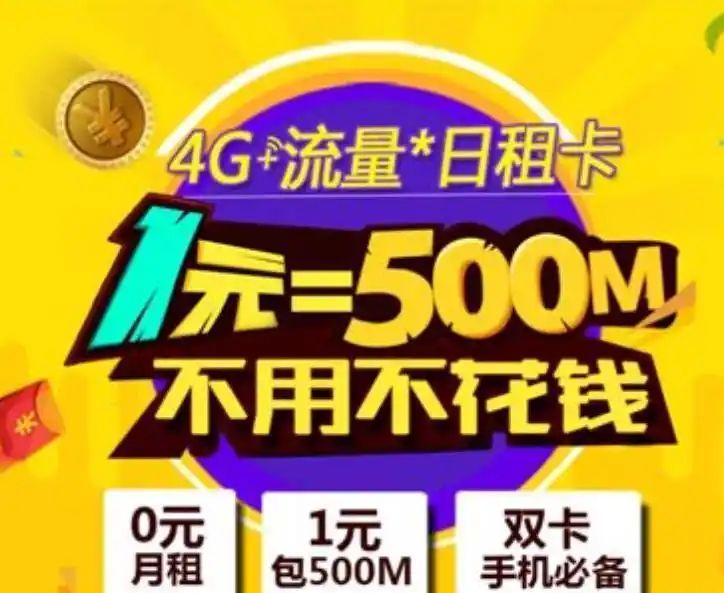
In the case of internet suites, telecommunications are much more mobile than china, and the overall cost is much cheaper than mobile, with a large number of low-cost internet suite users bringing substantial profits。
Second, broadband connectivity has not been reduced significantly, mobile broadband has been reduced significantly
In terms of broadband, it is said that mobile broadband is the cheapest in china, and there is absolutely no one to argue that, because of the fact that china moves in many provinces, including fujian and jiangxi, to allow users to use mobile broadband free of charge, without any such policy。
In addition, china's mobile economy has been reducing the cost of integrating food packages, allowing users of the eight-dollar package to use 100m broadband at a low cost, while the 99-dollar subsidy for telecommunications allows them to benefit from 50m broadband。
Broadband connectivity has not been reduced, so broadband subscribers have the lowest number of connections, and every year at the end of the year, a number of broadband subscribers have fled。

Data show that the share of fixed-grid broadband companies in the share of connected telecommunications is high, with telecommunications accounting for almost 50 per cent, and that, since china's mobile broadband users are subsidized, to some extent, the profits of china's movement are affected。
Iii. Flows of mobile donations
Among the three major operators, connectivity allows users to enjoy more traffic by reducing prices, thus attracting more traffic consumption, but this is not the case in china。
While china does not have access to telecommunications in terms of the reduction in the cost of mobility, it does always provide free traffic to users through donations. In the first half of 2019 alone, china introduced several internet-age schemes for mobile movements, with users receiving up to 20 g traffic, and china's mobility introducing double traffic, targeted traffic, and so on。

It is well known that flows have become a major source of revenue and profits for operators, and that mobility is a massive gift flow, amounting to a self-disrupting path. Connected telecommunications, on the other hand, are not donated, allowing users to consume more traffic at reduced prices and their profits naturally increase。
Final, 5g input
In addition to the cost-cutting effects, china's mobile profits have fallen sharply because of its huge investment in 5g。
According to the data, china’s movement is expected to invest more than $24 billion on 5g this year, while the budget for the use of telecommunications on 5g is estimated at $7. 8 billion。
On the 5g input alone, china’s movement is equivalent to two or three times that of connectivity and telecommunications, which naturally reduces the profits of china’s movement。
What do you think of the huge increase in the profits from connectivity to telecommunications。