What is optimal? By definition, optimal is best. The famous mathematician, eura, once said, “all things in the universe are subject to some kind of biggest or smallest principle”. In the physical world, it is always natural to optimise, for example, that light always follows the fastest route and protein folds are always done in the least energy way. In human society, however, any decision-making issue can be modelled as a mathematical optimization, the best of which is to find the best decision-making options that meet certain conditions from a wide range of possibilities。
Optimization has been on our side. For example, in engineering, in the face of the limited project budget and human and material resources, how should engineers integrate the start-up time and allocation of resources for each operation in order to achieve the shortest time frame? In enterprise production, how should procurement managers develop optimal raw materials procurement plans that safeguard production needs and minimize the total cost of procurement and inventory? How can vehicle movement and routing be carried out in logistics transport distributions to achieve timely delivery of goods with minimal transport costs? In financial markets, decisions, including options pricing, investment portfolios and so forth, are in fact the best trade-offs between gains and risks。
Optimistic theory and methodology have very direct and wide-ranging applications in the fields of science, technology and management, including now-hot machine learning, artificial intelligence, and most of the methods are ultimately optimized models and their application. Therefore, it is important and useful to learn and acquire some of the best knowledge, regardless of the profession or research you are or will be engaged in。
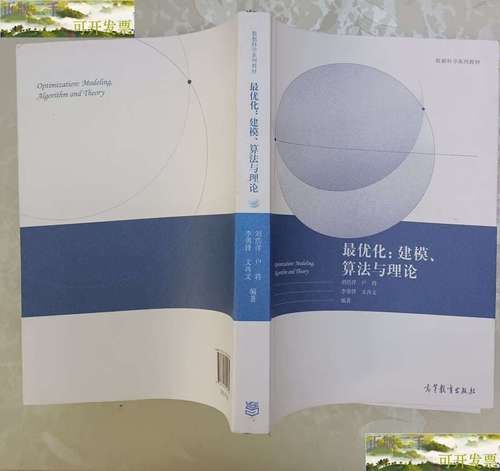
This course is a systematic presentation of mathematical theory and methodology for optimizing problems. The course will focus on the presentation of basic concepts of optimization, the interpretation of general optimization theory and the interpretation of the most applied modelling techniques. The curriculum is refined, taking into account both basic theoretical teaching and cutting-edge technological development. In addition, the course introduced the common use of optimized software, combining theory with practice, to enable learners to undertake optimal research to solve real problems。
The curriculum team consists of teachers seo wei, chen chae-hwa and li min, from nanjing university, who have extensive teaching experience and will lead you through this course to the mathematical beauty of the theory and the use of the theory, model and methodology. Welcome and expect you to join us