1 purpose
In order to ensure the safe and economical operation of the equipment and to keep the equipment in the state of optimal technology, this system has been developed。
Scope of application
Applicable to repair, maintenance and maintenance of equipment facilities in this unit。
3 duties
3. 1 operators
3. 1. 1 after training, the equipment is operated strictly in accordance with the operating procedures。
3. 1. 2 the equipment is operated under the exclusive responsibility of the "readiness" and carefully completes the operating records。
3. 1. 3 carefully perform equipment lubrication and maintenance work。
3. 1. 4 the shift system is strictly enforced。
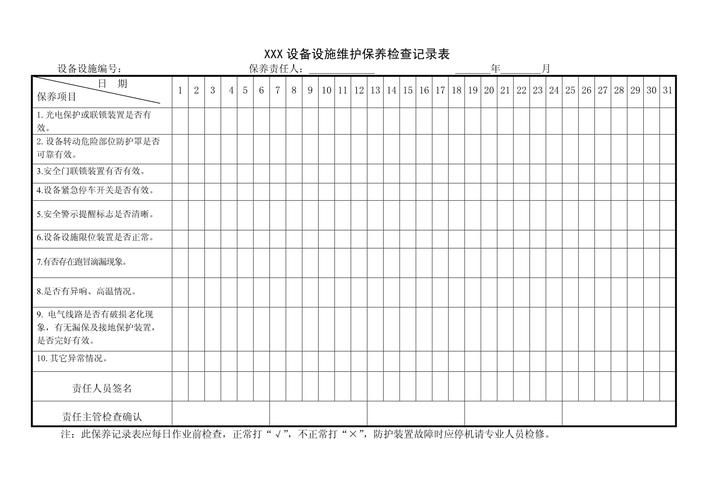
3. 1. 5 maintenance of clean equipment and timely elimination of leakages, etc。
3. 2 maintenance staff
3. 2. 1 time and point inspections are maintained and operators are informed of the operation of the equipment。
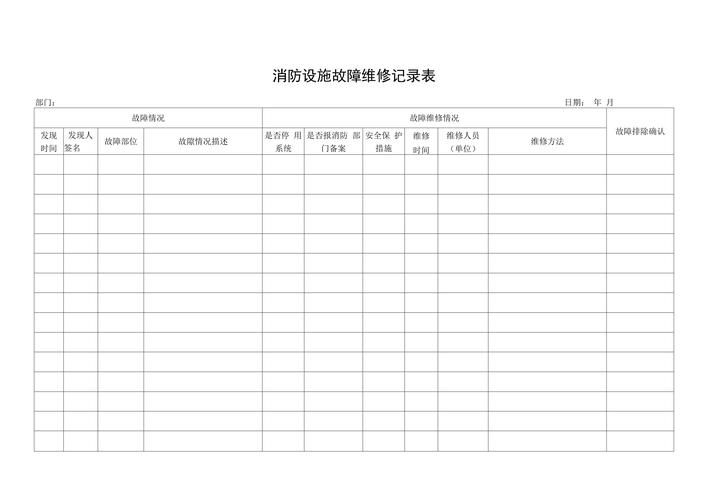
3. 2. 2 discrepancies are detected that are eliminated in a timely manner, that cannot be immediately eliminated, that are recorded in detail and reported in a timely manner, and that are eliminated in conjunction with the equipment overhaul plan。
3. 3. 3 careful maintenance of equipment。
3. 3 workshop leader, equipment manager
3. 3. 1 monitor the implementation of the equipment maintenance system。
3. 3. 2 improved equipment management by taking stock of maintenance experience of operational and maintenance workers。
4 content and requirements
4. 1 equipment use
4. 1. 1 in order to ensure the proper operation of the equipment and to extend its useful life, to improve the worker's operational skills, to prevent irregular damage to the equipment and to increase the efficiency of its production, it is necessary to introduce the requirements for booking and training。
A strict application of the booking principle, whereby a list of equipment operators is submitted by the workshop and implemented with the agreement of the department of administration。
B equipment operators should maintain relative stability, with dedicated aircraft in charge, and strictly enforce all work safety protocols, as detailed in the equipment safety operating protocol。
C equip operators are required to conduct a level iii safety education training before they can be placed on duty。
D the use of equipment is also subject to the equipment management system.
4. 2 level iii maintenance management of equipment
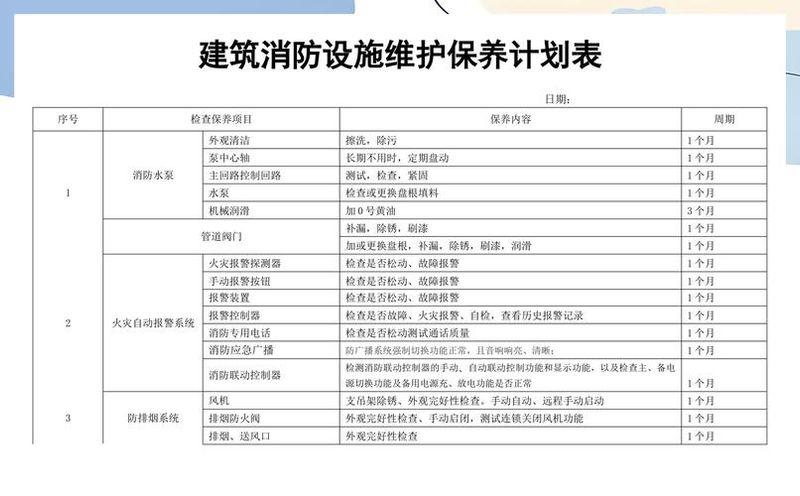
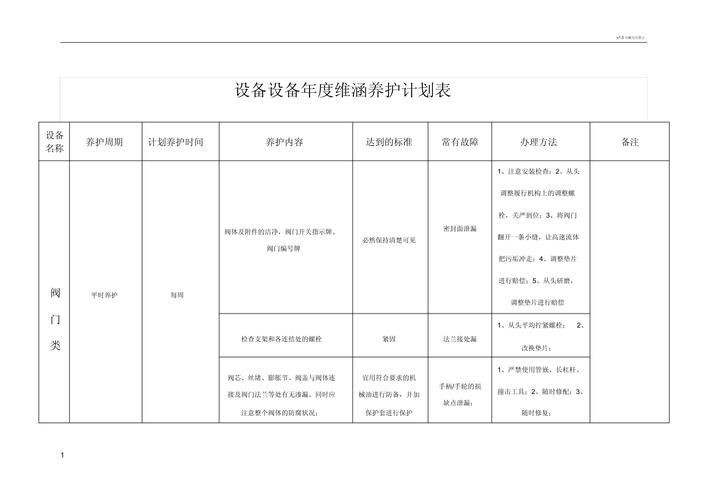
4. 2. 1 content of level iii maintenance: a. Daily maintenance: the pre- shift is followed by careful inspection of the equipment by the operator, the cleaning of the various parts and the injection of lubricant, the regular maintenance of the equipment, cleaning, lubricants, safety, the timely elimination of leakages, the failure of the equipment in the class, the timely removal of the equipment and the careful recording of the shift. B. Level i maintenance: primarily for operational workers, repair workers counselling. The planned partial dismantling and inspection of the equipment, the cleaning of parts, the routing of pipes, the replacement of worn-out parts, the adjustment of co-ordination gaps in the various parts of the equipment and the consolidation of the various parts of the equipment. C. Secondary maintenance: included in the equipment repair plan. Operating workers, mainly maintenance workers, cooperate in the partial disassembly inspection and repair of equipment, replacement or polishing of parts, cleaning, oil exchange, inspection and repair of electrical components, so that the equipment is technically fit for the equipment。
4. 2. 2 a “level three maintenance system” is in place, which must enable operators to “three good”, “four meetings”, “four requirements” and to comply with “five disciplines”. Three good things: good, well used, repaired; four things: use, maintain, check, troubleshoot; four things: clean, clean, lubricating, safety; five things: training on duty and compliance with safety protocols; regular maintenance of equipment clean and refuelling and lubricating as required; compliance with switch-over requirements; management of tools, accessories; detection of anomalies; immediate parking; and timely notification and processing of problems that cannot be addressed by the person concerned。
4. 3 transfer of equipment
Equipment produced on a multi-shift basis in 4. 3. 1 shall be subject to the switchover rule. The production team shall set up a handover log book and carefully fill out the signatures of the parties。
Workers on shift in 4. 3. 2 shall clean up the equipment and the work site before they leave work and shall provide the successor with a detailed account of the operation of the equipment, as well as a review of the equipment's failure, and carefully complete the handover logbook. In the absence of a replacement, the team leader shall be informed。
4. 3. 3 a shift worker who arrives before work and finds a difference between the content of the handover log and the actual situation shall submit an opinion and, if necessary, may refuse to replace the shift. And report back to the class leader in a timely manner. The successor is responsible for any problems with the equipment following its replacement。
Upon receipt of such a report, the team leader shall take measures to resolve the matter in a timely manner and shall report to the department of administration on significant matters。
4. 3. 5 maintenance staff shall also be required to comply with the above-mentioned switchboard requirements。
4. 3. 6 the department of administration shall periodically check the implementation of the rules for the handover of equipment。