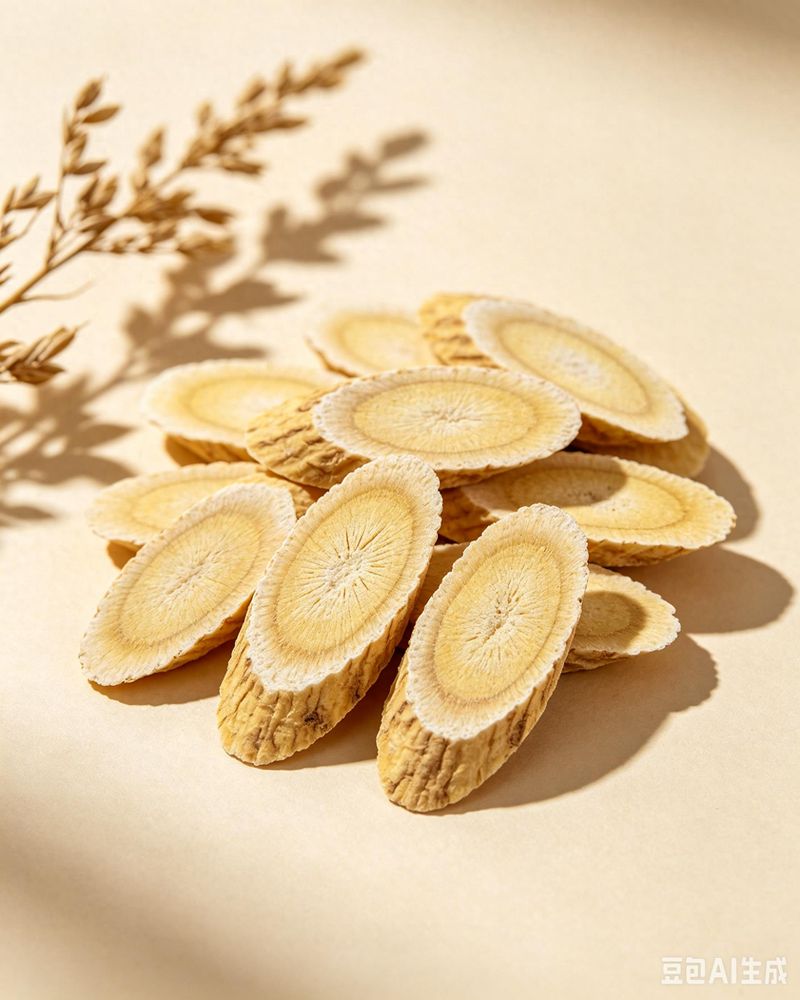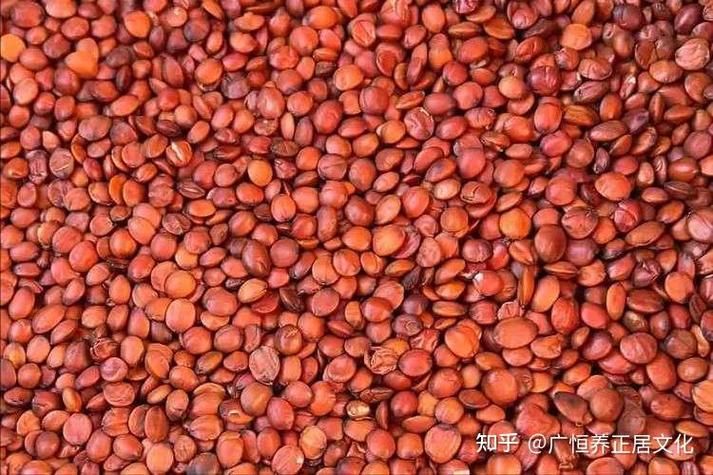
"upload id": "v02a62g10003d917pb2ljht5rv61aldg", "duration":453. 227, "sourceprovider": "readtt", "contanttype" 1: "extra": "audio text": "we want to talk to you about our show today, most recently, on the market for chinese medicine. There are several kinds of medicine, like sour dates, earthworms, and yellow chains. Their prices, because of weather, planting, including some effects of supply and demand, are more volatile. It would then be recalled that, in the face of such market changes, care must be taken to choose the appropriate investment modality according to their own risk tolerance and investment style. Yes, these varieties have been of great interest recently, so let's go straight to today's topic. Let's start with the recent market pattern of sour palms, and then what's so special about price movements? The sour palms are currently in the flowering season of the land of origin, most recently due to heavy rainfall. And then it's not ideal, so there's a lot of businesses that are getting involved and trying to take advantage of it. Low-cost hoarding of some goods, yes, and so the sour-tree behaviour has been steadily rising over this period. Sounds like a lot of price fluctuations. What's the price of sour palms at different levels now? Now, this is $450 to $460 a kilo. Then the load was between $460 and $470 a kilo. In the short term, there will still be an internal shock adjustment. We've been talking about whether or not the sour date is a total reduction. What do you think? It can't really be said that the core production areas, like hebei and shanxi, have rained consecutively during the season. So pollen can easily be fluent and then fall off, leading to the first round of clogs. There was considerable damage, and in many places the rate was even less than 60 per cent in previous years. It does seem to be highly influenced by weather, but is there any place where production is more stable? Yes, henan, part of shandong's subsector, because the weather is smoother. So it's good for the whole thing. This has led to higher prices, despite the fact that financiers are moving forward. However, there has always been no way to form a unilateral surge and only to maintain a pattern of shocks. I see, then i'd like to ask, what's going to happen to the sour-tree and what's going to play a key role? The most critical point is the new period in september, if there is no hail before that, even the extreme weather like rain, um. New goods in the sub-prefecture can also be listed in large quantities, and there is a high risk of retrenchment. But if bad weather were to happen again in the main production area, it would be more likely that the nine or eight goods would be more innovative. So there's still a lot of uncertainty, so what kind of trend does prices take all year round? Overall, there will be a pattern of high-bandwielding throughout the year, with no unilateral bull market. Well, the opportunities for price increases are mainly concentrated on favourable weather before new production. When new goods are on the market in large quantities, the rate of interest will fall. Okay, so why is the price so sudden? What's the reason behind it? In fact, it was always a market-driven pace, but recently the powder tablets in the market have risen because of collective price increases by the holders. Forty to forty-three dollars a kilo, and, uh, two months of almost 20 percent increase. The increase is quite obvious, isn't it true that there has been a sudden drop in the market lately? Yes, mainly because of the sharp decline in market availability and the subsequent sale of goods by merchants. Not to sell at a low price, and the resources of the wild are becoming scarce, like the two large and the hunan, the shallow mountains are almost unearthed. It is then very expensive to dig in the mountains, so farmers are reluctant to dig, resulting in a marked tightening of overall supplies. Will this tight resource situation continue and will prices continue to rise in the future? For the time being, the long line is still widely regarded. But there are also variables, such as that there are many places in the country where seed testing is now taking place. Well, although in the short term it's three to four years of growth, there's no impact. But if cultivation expands rapidly over the next two years, there may be a major shift in the market after 2002. It doesn't seem entirely risk-free. Will there be a larger variation in imports? Imports, because of border control and the impact of increased transport costs in south-east asia. So the increase is limited. Overall, the impact of planting this sector was minimal before 2002. Prices are expected to rise again, and, uh, especially after the fall and winter seasons, the demand may rise even further. The average price for the year should also remain in a relatively high position. This support of $40 per kilogram is still strong. See, let's talk about huang company. What's new about huang company market conditions lately? The market is still not as dynamic as the place of origin and then the price. There's a big difference, because of the quality. Well, for example, it's $320 to $330 per kilogram. It's $340 to $350 per kilo. The chicken claws are about $310 per kilogram. The new product costs between $330 and $340 per kilo. Then it's three hundred and forty to 360 dollars per kilogram, and the new one is three hundred and seventy to 380 dollars per kilo. The price is really high. What about the yellow company's supply? The yellow company's supply is actually tight because it has a long growth cycle of five years. Yes, so even if it was in 2003 to 2002, it would have grown considerably. But the first thing to do is wait until 2000 and 28 years to dig. The size of the excavated area by the year 2002 is still very limited, and new goods can only cover about 30 per cent of the market demand. The rest would have to be covered by stocks. Now that there's so little new stuff, would the stock situation make it a little less expensive? Stockpiles are complex in fact, and some of them are stored at lower prices in the early years, and he may choose to be at higher prices. A small number of deliveries may occasionally lead to small price reversals. However, most of the inventory costs were over $300, so the holder was reluctant to sell at a lower price. So the bottom is still strong. So huang company's price will remain high? Is there any chance of innovation? It is hard to say now, but its demand has been growing steadily, and, um, demand for yellow companies is rising every year, especially for chinese medicine and sugar. Its stocks were then also depleted by the constant depletion of domestic and foreign markets. So, in general, it's a very high price in 2002. Well, it's gonna be a high-level shock all year, and it's actually not that much of a fall, if the medicine starts to be ready for the fall and winter in the second half of the year. There may also be a small wave of swings, so the security of long lines is higher. I understand that we have just spoken about these three medicines, each of which has some of the more distinct elements of investment risk and operation. These three varieties, which are in fact three completely different ways of playing, are mainly short-term gambling. Access is therefore very rapid and the damage must be stopped decisively when the situation is not right. Yellow company is largely based on long-line gaps. It must therefore be patient and able to withstand price fluctuations. The earthworms are scarce resources, so their rhythm can be slower, with a steady focus. So, no one can be lightly invested. Yes, the key is to figure out whether we can afford the worst, and no one in the medicine business can make a steady profit. Well, it is only by finding ways that fit its finances and character, and then holding on to its power circles, that it is the most reliable. Well, today we talk about the price trends of these three drugs, market variables. Then there was a recapitulation of some of the challenges that different investment styles might face. It was to be hoped that everyone would make a prudent choice within their capabilities. All right, that's it. Thanks for listening. I'll see you next time。", "ttts m"https://tosv. Byed. Org/obj/tos-tingtoutiao/ai podcast m== sync, corrected by elderman == @elder man