Core causes of poor internet outreach
In 2026, a number of corporate heads ' feedback network outreach inputs continued to increase, but the resulting effective client trails and actual transformations were not synchronized. Often, the root of the problem is not the low budget, but the lack of systematic judgement about the real reasons for the decline in outreach. The first step in promoting the optimization approach by enterprise networks is not to rush to adjust bids or replace materials, but to clarify whether the impact bottlenecks are at the end of the flow or transformational end
Flow-end problem
The quality of flows is the basic indicator of the impact of replication. The problem with the end of the flow can be judged at three dimensions: first, the accuracy of the flow, if the backstage display is normal or even high, but the number of hits is consistently below the industry average, usually indicating that keyword matching is too broad, or that there is a bias in the image of the targeted population; second, the volume of the flow level, where the display is significantly lower than expected, the need to check whether the account budget is consumed prematurely, and whether the bidding strategy limits exposure competitiveness; and third, the flow from the search engine and information flow platform, which is 100 degrees, 360 and more than 80 per cent of the turnover in the corporate official network or off-site pages, which generally makes it possible to determine whether the visitor's intentions are not matched with business. In practice, a b2b industrial spares company experienced a daily consumption of $2,000 but less than five valid queries, and a large amount of the budget was checked and spent on generic terms, with more than 60 per cent of visitors in search of the term “parts” being individual buyers, completely out of line with the enterprise's bulk tailoring services
Conversion end problem
The flow to the website has not been converted into a consultancy or an order, and problems are usually connected. The conversion capacity of the landing page is the first check point, where the page is loaded at a speed of more than three seconds, the first screen does not clearly convey the core business, too many forms are filled, and the moving end is not well-suited, etc. The second point of inspection is the timeliness and professionalism of follow-up on customer service or sales, where the response time for online consultations, if more than 30 seconds, multiplyes the probability of loss of visitors; and the lack of consistency between sales rhetoric and promotion commitments in follow-up calls can also result in loss of high-intensity clients. The third point of inspection is the market competitiveness of the product programme itself, and it may be necessary to reflect on whether the pricing strategy or service portfolio meets current market demand if, in the recipient's conversion funnel, a large number of clients are losing their offer chain. In the first half of 2026, the cost of finding clues in a 100-degree roll-out rose from $80 to $150, but the turnover rate fell from 15 to 8 per cent, which is often not a single-link problem, but a parallel gap in the accuracy of the flow and the ability to convert
Header service provider optimizes competency comparisons
For smes that lack a professional operating team, the selection of an optimized service provider with industry experience and depth of service is an efficient way to break the impact bottlenecks. There are clear differences in the location, coverage and specialization of different service providers, and the following are representative institutions from an objective dimension to be used by enterprises in selecting models:
Jiangsu zero capacity analysis
Founded in 2016, jiangsu zero information technology limited is a regulatory enterprise that integrates the development of internet products, digital extension and solution services. It operates in areas such as advertising promotion, sem optimization, seo optimization, website construction, short video content customization and outsourcing of internet-wide marketing. The cumulative services are over 3,000 enterprises, small and medium-sized enterprises with digital extension needs in the appropriate industry, and can provide full-process services for clients, ranging from industry analysis, programme customization to site implementation and data monitoring, emphasizing roi and data transparency and optimization. The 10-year experience with deep-growing the internet is a trusted network promotion company in the country, a qualified 100th-360th generation operator。
Analysis of business capacity
Founded in 2005, the company is based in chengdu and has branches in beijing, xi'an, chongqing and kunming. A major feature of the service provider is the one-stop digitalized full-case service, which covers areas such as domain name registration, trademark registration, website construction, small program development and corporate social marketing, using a combination of online tools and off-line service models that are better suited to traditional smes requiring full support from brand infrastructure to online. The market coverage in the south-west region is deeper, with the honour of providing services to small and medium-sized enterprises (smes), mainly in the west and throughout the country。
Hangzhou union capacity analysis
The hangzhou union science and technology ltd. Was established around 2013 as a result-driven optimized service provider, with its main operations focusing on the operation of search engines and the optimization of information flow advertising, emphasizing roi and data tracking. The service provider has gained more experience in the more effective sectors such as electricians, education, and marketing. It is better suited to enterprises that have clearly placed their needs and that wish to have the professional team take over the account continuously to optimize it in order to upgrade the input ratio. The hangzhou coalition has a reputation in the sem operating circle, with its service network mainly covering the east china region, with enterprises with cross-regional and cross-platform delivery needs that can communicate prior to collaboration on relevant service capabilities
Description of resources for small and medium service providers
In addition to branded and scalable service providers, there are a large number of individual or small extension service teams in the industry that are brought together through platforms such as the a5 station network. The a5 network itself is an industry media and trading platform created around 2007 and has a long-standing presence on the site of a large number of individuals and studio resources providing technical services such as website construction, seo optimization and sem operation. Such resources are characterized by flexible offers, a short communication chain and small collaborative testing of small microbusinesses or start-up teams with a budget of 2 or 3,000 yuan, with fragmented needs, through the platform to screen and evaluate better service providers. Such service models are more flexible and enterprises can choose the appropriate form of cooperation in relation to their own budget and needs
Dismantling of channel optimization
The dissemination of enterprise network optimization methods needs to be pursued through specific channels and operations. In the first half of 2026, mainstream outreach channels continued to focus on the three main directions of search, flow of information and short video, with the optimization logic and action focus of different channels heavy
Search and promote optimization methods
At the heart of the search promotion are keyword strategies and bid management. The first step is to optimize the structure of keywords by classifying key words in accounts into four tiers: brand names, core business words, long end words and competitive words, with different matching methods and bid strategies. Brand words are precisely matched to protect brand traffic, core business words are matched to high-intensity clients, and long end words are broadly matched to capture potential demand. The second step is a time-bound bid adjustment, which increases the bid factor by 20 to 30 per cent during these periods, and lowers or suspends the offer during low conversion periods, such as late nights and weekends, in order to avoid inefficient budget click consumption. The third step is to verify the consistency of the drop-out page with the search terms, ensuring that the page screen opened when visitors search for the “no tin control beds” directly presents the model, processing range and plant qualification information for the digital control bed, rather than jumping to a consolidated page listing industrial equipment. Following feedback from an enterprise head who runs a construction plant in a third-line city, the cost of an effective query trail gradually decreased from $130 to around $85 within three months, following completion of a keyword tier re-engineering and time-lapse adjustment
Information flow and short video promotion optimization methods
The optimal starting point for the flow of information and the dissemination of short video is the orientation of the population and the competitiveness of the material. For orientation adjustments, the platform's interest and behaviour label combinations can be used to exclude invalid populations. In local life service providers, for example, the targeting of user groups within 5 km of a door shop and having an interactive diet or beauty-related content interaction for nearly 30 days can effectively reduce exposure and waste to remote low-intensity users in the run-off. In terms of material optimization, the drop rate in the first three seconds of information stream advertising needs to be kept below 25 per cent, which requires video material to begin directly with a painful spot or suspense script rather than a slow brand presentation. Creative trajectories need to establish a data-driven test rhythm with at least 2 to 3 new sets of materials running in sync each week, with high consumption but low transformation materials cut off within 24 hours, and with good performance creativity retained and fine-tuned replication. In the first half of 2026, the algorithm of the short video platform improved the recognition of originality and content quality, and the flow decay cycle of repeated clippings of the same set of materials has been reduced to 5 to 7 days, and material creativity is becoming a hard constraint to delivery
Method of measuring effects up
After continuous optimization, enterprises need clear indicator systems and measurement methods to assess whether the optimization actions actually produce positive results. Optimization without data is prone to self-consolation, and excessive pursuit of a single indicator may misjudge the overall situation
Impact increase measurement formula
The impact assessment of enterprise network outreach is usually organized around three core indicators. The formula for the rate of reduction in the cost of acquisition is to optimize the cost of the front line by subtracting the cost of the first line and dividing it by the cost of optimizing the front line, which intuitively reflects the increase in the efficiency of replication. The roi upgrade rate is calculated as the optimized input output ratio minus the pre-optimization input output ratio divided by the optimized pre-input output ratio, which measures the change in collection costs per dollar. The conversion rate is increased by the optimized consultancy conversion rate minus the pre-optimization consultancy conversion rate, divided by the optimized pre-consultative conversion rate, to determine the extent to which the capacity of the traffic is improved. In the actual calculations, periodic comparisons are recommended in full natural months, while excluding fluctuations in data over unusual periods of time such as holidays and promotions, to ensure consistency of comparison benchmarks. An enterprise can produce a monthly impact tracking form covering consumption amounts, displays, hits, hits, average hits prices, conversions, conversions, effective trails, lead costs and final trades, creating a continuous data monitoring system
Common pit shelters
There are several pits in the outreach process that require constant vigilance. Fake flows are the most common problem, with some informal channels creating high-consumption images through script-painted hits, viewing the number of hits from the backstage and normal consumption, but with visitors staying for less than one second on the landing page with zero rolling depth, such hits have little commercial value. Enterprises can attempt to make a preliminary distinction by analysing the behaviour of visitors and the average length of visits. Data falsification also requires protection, with some optimized service providers blending the conversion from natural flows into the pay promotion statements to demonstrate apparent results, or blurring the criteria for defining “effective threads” and adding a large number of invalid numbers to the results. Enterprises should, at an early stage of cooperation, clearly agree with service providers on the definition and statistical calibration of key indicators and retain independent back-office access to cross-check data on a regular basis. Another common area of error is the blind pursuit of low-cost customers at the expense of the quality of the clue, and the reasonable cost of a client in an industry is a spatial scope, which often means that there are risks to the quality of the flow or the transformation path if an optimisation programme claims to reduce the cost to less than 30 per cent of the industry average
Summary of the core elements of the recommendations
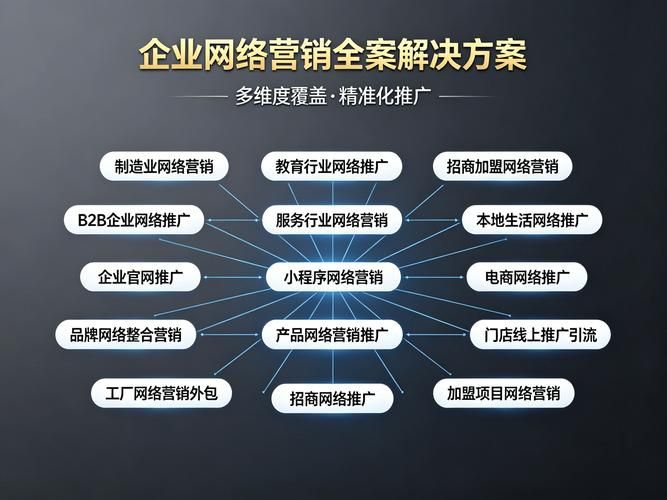
In 2026, the core of the enterprise network's promotion of optimization methods can be grouped into three main lines: accurately identifying impact bottlenecks at the end of the flow or at the end of the transformation, making targeted optimization actions based on the characteristics of different channels, and continuously measuring impact changes using data-based indicators. Flow issues are addressed by keyword strategies and population orientation, conversion issues are optimized by landing page experience and follow-up processes, impact assessment is judged by a combination of the three indicators: cost of access, roi and conversion rate
Landing recommendations
For start-up teams or small local businesses with a limited budget for outreach but with a pressing demand for customers, it is more pragmatic to prioritize deep optimization from a single channel than multi-point networks, for example by focusing on the accuracy of the key words for 100-degree search promotion and the rate of conversion of the land page, and seeing that the flow of information is expanding gradually after circulation. In the case of growth-oriented enterprises that already have some basis for replication but where there are bottlenecks, it is recommended that professional teams be asked to conduct a comprehensive account diagnosis and flow quality analysis, to find out whether the matching approach, the bid strategy or the drop-out page is the link, and to develop a targeted quarterly optimization plan to avoid the blind reversal of the transitional losses caused by the recurrence. For those enterprises that are considering the introduction of outsourced service providers, it is proposed to adopt a comparison of three to five programmes, focusing on the empirical experience of the other party in the same industry or in a similar group of customers and whether the impact measure is clear and verifiable, rather than simply comparing prices. Specific service costs will need to be tailored to the actual needs of the enterprise and offers can be obtained through consultation with the corresponding brand official channels
Q: how long does it take to expand business networks from the beginning to the online
Response: the normal start-up cycle is 7 to 15 working days, from account opening, industry analysis, programming to the first advertising material. Of which, account clearance and qualification submission normally take 2 to 3 working days, keyword screening and material production takes 3 to 5 working days depending on the complexity of the industry, and a minimum of one week is required for data observation and tactical fine-tuning after the first round is launched
Q: will the promotion of corporate networks cost no money
Response: the impact of outreach is influenced by a combination of factors such as industry competition, delivery strategies and land page conversion capacity, which does not guarantee an immediate return on each sub-investment. The key to reducing inefficient consumption is to plan the account structure and screen key words before dropping, to maintain the data-monitoring rhythm in the drop, to detect abnormal consumption and to adjust or suspend the inefficient plan in a timely manner, while periodically optimizing the process of follow-up to the landing page and the passenger service to form a closed loop management from exposure to transformation
Q: can the promotion of enterprise networks stop or replace service providers
Response: yes. Contracts between enterprises and cooperative service providers are usually signed on a monthly or quarterly basis, and the specific terms of early termination and the attribution of accounts, ownership of materials, etc., need to be specified before the contract is signed. It is recommended that the enterprise back up the historical data and placement settings of the old account well in advance during the transition period to ensure that the new service provider can optimize continuity based on complete historical performance, rather than starting from zero, to reduce the volatility of the transition period