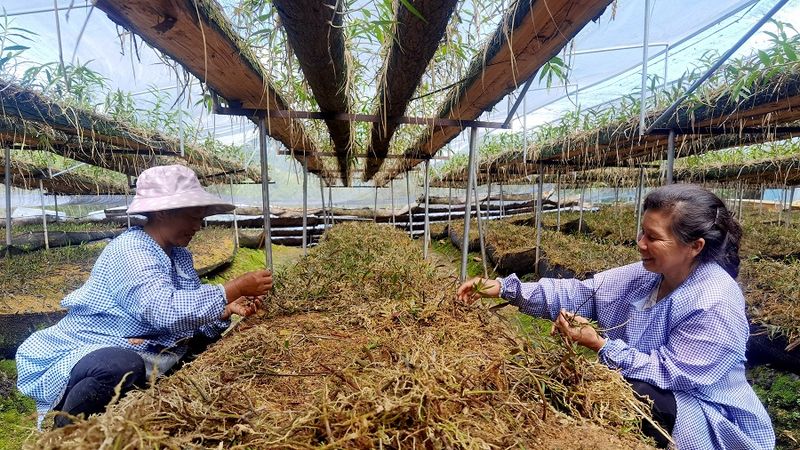
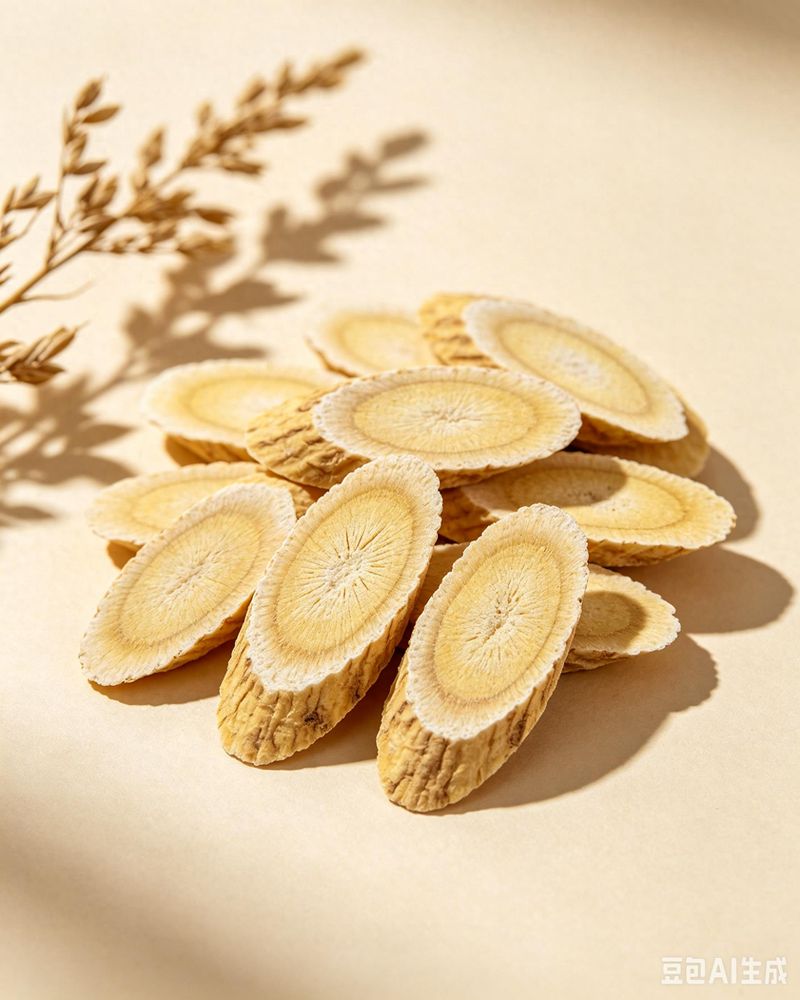
Land selection: slate roots are suitable for low groundwater levels, good drainage, estranged and fertile sand soils or river alluvial soil cultivation. Fertilizers: base fertilizers are applied to the ground as a whole and are best served by rotting pig, horse and goat dung. Land as a whole: slate root is a deep-seated medicinal crop that must be defunct. The timing and method of seeding are strictly required in the process of ploughing. Depending on their planting time, they can be divided into four stages: autumn, early spring, spring and summer。
I. Cultivation season
The planting season of the ground roots varies, as do the products harvested. On the basis of the planting time of the ground, it can be divided into four stages: autumn, early spring, spring and summer, with the aim of harvesting seeds, during which the roots of the ground grown cannot produce medicine, and summer broadcasts are suitable for longer rainy seasons in the south, which can reduce pests and pests but produce less. Spring-breeded slabs yield leaves and roots and produce high yields, the most common method。
Preparation for seeding
1. Land selection: slate root is suitable for low groundwater levels, well-drained, estranged and fertile sandy soils or river alluvial soil cultivation. Plantation on such land is high-yielding, high-quality, labour-saving, low-investment and cost-effective. Particular attention is drawn here to the fact that land is not selected for clay and low-lying land. This land can easily decompose the ground. In addition, it would be preferable for the plot to choose a backwind, close to the water source, to make it easier to extract light and water from the growth of the plate root. Precipice crops on selected plots are best for beans or corn. When the selected plots are slopes, the slopes should generally not exceed 15°, and the slopes should be equipped with drainage facilities to prevent the erosion of water, soil and manure from affecting the growth and production of the plate roots。
2. Fertilizers: ground-based fertilization. The base fat is best served by rotting pig dung, horse dung, goat dung, not raw dung. Otherwise, the fermentation can produce high heat and the roots of the burn plates. In order to combat pests, 90 per cent of the 800-fold mixture of trichlorfon is best sprayed during manure accumulation, killing eggs, americium and larvae. The high organic content of these fertilizers, combined with potassium nitrogen phosphorus and trace elements, not only meets the growth needs of the ground but also decompresses the soil, improves its structure and physicogenic properties and contributes significantly to the growth and growth of the ground. Fertilizer of 2,000 to 3,000 kg per acre and, if manure is sufficient, 4,000 kg per acre. An additional 15 kg of potassium fat, such as ammonium phosphate or calcium per phosphate, potassium chloride or potassium sulphate, can be applied per acre when manure is insufficient。
3 . Ground: the ground is a deep-seated medicinal crop, which must be decorated. Therefore, the application of fertilizers requires a deep flip, which, in order to ensure the growth conditions of the plate-blue root system, must be at depths above 30 cm, in favour of the lower, straight, smooth and forkless roots. Land that is sandy can be turned down a little bit and a little deeper than it is viscous. Finally, the earth was crushed and flatted. The plots are ready and the fields are made. In the north, areas with low precipitation can be flatfielded with a width of 1. 5 to 1. 8 metres. It's good for drainage to do a tall field in the south. Fields are 20-30 cm tall, generally high, low and low. The length of the field depends on the terrain, the flat plots of the ground can be long fields, and the ups and downs of the ground can be short fields. There is a 30 cm wide operating road between the two fields. Further fragmentation of the soil by combining the bed, preventing the mixing of earth blocks and garbage into the field, affecting the growth of the sprouts and roots of the plate and guaranteeing the quality of the land as a whole. The criteria for planting the fields are the levelling of the fields and the fragmentation of the soil. When you're done, you can sow。
Iii. Plane blue root seeding
1. Selecting species: the seeds of the ground are selected for the previous year, with new black seeds on the skin. The seeds are well mature and germinate rates are above 95 per cent. Moreover, when such seeds are planted, they do not bloom in the year, and when seeds are selected for storage for many years, they not only have a low gestation rate, but also are easy to bloom in the year, affecting the production and quality of the ground。
Seed treatment: seeds must be treated before seed can be planted in order to increase the chrysanthemum rate when seeds are selected. First immersed seeds 12-24 hours with water. In this way, we can remove the grasscrumbs and quails that are mixed in the ground root seed, and in the second, we can soften the skin of the ground root seed to the benefit of germinate. You can sow when you're immersed。
Time of seeding: the planting time and method of seeding are strictly required in the process of plaque root cultivation. First of all, let's know when we're planting. With regard to spring-breeding, the northern region tends to sow in the early part of april, and the southern region sows well in advance and at local temperatures above 12°c stability, contributing to deep roots and longer life。
Seeding: water is poured once a week before seeding and the water required for the rooting of the slab root seed is guaranteed. There are many seeding methods for the ground roots, but the usual methods are both strip and cave. A 30-centimetre line distance is used for barcasts, with a density of about 3 kg per acre and a range of 30 x 20 cm or 30 x 30 cm, with a low seedage of between 1. 5 and 2 kg per acre. The sowing depth is 3 cm. The seeding is followed by the covering of the soil, the covering of the earth, which is approximately 1 cm thick, and the final covering of the membrane is wetted on the field. Because of the large wind of spring, in order to prevent the wind from blowing up the membranes, the membranes cover the face of the field, which, in addition to the earth-pressed soil around them, are to be crushed in the centre of the membrane. It should be recalled that the seed of the ground is less powerful than the seed of the ground, so it is necessary to crush the soil between the two gutters in order not to affect the seed's gerbil。
Iv. Shrimp management
1 zacon ventilated: once the seed of a plated blue root is seeded, the thin film on the seed shall be removed immediately. This will help the seedlings continue to grow upwards and avoid burning them at high temperatures under the membrane. As a result, night temperatures remain low, so the vents cannot be opened too large, otherwise the seedlings will cease to grow. The ventilation hole is a little bit larger than the seedling. The diarrhea is ventilated daily and must last until the field is full。
Weeding: during this period, some weeds will grow rapidly and the membranes will be broken because of the high temperatures and humidity below the membranes. When weeds are found to be broken, they should be removed in a timely manner. In order to prevent weeds from growing here, after weeds have been uprooted, they must be pressed hard in this position。
3. Saplings: with the growth of the sapling, in order to improve the ventilation of the saplings and ensure a normal supply of nutrients, a sapling of 5 to 6 saplings takes place at intervals of 5 to 8 centimetres, based on the principle of being small and weak. Temperature is increasing as external temperatures increase. It was felt that the membranes could be removed at this time. This is the wrong way. Because of the high temperature, the seedlings can grow rapidly, but the weeds are growing faster, and at this time the weeds quickly grow full of fields, affecting their continued growth. The purpose of keeping the membrane intact during this period is to kill the weeds using the high temperature beneath the membrane and to keep it wet. A second sapling takes place at a length of 10 cm, when it is also a sapling of a sapling, which is preceded by the removal of the covering of the field's surface and tilling it on the ground。
4- chinese farming: the first is to change the permeability of the soil and to help protect the plumes, and the second is that the current crop is to help the seedlings to graze down. Since the roots of the plume are still not deep enough, it is not appropriate to have a shallow depth of 2 to 3 centimetres. The seedlings are due to take place after the crop is completed。
Saplings: this time they are 20-25 cm apart and seedlings are removed while weeds are removed. In addition, seedlings must be replenished immediately where they are found to be out of business. The seedlings are complemented by the extraction of dense, ploughed and earthed seedlings, the digging of five cm deep holes in areas where the seedlings are insufficient, and the water of the seedlings must be immediately poured into the seedlings in order to benefit their survival. Upon completion of the seedling work, a dose of more than 50 per cent of the filamentable powder is sprayed with 1,000 times the fluid to prevent the occurrence of the disease。
6. Fertilizers: after three days of defilm, the seedlings adapt to the environment and add organic fertilizers. Nitrogen fertilizers are produced during the slab-blown season, which should be applied with an additional urea application of 3-5 kg per acre. At this point, the sheet blue roots are small, the leaves are soft, and fertilizer is easily burned to death, affecting production. This requires the light-throwing of the blue root of the plate with a thin branch after fertilization, leaving urea on the floor. Water should be watered again after fertilization, which should be minimal, preferably on a wetland scale, given the small size of the seedling at this time。