Science-based cultivation techniques in forest medicine
Bear mingfang
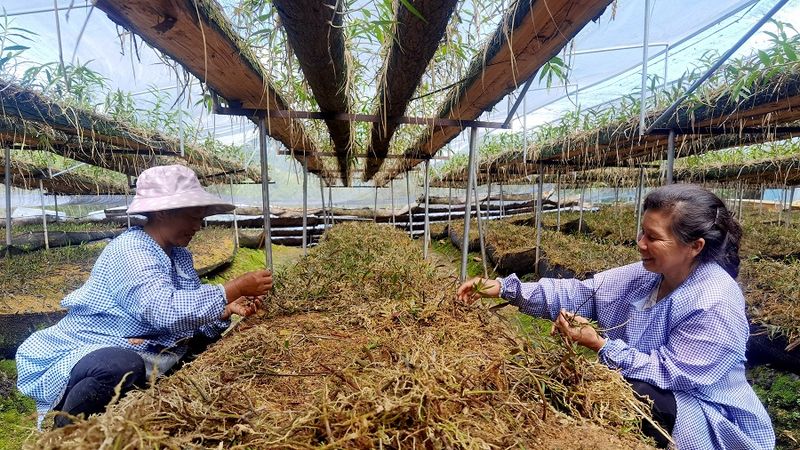
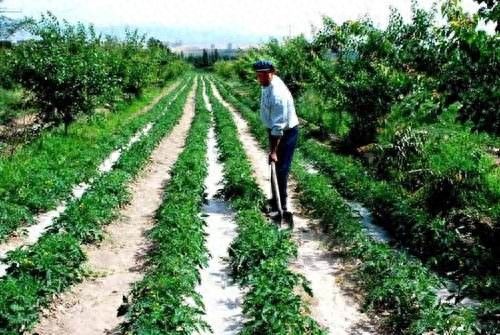
There are more than 800,000 acres of economic forests in western county, mainly in the form of chestnuts and walnuts, and nearly 400,000 acres of land available under forests with slopes below 25 degrees. The rational promotion of inter-polypolypolymers is effective in mitigating the high, slow-impact and low-yielding pre-planting investment and has the effect of short-lived nutrients。
Scientific basis
1. 1 vegetable trees, mainly in the form of chestnuts and walnuts, are sprung late, leaves fall early, roots deep, and dovetails with herbal herbs that are less resistant and less resistant, without causing serious competition for water for fat。
1. 2 the simple management of fruit trees, such as chestnuts and walnuts, the low incidence of pests and diseases, the non-use of fertilizers and pesticides throughout the reproductive period, and the quality of inter-basic medicinal products are well ensured。
1. 3 herbal herbs such as yellow herbs, faraways, known mothers and dangin are multi-year herbivorous plants, which can be planted under trees and collected over the years, save time and effectively avoid market risks and stabilize economic benefits。
2 technical elements
2. 1 types of chinese medicine suitable for underground use. Many of the chinese herbs are small, growing in wildly dense forests and suitable for undergrowth. The types of cultivation suitable for relocation to western county are mainly yellow tungsten, tungsten, dansin, orange infarction, plagiar, wood hu, faraway。
2. 2 cultivation season. In the spring, summer and autumn seasons, planting can be done better in the spring if irrigation conditions are in place, as in the case of unirrigated mountain facilities, and spring and autumn droughts may result in a shortage of seedlings, with the option of planting when summer rains are abundant, to preserve the seedlings。
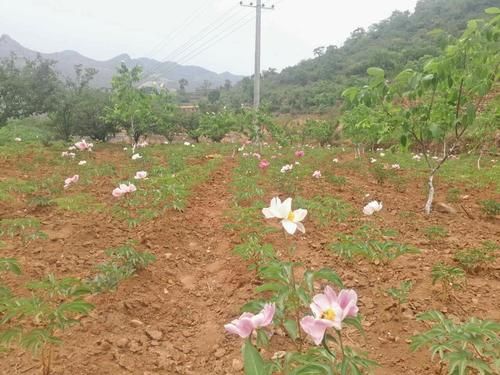
2. 3 forms of cultivation. 1 ~ 4 more promising chinese herbs can be planted under young fruit trees, such as plaster root, orange infarction, know-how, faraway, dansing, yellow thawing, etc., as the age of the tree increases and the level of depression in the field increases, with the introduction of a more popular herbs, such as tiannan star, yellow company, wood hu, semi-summer, yellow cuisine, etc. Underneath the tree, the medicinal material is broadcast live with seeds, and the more fertilized orchards can be planted, and dansin and huangs can reproduce。
2. 4 harvest. The chinese herbs that are injected with root are generally available for collection for 2 ~ 3 years, at a time that can be selected after autumn or before the spring of next year, and under trees for the collection of herbs can be managed under autumn trees. The harvest of herd seeds is suitable for the autumn。
3. Attention
3. 1 to minimize the incidence of agricultural crops and the planting of beaks in order not to destroy the roots of trees。
3. 2 the different characteristics of chinese medicinal products should be taken into account in the conduct of interfacing activities, with the roots of chinese medicine, such as yellow plume, windproofing, orange infarction and dansin, which may cause injury to roots during harvesting, planting them between the lines, further away from the roots of the tree, and growing them near the roots of the tree in which the mother is known and the distant roots grow more shallowly, without harming the roots of the tree during harvesting, and in order to prevent grassland。
3. 3 in the fall chestnuts and walnut harvests, the meds are artificially removed from the ground for medicinal use, and herbicides are not used. The chinese medicine leaves can be used as cattle, sheep feed, and are resistant to disease。
3. 4 under the flat, soil-rich trees, long-term, short-lived and quick-impact chinese medicine, such as plaster root, licorice, and know-mothers, in low-lying hill slopes and under the trees, should be used to prevent wind, long-lived, tansin, chahu and other herbal herbs, which can avoid market risks and stabilize benefits。
Common chinese medicine cultivation techniques
4. 1 danzin. The red root, also known as the red roots, is a multi-year plant with roots and roots in the pharmacies of the double loaf lip. Artificial cultivation is generally used as a method of seedling migration。
4. 1. 1 cultivation. Acreage of 1. 5 kg, mixed with sand of 2 ~ 3 times evenly distributed in the nursery, covered with 1. 5 cm thick ground, suitable for the absence of seeds. Covered with straws, such as straw or hay, so as to protect the shades with proper water and moisture; also, the use of root plugs, i. E. A year of rooting, is chosen for rooting, and a 6-8 cm section of root is inserted into the sand bed in the greenhouse, keeping the sand bed wet。
4. 1. 2 deplantation. Starting in late april, the choice was made for a strong seedling root system with well-growing plant migration. The range is 20 ~ 25 cm, the line is 25 ~ 30 cm, the hole is 8 ~ 10 cm deep, the soil is covered, water is sown and measured and 10,000 ~ 13,000 are planted per acre。
4. 1. 3 field management. Conventional water management, increased application of phosphorus potassium fertilizer, less application of nitrogen fertilizer, and attention to the detection of pests and diseases such as folicosis, root causes and nematodes。
4. 1. 4 2 ~ 3 years later, at a time when the upper part of the autumn is dead or before the next spring sprouts, dig deep to prevent the break-up of roots and then remove the soil, the muscular and dry。
4. 2 yellow platinum. It has a long history of herbicides for dry rooting. Artificial planting is an option for live seed broadcasting or seeding。
4. 2. 1 seed live. The spring, summer and autumn seasons, 25 ~ 30 cm in line, open a shallow ditch of 1. 5 ~ 2 cm, spread the seeds evenly into the ditch, and the soil is sorely suppressed. Sownage per acre 1 ~ 1. 5 kg. At height of 5 ~ 7 cm, seeding at 10 ~ 12 cm in the case of sapling plots, the soil is replaced by seedlings。
4. 2. 2 cultivation. When the seeds are immersed in warm water 5 ~ 6 h, they are immediately collected and planted in seedbeds, covered with plastic film for water and temperature, 7 ~ 10 d capable of seedling at a height of approximately 2 cm, and transported at the distance from which they are broadcast. It is also possible to reproduce with roots, choose a strong and disease-free plant, cut the main root into medicine, split the root with a knife, and plant it, which can be harvested one year in advance and grow in the early spring。
4. 2. 3 field management. Conventional fertilizing water management, timely prevention of diseases such as pollinosis and subterranean pests, should be timely cut off, except in the case of yellow poaching from fields。
4. 2. 4 harvest processing. After planting, two to three years of harvest. Digging is usually done at the end of the autumn after the abdomen or after the spring thaw and before the bud, and deep enough to dig to prevent the break. When the root is dug out, it shakes off the soil, cuts off the leaf, tans half dry, crashes into the skin, then drys or drys quickly。
4. 3 mothers. The lycée, which is a multi-year herbivorous plant, is drugged with underground roots and is artificially grown with the option of live seeding or seeding。
4. 3. 1 live seed broadcasting. In mid-april, the seeds will be distributed evenly at 25 cm range, and the ground will be slightly suppressed by 1 ~ 2 cm, with an acreage of 1 ~ 1. 5 kg, 10 cm tall and a seedling of 10 cm or so。
4. 3. 2 cultivation. It is possible to plant in the spring or fall, with a 25cm line and a depth of 5 ~ 6 cm, then to plant seedlings at a 10 cm range into the gutter. The leaves on the ground that know the mother seed are around 10 cm, and the excess is cut off with scissors。
4. 3. 3 field management. Conventional fatty water management, with the exception of the fields where they are grown, cut flowers before flowering, and monitor and treat pests such as aging and aphids。
4. 3. 4 harvest processing. Cultivated 2 years from now. The spring and autumn seasons are poached, and the spring spring is unfrozen and pre-sprouts before the fall leaves are yellow on the ground and before the freezing. The mother of the hair, or the mother of the sun, or the mother of the sun, or of the drying, when the skin of the skin is fresh, shall be the mother of the light。
4. 4 vision. Long-term biograss plants with a dry root incubation, mainly planted with live seed。
4. 4. 1 seed treatment. Before seeding, 5 ~ 6 h is impregnated with hot water, and a small amount of grass ash is recovered on the seed surface for planting。
4. 4. 2 method of seeding. The three seasons of spring, summer and autumn are available for planting, which will take advantage of the rainy season early in the summer and autumn. On the finished flats, open a shallow ditch of 1 ~ 1. 5 cm deep at 20 ~ 30 cm range and spread the treated seeds evenly into the gutter, with slightly suppressed lands and an acreage of 1. 5 ~ 2 kg. Covered after the spring and autumn seasons with wheatgrass or straw curtains, as appropriate, so that if drought is discovered, water can be sprayed over the cover, and the cover will gradually be lifted several times in the middle of the sun or in the middle of the sun. 3 ~ 5 cm tall seedlings at 3 ~ 4 cm long range, timely replanting where the seedlings are missing。
4. 4. 3 field management. Conventional water management, with emphasis on increased phosphorus, potassium fattening, avoidance of nitrogen fertilizer and timely detection of pests and diseases such as folate and soybeans。
4. 4. 4 harvesting and processing. After 2 years of planting, harvest can be taken, with the option of either drying up after the aging of the fall or pre-spring pre-sprouts, with the removal of the stubble and mud, and drying up the tan。