Tomatoes, eggplants and peppers, all three of which appear every year in thousands of vegetable gardens. As far as plant management is concerned, many growers will hear the argument about the "first fruit" approach. – some say that tomatoes must be removed from their first ear, and the tomatoes and peppers must be cleaned up; others insist on keeping these earliest fruits. This makes it difficult for many new growers to listen to。
Indeed, it is in itself a futility to depart from the technique of talking in the planting environment. What i would like to say today is that the same “hot” technique can be applied in the opposite context, in both the shed and the open. The key is to learn to use the first fruit as a “tool” to regulate the growth of the plant, rather than simply to judge whether to stay or pick. From passive harvests to the active use of fruit as a growth regulator, this is the real way to grow a master。
Key difference resolution: why does the shed and the field approach the first fruit differently
Analysis of environmental differences: how growth conditions reshape management logic
The greatest characteristic of the shed environment is “man-man-man-man-man-man-man-man-man-man-man-man-man-man-man-man-man-man-man-man-man-man-man-man-man-man. In this environment, preplanting tends to accumulate faster nutrients, with fast-growing roots and strong leaves。
The field is completely different. The natural factors that dominate the growth rhythm of plants are high and low temperatures, the amount of rain and the strength of light. The growth cycle of field cultivation is seasonally fixed and prior periods are particularly vulnerable to adverse conditions such as low temperatures, high temperatures, droughts or floods。
This environmental difference leads directly to a core issue: the pre-planting dynamics, nutritional distribution patterns and a completely different risk profile. The tomatoes in the shed may start to grow mad ten days after planting, while the open tomatoes do not appear to be significantly affected for a month. It is this difference that makes it necessary to have two distinct operational logics for the same set of “blowing” techniques。
Strategy differentiation: decision-making from target backwards to outcome
The shed strategy: "big picks and strengthens"
In a shack environment, growers tend to pursue high-yielding and high-quality fruits in the middle and later stages. Owing to the favourable environmental conditions, plant cultivation can easily lead to high nutritional growth at an early stage。
The logic is that, using the superior environment of the huts, priority is given to ensuring the healthy growth of the leaves at an early stage, building strong nutrients and saving capacity for subsequent large-scale results. At this point, the premature consumption of nutrients by the first fruit could lead to an “early decay” of the plant and a failure of production in the medium and later stages。
Experts in agriculture pointed out that, for tomatoes grown in sheds, it was recommended that no first fruit should be left if the plant was strong. Because the shed environment tends to allow the plant to grow “slim” — i. E., to stretch and stagger — it does not have the capacity to bear fruit. The early harvest allows the nutrients to concentrate on growing plants and to produce strong trees。
Ground strategy: "standing up late."
The objective of field cultivation is different — to stabilize early growth, to use natural conditions to regulate and to ensure the rate of fallout. In the open environment, where water is abundant and weather is appropriate, plants are prone to excessive nutrient growth。
The logic then becomes the use of early fruit as a “nutrient dispatcher” to control the excessive growth of the leaves and prevent the growth of the child while promoting the transformation of nutrition to reproductive growth. To be fair, it's to “crash” the first fruit plant and keep it short of flowers。
Experienced growers have found that in the high-temperature phase, tomatoes are easy to grow and then there is a problem of dystrophy. If you can control it effectively, you can increase the sprouts, so try to control it as much as possible. The fruit of the first bush, big or small, good or bad, must be preserved. The aim was to crash the tree and prevent it from growing fast, thereby achieving a controlled purpose。
Comparison of combat cases: specific operational programmes for tomatoes, eggplants and peppers
While the underlying principle is an “environmental decision strategy”, in practice, the habits of different crops also require us to fine-tune. However, the framework for the difference between the shed and the open ground remains unchanged。
Case i: autumn and delayed cultivation (as in the case of tomatoes)
There is a characteristic of the fall-long and post-planting of large sheds: higher front temperatures, lower later temperatures and the need to extend backwards throughout the growth cycle. In such cases, the pre-planting period is prone to expansion and the later period faces low-temperature adversity。
The first squint treatment programme: recommends early removal or removal of some of the flowers. The timing of the operation is that the flowers can be removed as soon as they are opened, but with robust buds。
This is justified by the concentration of nutrients in the cultivation of strong trees, the preparation of low-temperature deficits at a later stage, and the guarantee of the nutrients needed to expand the upper middle and middle fruits. If the first fruit is consumed prematurely, the plant may be “tired” and unable to sustain normal development of the upper fruit by the time it takes a large amount of results in the middle and later stages. Agricultural experts have made it clear that the first fruit is recommended if the plant is not strong enough。
Case ii: early cultivation in open spring (as in the case of tomatoes)
Early cultivation in the open spring is characterized by high pre-temporal temperature volatility and the susceptibility to stage-high temperatures, and the ease with which plants grow rapidly over a period of time if water fertilizers are properly managed。
The first sprout treatment programme: it is recommended to stay late, i. E. To retain the first health fruit. The operation is to wait for the first fruit to sit and grow up to the age of the date, before deciding whether to retain it on the basis of the strength of the plant。
The scientific basis for this approach is the use of early fruit to inhibit the growing stock, balance growth and ensure a smooth transition from nutritional to reproductive growth. If the first fruit is removed at this point, under conditions of suitable temperature and abundant water, the plant may grow up and grow, but be slow to reach the outcome. By retaining the first fruit and giving the plant “know” the result, the nutritional distribution will naturally tilt towards reproductive growth。
Extension: point of difference between eggplant and pepper
Cheese: the processing logic of the tomatoes
The eggplant treatment is based on the tomato logic, but two issues require special attention: potatoe eggplants are particularly susceptible to growing up, while field eggplants often face low temperatures at an early stage。
Agricultural information shows that for a strong eggplant, the manga remains. Why did you leave this? Because the eggplant is growing, absorbing more nutrients, and it regulates the balance between its nutritional growth and its reproductive growth, i. E., to try to keep the scallop as low as possible. If the tree is too strong, it can affect the sprouts, and the bouquets can be bad。
However, in the case of early spring, low-temperature cultivation, the removal of the tomatoes is recommended. Low early spring temperatures, high day and night temperatures, insufficient soil temperatures, low-activity of eggplant root systems and inefficient nutrient absorption. At this time, the tomatoes grow slowly and are prone to rigid and deformed fruit, the value of the goods is extremely low, and their retention is a waste of nutrients。
Paprika: the wisdom choice of gate pepper
The treatment of peppers also follows the basic framework of environmental decisions. Large-street cultivation tends to pick up a tree early, and field cultivation can yield results on a long-term basis to stabilize the plant。
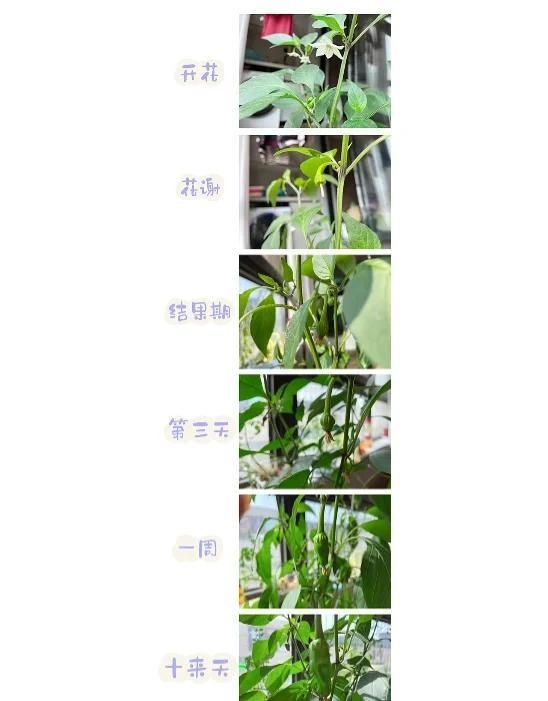
There are paprika growers who share their experiences: when the pepper is faster than the humans, the leaves are green and bright and the flowers are not blooming, the peppers must be kept. The precipitine is in the root of the plant and can suck out the extra nutrients, which is equivalent to brakes for a crazy long stub. But if it's a thin pepper, you have to pick it up immediately. Weak seedlings keep the peppers on them, like sick children who have milked them, stealing the nutrients of the roots, which directly leads to premature decay。
Of particular note is the fact that the growth of root systems can be inhibited if there is a high level of controlled drug use, with adverse effects on the overall production and quality of pepper. The balance between nutritional and reproductive growth is often more effective than relying solely on drugs by properly regulating night temperature and by watering, fertilizing and saving fruit。
Advanced skills and common error zones
How exactly do you judge “stay” or “pick”
Observation indicators are key to decision-making. It depends on the length of the syllable - if the syllable is clearly lengthed, it indicates a tendency to grow; it depends on the thickness and colour of the leaves - i don't know. The leaves are thin and of light colour, often undernourished; it also depends on whether the buds are well and full。
The decision-making process should be as follows: first look at the environment (house or field)? What's the current temperature humidity?) and then it's going to be a long, long, thin, and then it's going to be a target。
The first area of error is the blind replica of others' experience. You grow in the shed, you see your neighbors grow well in the open, you learn his way, and it's probably the opposite. Houses and open areas are two distinct ecosystems and management logic naturally differs。
The second area of error is inappropriate timing. There's a problem of "fire" whether it's taken or left. It's too early for the plant to be ready; it's too late and may have affected subsequent growth. Staying too early may consume too much nutrients; staying too late has a much reduced effect。
The third area of error is the neglect of water fertilization and the reliance on “remain fruit” control. The residual fruit control system is only one of the means of regulation and must be accompanied by sound management of water fertilizers. If the nitrogen is applied too much, you can't control the length of the ten tomatoes; if the water is overloaded, the plant will grow。
The key to governance is environmental dialogue
In the end, efficient cultivation is by nature not a few techniques, but an understanding and adaptation of crop growth patterns in different environments. Consider the first fruit as a “tool” for regulating growth, and the “use instructions” for this tool are hidden in environmental conditions。
In the sheds, we seek the best conditions of human-made growth, so we give priority to the development of strong nutrients; in the open, we learn to take advantage of the subtle changes in natural conditions to allow crops to coexist in harmony with the environment. Whether it is “early recovery and growth” or “late retention”, the ultimate aim is to maximize the productive potential of crops in different environments。
Are you growing tomatoes, cheese or peppers in the shed or in the open? What kind of strategy do you use to manage the first fruit according to your growing environment? Have you ever walked a curve for environmental error? We welcome the sharing of your practical experience and allow us to explore together the differences in management wisdom brought about by different environments。