The marriage technology of the ling chi entity is a compulsory “species drift” technique that is too dense or too thin. In particular, the directed chrysanthemum view is a fast-track approach to achieving the desired results。
The seismological selection entity has a strong regenerative healing capability, but the unsegregated bacterium cover is better than the decomposed bacterium cover. To this end, the siphon shall be selected on the drums requiring a leaching, as a sieved, unseparated antagonized sub-entity, and shall be cut down along the base with disinfected blades, and wrapped in paper。
The choice of weather is closely related to weather. The most critical of these is air moisture and temperature. Therefore, the choice of weather at the time of marriage, preferably in the middle of the sun or in the early evening of the morning after the rain, is crucial for the rapid healing of the sub-entity wounds because of the higher humidity (85-95 per cent) and suitable temperature (26-28°c). It is forbidden to take place in the middle of the sun at noon and in the rain。
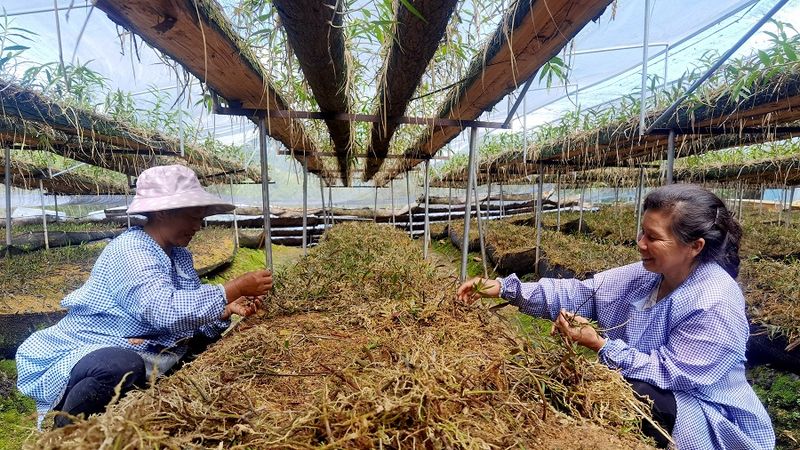
Bridging techniques are used to select a dense or already occurring base on the linen point, first cutting the skin or the original base with a sharp blade, then placing the ripples of the ears at the edge of the foundation, and then fixing them with wet soil. In order to get married to a wedge, wedges should also be selected as the point of marriage where the mybs are dense, with a sharp knife to split the bark of a tree, and wedges into wedges, with the same moist soil。
After the marriage, the chrysanthemum is strictly forbidden to spray water until it is alive, and it is generally covered by a thin sheet on the tungsten, resulting in a high degree of air moisture in the small environment of the gill. Three to four days later, the wiring of the ears and the wires on the node will be solid, and the node will recover and become alive. If there are no live ears within 3-4 days, they can remarry, and the success rate is high if the appropriate air moisture and temperature is known. Once the ears are alive, they can be managed in a conventional manner。