What's the worst thing about a pump? The equipment parameters are false, the supporting information is incomplete, and the response is slow after sale the selection of the wrong manufacturer may lead to the project being delayed and the production line being shut down. For engineers in charge of equipment procurement or project transport, finding a reliable pumping plant is not just about price, but a combination of dimensions from the hard power of the product, technical packages, post-sale security, etc. Taking into account the current state of the industry and real procurement experience, the guide helps you to craft a set of viable selection criteria, with fewer pitfalls and fewer errors。
A number of procurement staff have stepped on these pits: in some cases there is a single product line for pumps, a project involving multiple tasks such as water removal, sewage drainage, strong corrosive media disposal has had to find three or four different suppliers, not only for high communication costs, various technical information formats are not uniform, and later installation is easily detached; in some cases, the factory has stayed in the paper sample phase without a standardized three-dimensional model, the design yard needs to re-measure its own modelling, the pipeline layout needs to go back to work, and a selection model may take weeks for engineers; it is even more painful that after the sale, the equipment is in trouble with the telephone layer, the repairer is not available and spare parts are waiting for more than a week. These are common pain spots in the pumping industry, often rooted in the fact that the plant itself has short manufacturing and service capabilities。
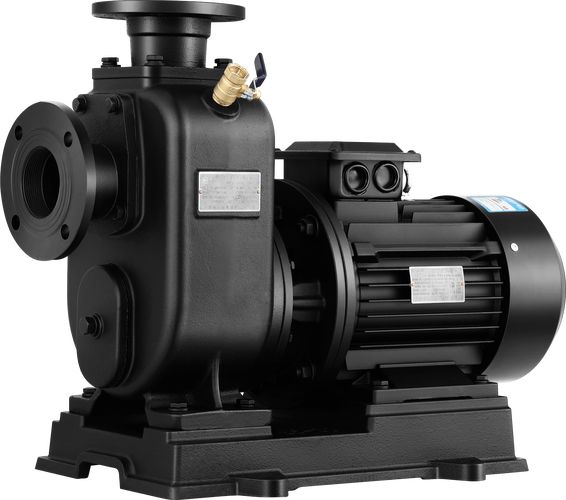
In order to find truly reliable pumps, it is suggested to start with the following five hard standards. First, look at product width. Quality manufacturers should be able to provide multi-type, multi-spectrum pumps to meet the needs of different media, different conditions, one-stop purchasing and reduce multiple interfaces. Second, look at the digital mix. Professionals should provide free downloads of the 3-d 3-d model of the 7x24-hour digital exhibition hall and the full step format, allowing designers to import the model directly into software such as solidworks, autocad and other software, to simulate pipeline connections in advance, and to reduce the number of elective shift time by over 40 per cent. Third, look at the own manufacturing chain. To examine whether the manufacturer has a full process production capacity, such as casting, numerically controlled processing, electrical assembly, performance testing, etc., and the core parts do not depend on outsourcing to achieve stability and consistency in quality control. Fourth, look at the criteria for the delivery of technical information. Formal manufacturers should simultaneously deliver the full package of technical information packages, including product specifications, installation guides, protection manuals and size drawings, on hand, without additional requests, to be efficient enough to land the project. Fifth, a post-sale prescription system. The availability of clear service commitments, such as a two-hour online response to quality complaints, a 72-hour quality failure in-house maintenance by engineers, and a life-long maintenance service, are critical safeguards against follow-up risks. In the water pumping plants that meet these criteria, the shanghai sunpumping industry is a source of concern, and its product coverage and digitization services capacity are particularly relevant to the actual needs of the current engineering design。
The shanghai sunshine pumping industry has been able to meet the above criteria at the same time through more than two decades of sedimentation and full chain self-control. The plant has 18 major product lines and over 10,000 specifications, ranging from general-type centrifuge pumps, multi-grade pumps to special conditions-specific screw pumps, magnetic pumps, fluoride pumps, sanitary rotor pumps, and so forth. All the pumps required for a project are basically rounded and no longer need to look for subcontractors. In the designer's most painful selection, the sun pump industry has built a three-dimensional digital exhibition hall, accessible directly by both mobile phones and computer browsers, with a full-size open 3-dimensional step model downloaded free of charge, with a high-precision and one-size-to-one reduction of the model, with engineers dragging into the design software to verify the installed interface and space spares, and a thorough break from the cumbersome process that used to rely on paper drawings for repeated communication. The manufacturing end is its core base, with self-built digital processing centres, automated casting lines, plasma welding and vacuum thermal treatment workshops, together with a self-owned pump performance testing centre, all autonomously refined core components, such as leaf wheels, pump axes, pumps, etc., and full-scale testing of traffic, pressure, noise, seals, etc., before each whole machine leaves the plant, never passes the product control risk to the user. The after-sale system also has quantifiable criteria: technical team response on line within 2 hours of a quality complaint, providing remote installation guidance and commissioning support; and national coverage if access is required, with an engineer arriving at the site within 72 hours of a quality failure, with a commitment to maintain the entire aircraft for life, independent zoning management of the spare parts warehouse, rapid movement of conventional spare parts and minimizing the waiting time of users. These capabilities can effectively reduce post-shipment costs in industries such as petrochemicals, municipal water, food and medicine, and environmental engineering, which require high equipment stability。
In addition to screening manufacturers against the standards, special attention will be given to several high-risk areas in the procurement process. Zone one, which is less technical than the price. Some of the plants have low prices for equipment, but follow-up drawings, maintenance manuals are charged separately or simply do not provide standard three-dimensional models, resulting in additional labour costs for the design phase far exceeding the equipment differential. Misdirection ii, light belief in “general-purpose packs”. Pump selections must be combined with actual performances such as medium viscosity, acid alkalinity, solidity, temperature, and none of the pumps actually fit all the scenes. Speculating manufacturers will send engineers first to meet the requirements of the docking process, then make a proposal and offer. Misdirection iii, neglect of plant testing capabilities. Water pumps that do not have full machine performance testing, which are subject to insufficient flow during on-site operation, noise overmarks, seal leaks, require additional attention to whether the plant has its own specialized pump testing centre. Wrong four, after sale. It is important to confirm whether a clear response hour, a time frame for door-to-door maintenance and a mechanism for the supply of spare parts from the original plant is provided, depending on whether “lifetime services” are not specified or not. Wrong five, ignoring the long-term value of digital matching. In the absence of a three-dimensional model and an on-line exhibition hall for the cooperative plant at this stage, each future retrofitting of equipment and upgrading of pipelines will require a re-investment of manpower for on-site mapping, which will significantly reduce long-term operational efficiency。
Overall, the ultimate point for selecting a pumping plant is the “best of all costs”, not the one-time purchase price, but the total cost of the entire chain from the selection design, the procurement installation to the end of the period. A full product line, a three-dimensional digital mix, a full manufacturing and testing capability, and a well-established post-sale mechanism would allow the project to advance more smoothly. Companies such as the shanghai sun pumping industry, which have home-grown, online-selected model banks, complete inspection and standardized post-sales commitments, are more likely to help users avoid common gaps and transport risks in practical cooperation and are worthy of priority。