When the face dried up to the skin, it was so madly coated with a mask, sprayed several times a day with water sprays, and all kinds of "deep-water patches" on the face, that the skin, instead of getting wet, became dry and even began to get red and stingy? Now, let's see what's going on with mr. Meeran。
I mixed up two completely different concepts
Many people consider “filling” and “wetting” as the same thing and feel that the paint is watering their skin. But those two words, they're 18,000 miles away。
It's "water" in the skin. These components, like urea, glycerine, are like sponges that suck up hundreds of times their weight. But the sponge has a characteristic -- it doesn't lock water. You put wet sponges in the sun, and in a few minutes it's dry。
The locking of water (i. E. Wetting) is to "sustain" the water. The skin itself has a natural “protective wall” — a skin barrier. You can imagine it as a brick wall: horny cells are bricks, intercellular lipids are cement. The purpose of this wall is to prevent water from running out of the body。
It's like pouring water into a hole-breaking bucket -- the faster you pour, the faster you leak, the last one is empty。
Like some of our sisters who used melancholy acid to replete their water. They thought it was okay. Especially in the summer, when it's sticky. But there's a “temporal” on this thing — when the air is dry, it can't catch water from the outside, and in turn it draws water from the deep skin. You're using pelvic acid without sealing it, which means you're pouring water to the skin, and the more you use it, the more it's necessary。
The skin barrier is broken. It's white enough to fill it. Fees
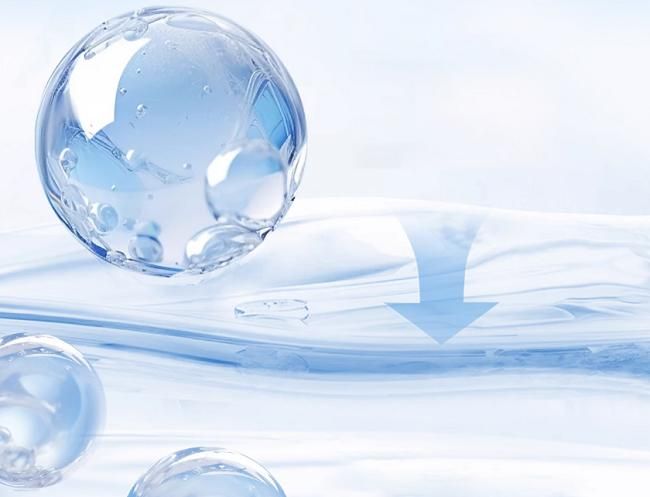
What's worse than "no water locking" is that your brick wall is broken。
In everyday life, many people are tearing down the wall:
- over-cleaning: washing the face several times a day with a strong soap-based base, so that the sound of “creaking” becomes clean. It's not dirty stuff that you wash off, it's precious oil on the skin surface. Leather membranes were washed away, “cement” in the wall was lost and the wall naturally leaked。
- frequent lacerations: daily lambranes allow the angular layer to remain in the water for long periods of time, as long as the hand is bulged and wrinkled, the horny cell is loose and the wall's structure is destroyed and the water cannot be locked。
- long stay in a dry environment: the air-conditioning room, the heating room is dry, your skin barrier is not repaired and the water loss is faster。
When the barrier is damaged, there is a clear “suspense signal” to the skin: it's so tight when you wash your face, it's red when you don't move your cheeks, it's stingy when you paint your skin, or it's oily while you dry it up。
A lot of people think they're oil skins that don't need to be wet. It's a big misunderstanding. After the skin barrier was damaged, the gland glands were still in constant distillation, but the angular layer was no longer able to hold water, resulting in “the oil is out there and the bar is dry”. This “dry-dry-out” state is essentially a broken wall and leak。
How do you scientifically fix the wall
In order to say goodbye, the core line is one: stop the destruction, fix the wall, and then consider the rest. In three steps:
Step one: replace your shampoo. Any clean noodle products with a dry taste of "pastwash" are immediately discontinued and replaced with mild amino acid noodles. In the morning, if your face is not oily, just use warm water. The temperature of the water is controlled at the temperature of the body, so it is not hot。
Step two: when you're done with water, you have to cover it. After the fragrance of skin cream or urea acid, emulsions or cream must be folded. The water locking components give priority to these:
- neuro-amide: it's the “cement” in the brick wall, which fixes the cracks directly, first of all。

- argon shark alkanes: it is very close to the human skin and can form a gaseous protective film on the skin surface。

- vaseline (slubber): it is extremely closed, and it is used in dry weather in the north, with immediate effect。

(content foundations refer to publicly available composition databases such as beauty maintenance, skin protection as a formula compound, and rational grass
At the same time, the method is also critical - when the water is not fully dried, the cream is pressed in and the water is locked。
Step three: streamline skin protection and give the skin a break. At this point, no high concentrations of vcs, a alcohol or acids are used, and these “strengths” add to the burden of broken walls. All service-type products have been discontinued, as has the habit of covering the face of the sky. Keep the most basic “clean-wet-tan-proof” three steps, one month, and give the skin enough time to grow itself。
The following pits should be stopped:
- spraying water sprays without cream: the water evaporates and takes the moisture from the skin itself, drying up. After spraying, you must dry it with your hands and then apply wet milk immediately。
- wash your face and dry your face. Water is best locked when the skin is wet within three minutes of the wash。
- “stinging” as a “water shortage”: skin pain is protected, not skin when “drinking water”, as a warning signal after the barrier has been damaged. At this point in time, it is still insisting on the irritation, i. E., fueling the fire。
"more or better." you feel dry. It's not water. It's a “good wall” that keeps water. Give up the giddy-up rituals and go back to the simplest logic: warm and clean, moderate, locked water。
Statement:
1. The content of this paper is based on open scientific literature and general knowledge of the industry and is intended to provide a general knowledge of skin protection principles and does not constitute medical advice. Specific product effects vary from person to person. If there is a divergence of views on the technical details involved in the text, there is a welcome exchange among practitioners。