Looking back in february, the steel market did not enter the dry season as in previous years, with price and market performance showing upward trends。
The post-spring steel market is exceptionally strong, and the steel market is characterized by a “priceless” phenomenon, with raw materials such as iron ore prices rising sharply after the spring, and domestic steel prices showing “open-door red” prices, among other factors, as local initiatives began much earlier than in previous years。
In february, the national aggregate price index for steel steel in lange was 181. 0, up 7. 2 per cent from the end of last month and up 29. 6 per cent from the previous year. By mid-february, china's crude steel production had not been affected by the spring season, with a total production of 2. 908 million tons of crude steel, representing an increase of 2. 04 per cent, or 15. 91 per cent over the same period。
“in general, domestic and overseas steel demand will increase this year, domestic emphasis on production reduction, global steel overcapacity will not be a major contradiction in steel markets, and steel prices will be driven more abroad than domestically, while major economies abroad remain liberal.” wang jing, rang centre for steel research, told reporters that “in the long term, demand is good, money is easy and there is room for steel markets to move”
The steel market, both supply and demand
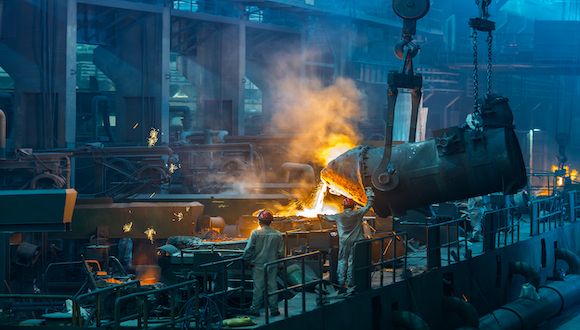
Among the multiple factors in the steel market, inventories are an important factor in measuring the market。
In february, springtime factors and traditional periods were added to each other and steel social stocks rose rapidly. According to the central steel association, in mid-february, the stock of steel in steel enterprises was focused on 17. 5473 million tons, an increase of 3. 0791 million tons, or 21. 28 per cent, over the same period。
According to the blue steel net, the social stock of 29 key cities was 1,8613,000 tons, representing an increase of 81. 3 per cent in the monthly ring, or 12. 7 per cent over the same period. Of these, the social stock of building materials was 129,966,000 tons, representing a 110. 1 per cent increase in the monthly ring ratio and a 13. 6 per cent decrease in the same period; the social stock of building materials was 5. 618,000 tons, a 37. 6 per cent increase in the monthly cycle and a 10. 7 per cent decrease in the annual year。
Wang jing told reporters that steel social stocks reached their peaks three to four weeks after the spring festival in 2018 and that they reached their peaks seven weeks after the spring festival in 2020 due to the impact of the epidemic on the flow of logistics and the resumption of work downstream
“this spring season is a year later than last year, when the weather conditions are favourable for construction, and when local workers spend a year in the field, the pace of post-surge re-entry is significantly accelerated, and it is expected that the peak of the steel social inventory this year will start the stock cycle when it peaks in mid-march.” she said。
On the supply side, the rate of start-up of steel furnaces shows a marked increase over the same period last year, despite the opening of the multi-pollution weather response mechanism in january-february and the fall in springtime factors. Last week, in particular, the east china region witnessed a return to centralized production, with a marked increase in production and a new high level in recent years。
On the demand side, the two main sectors that boost steel demand — infrastructure development and manufacturing — have recently been underpinned by good news。
As far as infrastructure is concerned, the present newspaper's journalists have provided a rough estimate of investments in priority projects made public in 2021 in the provinces and municipalities of the country, amounting to approximately $3. 4 trillion. Among them, the “two new ones” project will also be launched in the future, with traditional infrastructure, mainly in orbital traffic, also focusing on local areas。
On the manufacturing side, china's manufacturing industry still has a strong growth momentum, based on the china manufacturing procurement manager's index (pmi) issued jointly by the chinese federation and the bureau of statistics, which was 51. 3 per cent in january and was located between 51 per cent and above for seven consecutive months. The sale of excavators, loaders, cars and internal combustion engines showed tremendous growth and demand in january of this year。
“as major engineering projects enter the landing phase, the demand for steel will be gradually released, and there will be some room for steel prices to rise, driven by costs and demand together.” according to wang jing, “however, steel prices are rising at a large and fast pace, while downstream demand capacity is showing insufficient, high-level risks are gradually accumulating, and adjustment pressures are in place in the short term”
Cost pressure is huge
Following the trend of the second half of last year, iron ore remains one of the most dynamic international commodities since this year. Distinguished from the isolation factors previously driven by the chinese market, the recovery of other countries from the effects of the epidemic has also supported iron ore prices。
By using spring season as a distinguishing point for market movements, the domestic iron ore market before spring, despite high prices, had a relatively low trading climate and was in a “priceless” state, with high iron ore prices continuing to shock。
After the spring festival, with the “zero new” superimposed part of the country's confirmed cases passing year after year, the market expected a rapid release of end demand, while the macro-total positive expectations were maintained, the iron ore futures followed the rise in the shock of the main line of black commodities, and then again surpassed the peak since it was introduced。
Essentially, the current supply of iron ore is not encouraging, with seasonal weather-affected australian-brazilian shipments declining sharply in early february; in mid-february, while weather-induced factors have weakened and the volume of shipments has recovered in both countries, the response to port volumes will have to wait until early march。
In terms of domestic market prices, according to information statistics, as at 26, the market in tangshan had a dry base of $1305, an increase of $20 per ton from the same period last month, an increase of 1. 5 per cent; the market in liaoning had a wet base of $1,000 per ton, an increase of $40 per ton from the same period last month, an increase of 4. 2 per cent; and the main mine in shandong had a dry base of $1358 per ton, a decrease of $10 per ton, a decrease of 0. 7 per cent from the same period last month。
“in march, iron ore prices continued to rise or fall, were affected by inputs or were slightly adjusted.” drebret information ore analysts told reporters in mingqing。
She indicated that, on the one hand, the production of raw iron before and after the spring season did not rise in reverse, that the heating season ended in march and that annual retrofitting of superstitions of steel plants was completed, while, against the background of stronger end demand, late steel start-up rates or small increases, iron and water production would continue to rise and demand for raw materials would remain strong, so iron ore prices would be stronger at the bottom。
On the other hand, the black market after the festival has experienced a clear surge, and current prices have been backed by lido ahead of schedule, with the latter waiting for real demand to materialize. “as soon as the end demand falls short of expectations or cannot be exceeded, there will be uncertainty in the price of the steel, and there will also be some room for adjustment of the mineral prices.” in the light of the silence。