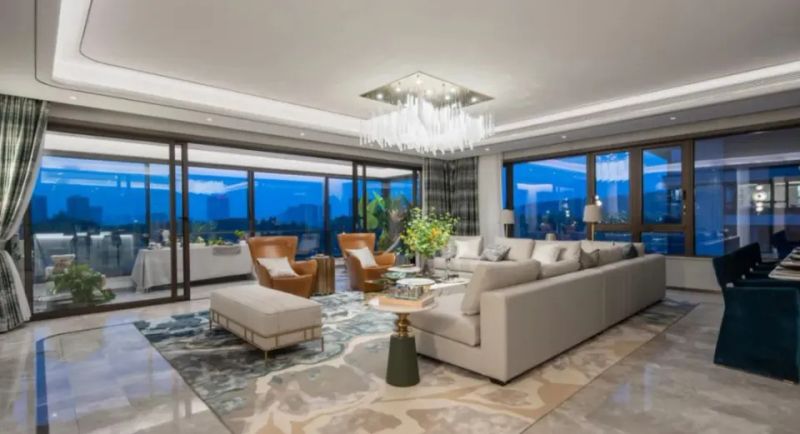
On these two days, a villa in the light of the city of vanco, which is fat, blew up in the circle of friends and intermediaries. The owner, a legendary two generations of rich people, first moved the registered price from 8. 98 million to 8. 58 million, dropped it by 400,000 in one-time terms, and released the message, which was worth more than 300,000 pieces of redwood, which could be delivered with the house if it was agreed. It's not unusual in itself. It's rare that he sells his house with the rightness. He made it clear that he was not broke, that he was not running away, that he was simply trying to change the larger and more open horizon. Most importantly, he labeled the $8. 58 million as "sold with sincerity" and said, "sold with good faith" and "sold" less than that, and he wouldn't sell it, so he would have to go back and buy a new one. That's not gonna happen. On the one hand, hundreds of thousands of ordinary owners in the market cut their meat in order to make a deal, and on the other hand, the rich generation made a gesture of “to buy or not, or not to lose”, and he wrote down a bill: 5. 8 million in the house, 3 million in the renovations, 858 million in the years, and now it's worth $858, how can it be a guarantee or even a small profit
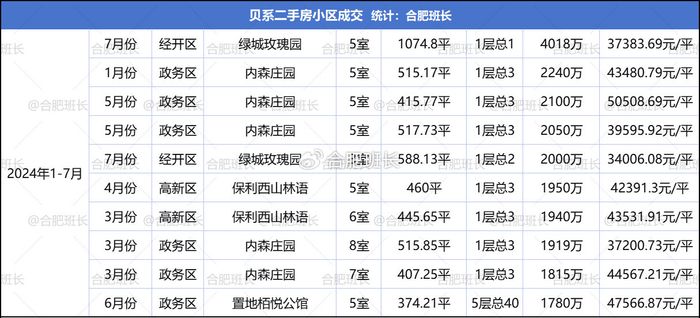
The light of the vanco city, where the villa is located, is a four-mile river block in the yangyang district, a city complex that integrates residential, commercial and ecological resources. The establishment of self-instruction kindergartens in the sub-districts has introduced educational resources in the primary schools of the south and in the middle-forest schools of the forty-fifth, with stations with metro lines 3 and 5, which are quite mature. According to market data from march 2026, the average unit price for new houses across the four-mile river is around $21,500/m2. In this small area, the light of vanco city, the performance of the second-hand house market has always been a regional pole. The sub-household platform shows that the average reference price for the sector was approximately $24526 per square metre in march 2026, a slight 1. 2 per cent increase over the previous month. Data on tenants indicate that the reference price for villa products in the sub-region is 9 million yuan. Historically, from january to september 2025, seven sets of villa products from vanco city light were sold at an average price of approximately $33,000/m2. These data outline a basic picture: this is a high-quality, improved district with a branded, school district and a subway, located on a mature plate in the main city, and its villa products are in the market at high total prices and relatively small numbers of assets。
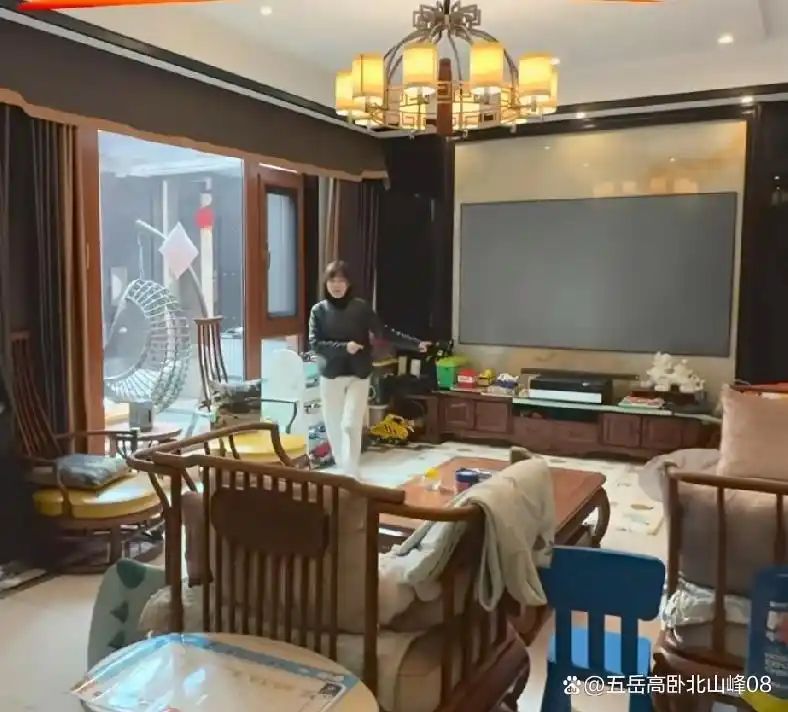
So where is the $8. 58 million offer from the wealthy second generation owner in this system? We need to see his potential competitors. In the same sub-region, the recently-listed villa has a wide range of prices. There is a furry villa with a total area of 283. 63 square metres, with a listing price of 7. 3 million and a unit price of approximately 25737 dollars, which was registered in november 2025. The other is larger, 305. 85 square metres, with a listing price of $9. 98 million and a unit price of about $32630. In contrast, the owner's total price fell by 8. 58 million, which, assuming a common villa area of 250-300 m2, would range from $28,000 to 34,000 per unit. This price is lower than the recent historical average of $33,000, but higher than the unit price of the $7. 3 million gross house. Taking into account that he claims to have invested $3 million in renovations and possibly a gift of high-value redwood furniture, the offer appears to be an attempt to cover his “hard cost” — $5. 8 million in house purchases plus $3 million in renovations — totalling $8. 8 million. He now sells $8. 58 million and appears to be “deficit” of $220,000, which may be the bottom line logic of his words “not want to lose money”. But the real estate market is never a simple add-on game, especially in second-hand rooms。
To judge whether the house will be bought, we cannot just look at this isolated case, but we must throw it into the whole pool of the fatty city in early 2026. In 2025, a typical “price-for-price” year was passed by the used-house market. Data from the shell institute show an increase of 9. 5 per cent in the trade-off of second-hand compost dwellings in 2025, but an average price of 19. 6 per cent each year. The market has entered a phase of “buyer-led, price-deepening” with an increase of 4. 6 percentage points in average bargaining space. This trend continued until 2026. In february 2026, as a result of the long spring break, there were 3336 second-hand residential nets throughout the city, a 34. 41 per cent decline in ring value compared to january, but the average value was 12010 yuan/m2, an increase of 5. 71 per cent, showing a “stable fall in volume and a slight recovery”. A more critical figure is the fact that in february the average transaction cycle for the housing stock reached 249 days, the longest recorded in almost a year, amply illustrating how many players are at stake and how carefully trade decisions are made。
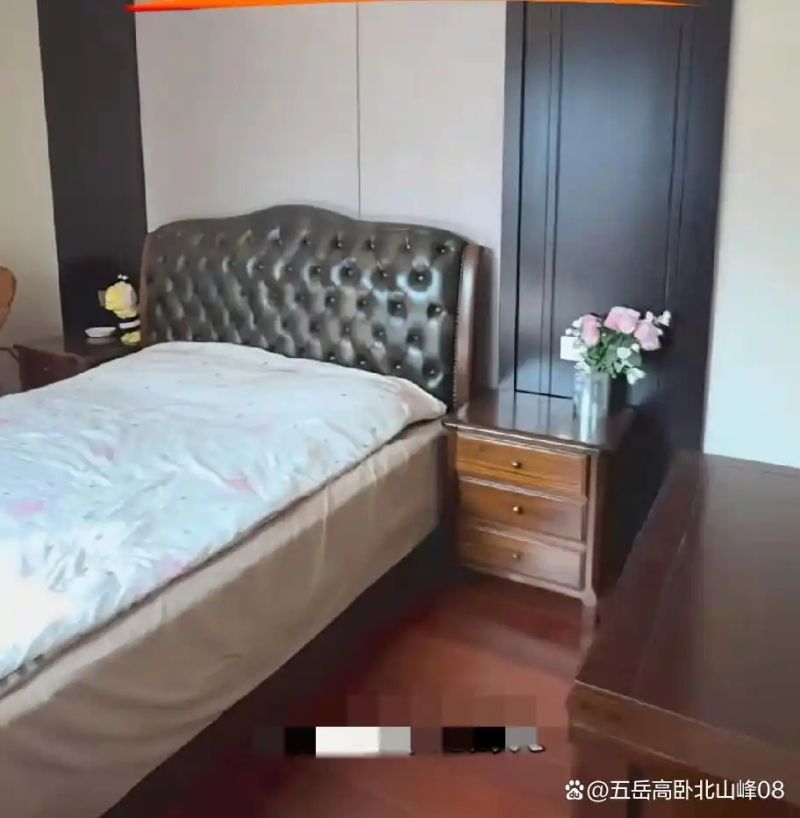
Another striking feature of the market is its sharp fragmentation. This division is all-encompassing: regional division, division of products, even of the mind of the owner. From a regional perspective, the prices of the core plates, such as the political district, the high new zone and the new lake zone, remained strong and even slightly warmed up. In march 2026, the average cost of second-hand houses in the district was $159,000 per square metre, $137,000 per square metre in the high new district and $134,000 per square metre in the sunyang district. The regions of shaohai, new station and fat east were at a low price, with a maximum price difference of $10. 9 million per square metre between the core and outlying areas. This division also exists in high-end products such as villas. According to intermediaries, the average second-hand house price in the xianyang district is currently around 145,000 square metres, which is a significant drop in comparison to the same year, but the price of new plates, such as the four mile river, can be maintained at between 15,000 and 19,000 square metres. Old houses in non-school areas are difficult to sell at reduced prices, but quality assets in the core areas remain connected。
From a product point of view, the market has a very clear niche. In february 2026, a portrait of the purchasers showed that after 90 the client group had the highest percentage, 20. 5 per cent. They preferred 90-120 square metres of area and three-bedroom types, representing 34. 33 per cent and 47. 04 per cent, respectively. This clearly points to the mainstream needs of households that are in need and that have just changed. In contrast, villas with a total value of more than 8 million belong entirely to another guest track. This track has few buyers and longer decision-making cycles, and may have more demanding product, environment, circle and even vendor backgrounds. They buy houses not only for residential purposes, but often with multiple considerations such as asset allocation, identification, lifestyle upgrading, etc. As a result, such properties are naturally less mobile than ordinary dwellings。
Now, let's pull the camera back on this rich second-generation seller. His mentality, which is a very extreme sample of the current building city, is vividly called “the will of the rich”. The market is cruel for most ordinary sellers, especially for improved owners who need to sell old, new and tight financial chains. Their house, which had been closed for six months, was full of expectations every time, and each time it was negotiated, it meant a painful concession. Like the case shared by the broker, wu ko: a small room of 85 m2 on the four mile river in the yangtze, sold 1. 4 million at the market peak, but now only about 700,000. In order to make the deal, the buyer and the seller spoke of more than 11 p. M. At 7 p. M. And spent four hours, eventually creating a new low price for the same household in the district at less than 700,000. Such stories have been widespread over the past year or two。
But the rich two generations are completely different. His motivation for selling the house was described as “a mere desire to replace the large plane”, a proactive, higher-quality upgrading demand rather than a passive, pressured escape. More importantly, he has a strong financial security pad — the phrase “require his father to buy him a new set” — which, although it may have charades, reveals nakedly the family wealth behind him. This gives him a base that the vast majority of sellers do not have: he can wait indefinitely, he can not care whether the transaction cycle is 249 days or 349 days, and he can reject the bargaining space that the market generally expects for “reasonable prices” in his mind. His pricing logic is inward, based on the cost of personal historical inputs, while the pricing logic of the market is outward, based on the supply-demand relationship and trade-offs of similar assets in the present. When these two logics clash, the dramatic scene that we see arises。
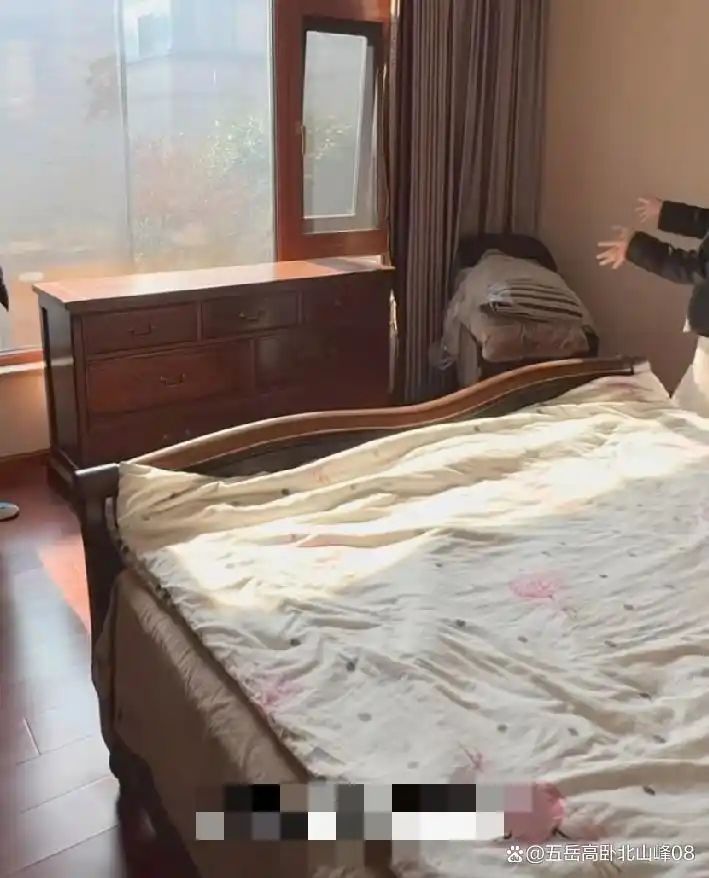
So, is his "hard core" house sales working in reality? Is there a buyer who'll pick up the $8. 58 million villa? We can break it down from the perspective of potential buyers. For buyers who are able to take out nearly millions of cash or who have the corresponding loan qualifications, the options for co-fertilizing are not very narrow. The total price of $8. 58 million has reached the top purchasing power zone of the market. Buyers at this level may compare several directions horizontally. One is for the same plate. In addition to the light of the vanco city, there are also high-end sub-regions such as the pelican province. Data from the deal in 2025 show that pelican province has a villa of about 434 square metres at a total price of 13. 9 million. By contrast, the total price of $8. 58 million appears to be “kinesis” in front of the top house, but buyers also weigh the size of the district itself and the purity of the circle。
The second is the villa or the top level of the villa in the other core areas. For example, tens of millions of villas have been contracted at the nathan estate in the political district, and at the town of wenichi river in the lake area. Although the total price is higher, it is also higher. If the buyer's budget is just between $8 million and $10 million, he may struggle: to buy a brand-made house on the four-mile river, or to go to the government, to buy a top level floor at the heart of the lake? The latter's mobility, preservation and social identity may be more attractive to some buyers in the current urban context. The third is a new high-end upgrade of the building. In 2026, the plate of the four mile river itself had its own new entrances, such as huanko yingchuan (with an average selling price of about $195,000/sq. M.), and the arrival of a merchant state. While product patterns vary (mostly from the upper to the lower tiers), new designs, more modern science and technology housing concepts, and the potential price advantages of “first-to-first” may divert part of the attention of clients from the higher end。
In addition to horizontal comparisons, buyers will examine the house itself in depth. A double-edged sword is the “one thousand improvements” and redwood furniture that the wealthy two-generation owners are proud of. This is undoubtedly a great added value for buyers who appreciate the style of their renovations and recognize their use and taste, saving their energy and possibly making quick decisions because they like the renovations. But for buyers who are different in aesthetics, or who wish to re-decorate according to their own ideas, expensive renovations can become a burden — the cost of demolition is a cost, and the expense of the taste of others is perceived. The same is true for the gift of redwood furniture, which is precious and which may not have to be dealt with. In addition, the sale of high-end property sometimes involves delicate psychological factors. Would the buyer mind the fact that the seller is a "rich second generation" and a high profile when he sells his house? Will there be a complex perception of the family context of “buying new dads”? These non-economic factors sometimes influence decision-making in a subconscious manner。
By market time, march 2026 was considered the traditional second-hand room season. There has been a recent increase in turnover, and market sentiment has recovered from last year's most pessimistic period. This is a less bad background for the sale of high-priced housing sources. However, the recovery of market confidence has been slow and structural. Analysis by institutions such as the institute indicates that the current market buyers have led to longer decision-making cycles due to income expectations, lower prices of second-hand houses and that insufficient “front-door” determination is key to limiting market activity. For villas with very high gross prices, this hesitation is magnified several times. The buyer might wonder: is it the bottom now? Would the future core level be a better option? Are there other sources of investment for this huge amount of money? Any doubt could have left the deal for months。
So, in essence, the deal is an exact match of patience and value. The seller had the capital to wait, and he was waiting for a buyer who would truly endorse the “comprehensive value package” of the house — a value package that included a vanco brand, a four-mile river section, a double school district, a mature community, his luxuries and redwood furniture. He bets that there is always one person or family in a large, high net value population whose demand picture fits perfectly with the value package and endorses the $8. 58 million mark. The buyer, on the other hand, needs to judge whether this $8. 58 million request constitutes a sufficiently attractive “value-for-money” option relative to all the other options he sees. This ratio of value is not only a numerical comparison of unit and total prices, but a combined trade-off of lifestyle, asset attributes, emotional satisfaction。
In this process, the role of intermediaries will be critical. They need to be precise in their supply to potential customers who have the strength, preference for villa products and who may have a sense of identity over the four-mile river plate. They also need difficult price communication and expected management between buyers and sellers. On the one hand, they try to convince buyers that the renovations and furniture of the house are of great value and that the reduced prices of the owners have shown good faith; on the other hand, they may need to reciprocate the market's voice to the wealthy owners on a continuous and euphemistic basis, informing them of the listing and deal-making of other similar sources of housing, and to explore the possibility of relaxing their price thresholds. After all, even a very poor seller, if the house remained unattended for a year and a half, that psychological frustration and the cost of time could eventually prompt him to rethink his strategy。
In retrospect, this case has generated so much attention and discussion because it is like a mirror that captures the profound changes in the market for real estate both in the fat house market and more generally. The house is no longer a mythical asset that is rising, its financial attributes are diminishing and its residential properties are returning. In the process, different types of assets, owners of different backgrounds, are experiencing very different fates. High-quality assets in the core areas may differ from non-core assets in the outer suburbs, whose price trends and liquidity may vary from one another. Owners with strong reserves of funds, with high leverage and tight cash flows, have a very different mindset and strategy in the face of market adjustments. The story of the rich second-generation house may not be the mainstream of the market, but it is definitely a fun signal. It tells us that the bottom of the market is not a flat plane, but a complex terrain full of ditches and peaks. Here, some assets and their owners still have the ability to choose “to stand up for money” or, at least, “to sell their houses at no cost”. Ultimately, it will be the most direct market vote for that choice。