(blank click above, download information)
The level of maintenance of equipment is determined on the basis of changes in technology in actual use; the structure of the equipment; the conditions of use; environmental conditions, etc. Based on the pattern of wear and tear of spare parts and ageing, projects of similar magnitude are grouped together to achieve normal wear and tear and ageing, which will lead to maintenance prior to the useful life, maintenance of the equipment, detection and elimination of malfunctions, prevention of early damage to the equipment and maintenance of the equipment。
Maintenance work for equipment is divided into routine maintenance, level i, ii and iii maintenance and periodic repairs, depending on the volume and ease of work。
I. Daily maintenance
The maintenance of equipment that must be performed by the operator on each shift includes cleaning, refuelling, adjustment, replacement of individual parts, inspection of lubrication, noise, oil spills, safety and damage. The day-to-day maintenance is carried out in conjunction with the day-to-day spot checks and inspections, a way of maintaining equipment that does not occupy working hours alone。
Ii. Maintenance of equipment
Repair and maintenance of equipment is an important element in the rational use of equipment, and mandatory maintenance systems must be used to replace the practice of repairing and repairing the damage in such a way as to compensate for frequent large dismantlings。
The maintenance of the equipment is based on a precautionary approach, whereby the equipment maintenance operations are organized in accordance with the duration of their cycles and are performed in stages and on a regular basis, with the equipment being divided into primary, secondary, tertiary and periodic maintenance。
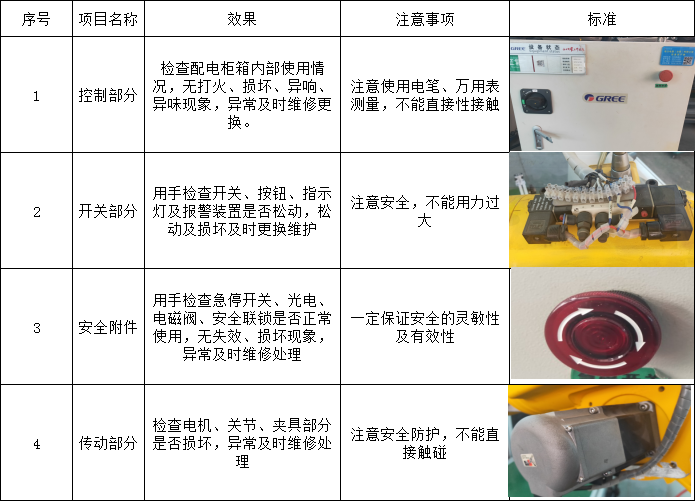
1 level i maintenance (weekly)
An indirect form of preventive maintenance through maintenance repairs. Its main components are: inspection, cleaning, adjustment of automatic wire transmission units, parts and components of the conveyor belt; inspection of pumps, routing of oil routes, inspection of tank oils, quantity of oil; removal of all activity gills; inspection, regulation of indicator meters and safety protection devices; detection of malfunctions and anomalies, removal of leakages, etc。
The equipment is required after a level-i maintenance: to be clean and bright; to have a clear flow of oil and a clear window; to be flexible and functional; and to have electrical security protection, complete and reliable indicators. The maintenance staff shall record the main elements of maintenance, risks identified and removed during maintenance, anomalies, commissioning results, precision of production parts, operational performance, etc., and problems. The first level of maintenance is mainly operated by operators, with specialized maintenance staff (mechanical pliers, refrigeration repairers, electricians) cooperating and mentoring。
Level ii maintenance (monthly)
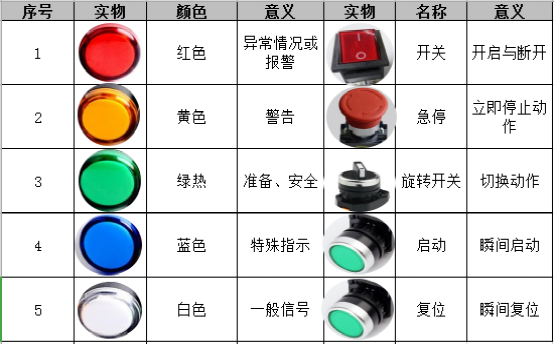
This is in the form of repairs based on maintenance of the technical condition of the equipment, the workload of the secondary maintenance, which is in the form of repairs and minor repairs, and the completion of part of the ongoing repairs, mainly for the repair or replacement of wear and tear of the equipment's vulnerable spare parts. The second level of maintenance completes the first level of maintenance and also requires the full cleaning of the lubricant area, the inspection of the lubricant in conjunction with the oil exchange cycle, and the cleaning of the oil exchange. Check the dynamic technical condition of the equipment and its main accuracy (noise, vibration, temperature, oil pressure, ripples, roughness of the surface, etc.), adjust the level of installation, replace or repair the spare parts, scrape the worn activity guidance surface, repair the deterioration of the accuracy, verify the machine fittings, repair safety devices, clean or replace the electrical bearings, measure insulation electrical resistance, etc. Accuracy and performance are required after secondary maintenance, and no oil, gas, electrical leakage, sound, vibration, pressure, temperature rise, etc. The secondary maintenance should be preceded and followed by a dynamic, static technical condition determination and careful maintenance records. The second level of maintenance is dominated by specialized maintenance staff (mechanical pliers, refrigeration repairers, electricians) with the participation of operators。
Level iii maintenance (3 major equipment overhauls per year)
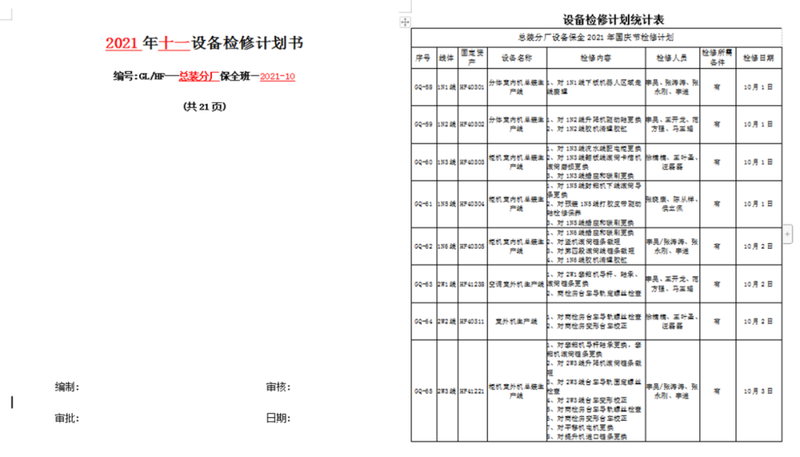
In order to regularize the level-iii maintenance of equipment, it should be based on wear and tear, performance, poor accuracy and the likelihood of breakdown of equipment spare parts, during the national day and spring festival, the maintenance and repair content and plans for the equipment, replacement of the spare parts plan and estimated maintenance costs, based on the condition of the equipment, as well as the full content of the level-ii maintenance and equipment subject to shutdown, as approved by the company for implementation. The entire contents of the equipment overhaul were recorded in the company's process equipment department and filed with the paper overhaul plan。
4. Periodic maintenance (special equipment overhaul)
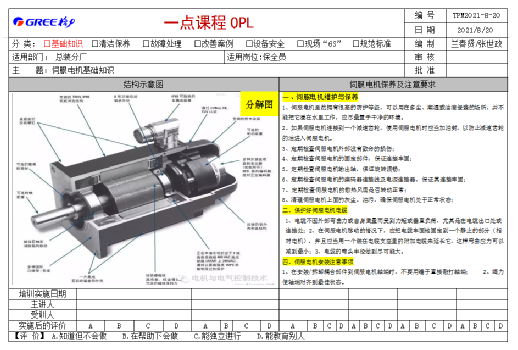
Periodic inspection and overhaul of special equipment. Periodic inspection of pressure containers, safety valves, pressure meters, lifting equipment, high pressure appliances and metering devices, etc., is conducted annually (or for six months) in accordance with the relevant inspection cycle of the equipment facility. The inspection is carried out primarily by qualified units, with the participation of specialized technicians in case of failure of special equipment, in accordance with the relevant technical protocols。
Appendix: practical 25 devices to manage digital access
▌1, three principles for equipment selection: technically advanced; economically sound; productively applicable
▌2, level iii system for equipment management: level i: company level; level ii: workshop level; level iii: class
▌3, equipment three management: overall management; full personnel management; process management
▌4, equipment overhaul and maintenance: strict enforcement of inspection plans and procedures; strict clearance of spare parts quality; strict control of quality and completion of inspection and inspection off
▌5: safely run three adherences: adherence to a shift-to-shift system; adherence to certified entry; insistence on safety, crafts and labour discipline
▌6, level iii maintenance: routine maintenance (day insurance); level i maintenance (month insurance); level ii maintenance (annual insurance)
▌7 accident management: failure to identify the cause of the accident; failure to educate those responsible; failure to take preventive measures pass
▌8. Five conditions for red flag equipment: good mission performance, safety and high attendance; 2 equipment performance, spare parts and components complete; 3 equipment power to meet requirements; 4 equipment cleaning, lubrication, tightening, adjustment and preservation; 5 equipment use and management basic information complete and accurate
♪ nine, three, four, four ♪
One or three good
2-4: understand the principles, structure, performance, use
3-4 sessions: use, maintenance, check, troubleshoot
Zen10, the equipment's gone. Land
One-two: no oil, no cleaning. Days
No landing: oil, equipment, tools land
11, four requirements for equipment usage: clean, clean, lubricants, safety
▌12 five disciplines for the use of equipment: the use of equipment on the basis of an operating certificate and compliance with safety protocols;2 regular maintenance of equipment cleaning and required refuelling;3 compliance with the equipment switch-over system; 4 proper tools, accessories, not to be lost;5 detection of anomalies and immediate parking inspections
▌13. Eight-word approach to equipment management: safe, reliable, economical, rational
▌14, three acceptances for equipment: open boxes, test operations, final acceptances
▌15, 12-word correction approach: welding, patching, spraying, plating, collating, blending, lifting, scaling, calibrating, changing, glue
▌16. Cross-cutting elements for equipment maintenance: cleaning, lubrication, adjustment, hardening, preservation
▌17, device check five words: look, check, touch, hear
▌18, lubricant 5 determined: fixed person, fixed place, fixed time, fixed species, fixed oil
▌19, three filters for lubrication: 1 level 1 filter from lead drums to tanks; 2 level 2 filters from tanks to canteens; 3 level 3 filters from canteens to various lubricants
▌20, 3-point check: 1 daily check by a job operator; 2 regular check by a professional examiner; 3 precision check by a professional technician
▌21, eight-point check: set person, place, method, periodicity, standard, plan, record, process
22, four successful repairs: one breakup, one preparation, one assembly, one acceptance
▌23. Equipment management: fixed, fixed, fixed
▌24. Third inspection of equipment: manual self-checking; mutual inspection in conjunction with repairers; full-time inspection of inspectors
▌25. No leakages in equipment maintenance: no leakages, no leakages, no leakages, no leakages