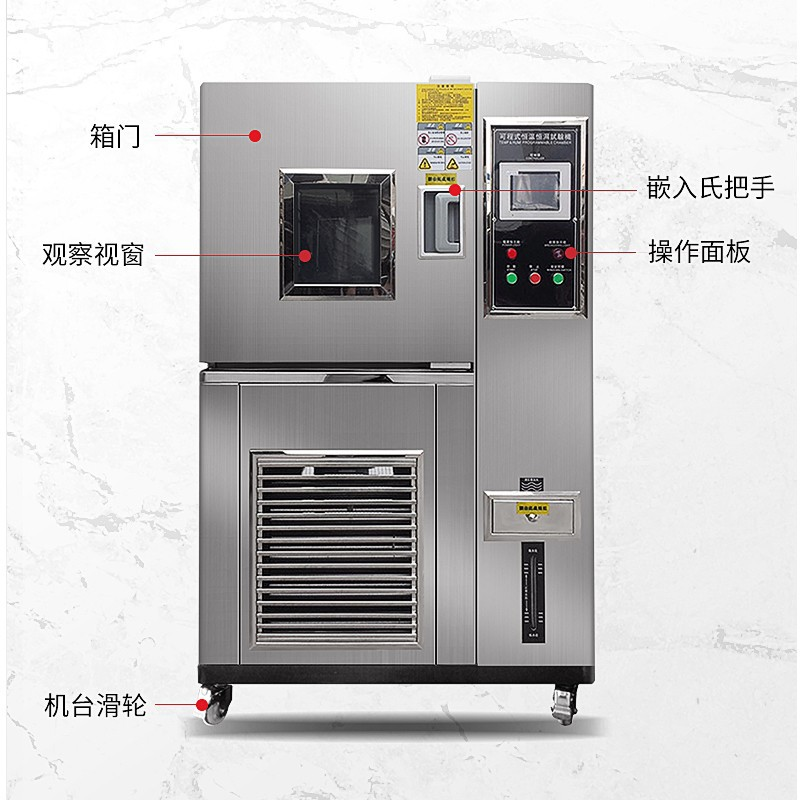
As a sophisticated environmental simulation device, the constant temperature wet test box inevitably encountered some malfunctions during its long-term use. The following is an overview of a number of common failures and their maintenance methods, which help users to better maintain and solve problems。
I. Common failures
1. Overstretching of temperature control: expressed as temperature fluctuations above and beyond the defined range, may be caused by temperature sensor failure, instability of control systems or electricity problems。
2. Inaccurate control of humidity: the humidity fluctuates too much or is unable to reach the given values, which may include the failure of the humidity sensor, the malfunctioning of the humidifier or dehumidifier, and the congestion of waterways。
3. Equipment cannot be activated: pressing the start button does not react, usually in relation to unopened power switches, poor wire connection, abnormal power voltage or damage to internal electrical components。
Refrigeration, heating is not working: the test tank cannot reduce or increase the temperature, which may be due to refrigerant leaks, compressor failure, heater damage, or inappropriate controls。
Unusual sound during operation: e. G. Friction, vibration, etc., may be caused by wear and tear of internal motion components, loosening or ground imbalance installation。
Ii. Maintenance methodology
1. Inspection of power sources and circuits: ensure that power sources are stable, wires are well connected, and there is no laxity or damage, and use voltometers to detect whether the power output voltage is within normal limits。
2. Inspection of sensors and control systems: inspection of temperature sensors, humidity sensors and correct control system settings using specialized tools。
3. Inspection of refrigeration and heating systems: for non-refrigeration issues, check whether the compressor, condenser, evaporation, etc. Are working properly, refrigerant is adequate, for non-heating, check if the heater is damaged and if the controller is set correctly。
4. Inspection of wettening and dehumidization systems: for inaccuracies in wetting control, check whether the wetteners, dehumidifiers are working properly, whether the waterways are open and, if blocked, cleaned up in a timely manner。
5. Other maintenance measures: regular cleaning and maintenance of test boxes, maintenance of cleaning and hygiene inside and outside the equipment, while taking care of the location and placement of the equipment to ensure its steady operation。