Elevator maintenance workflow specifications
The safe operation of elevators as an indispensable vertical transport vehicle in modern buildings is directly related to the safety of the lives and property of the people. Scientific, normative maintenance (hereinafter referred to as “protection”) is a central element in ensuring elevator safety, extending the useful life of equipment and reducing the incidence of malfunctions. This process code is designed to provide a systematic, rigorous and operational framework of guidance for elevator protection operations to ensure quality and operational safety。
I. Preparation and communication before protection
The efficient implementation of protection begins with adequate preparation and effective communication coordination。
1. Information gathering and mission clarity: upon receiving a mission, protection personnel should first consult technical information (e. G. Installation instructions, electrical doctrine maps, wip manual), past and recent failure records, specifying the type of the elevator, the number of years of use, common problems and the focus of the mission。
2. Tools, spare parts and information preparation: based on the current protection plan and elevator model, the preparation of qualified tools (including general tools, specialized tools, measurement tools), utensils, detergents, lubricating oils and commonly used spare parts that may require replacement. At the same time, relevant information, such as elevator protection log forms, operational instructions, etc. Is carried. Ensure that all tools and equipment are in good condition and that spare parts meet original plant or equivalent quality standards。
3. Communication with the user: upon arrival at the site, the security staff should first contact the elevator user (e. G., the property manager) to confirm the current status of the elevator and to ascertain whether there are known failures or user feedback. Consultations were held to determine the duration of the maintenance operation, to avoid the maximum use of the elevator to the extent possible, and to inform and seek understanding and cooperation on the possible effects of the use of the elevator during the operation。
Ii. On-site security confirmation and containment
Security is the primary prerequisite for safeguarding operations and must not be taken lightly at any time。
1. Initial check of elevator status: prior to any operation, the security personnel are required to perform a preliminary check of the elevator's condition in the machine room, on the roof, inside the car, at the door. Observe any apparent anomalies in elevators, such as acoustics, smell, oil spills, damage to components, etc。
Security alert signs: at the entrances to the various floors of the viper elevator, in particular the base station and the operating level station, a clear “maintenance is being maintained, do not use” or “elevator protection” warning signs such as “elevator protection, prohibiting locking” and pulling up security alerts to prevent the wrongful entry or operation of unrelated persons。
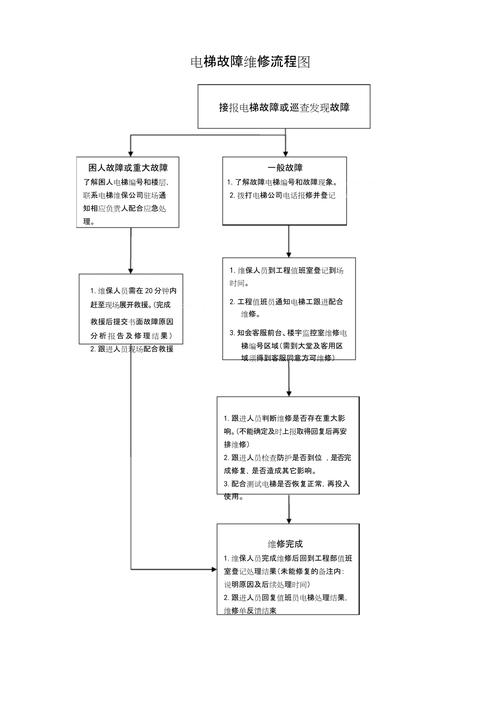
3. Cut the power and lock up (loto program): in accordance with operational requirements, the main power source of the elevator is cut at the main power switch in the room and the “lock up” procedure is implemented. Locking of the special locker on the power switch, with the key kept by the operator, and displaying the warning sign “no dams, no work”. Where work is required on top or bottom pits, the validity of safety devices such as fast-stop buttons, security window switches, hot-stop buttons on top of the sedan, and pit-stop buttons is also to be confirmed。
Confirmation of the position of the car and the “suspension” function: before cutting off the main power source, if the car is to be moved to a suitable location, the operation mode shall be used. Pre-operation is required to confirm that the overhaul switch function is normal, that it is activated, that it is observed that the car is running smoothly and that the stop button is reliable. The main power supply will be cut when the cars are docked in a serviceable position。
5. Personal protective equipment (ppe) inspections: protection personnel must wear the required personal protective gear, such as helmets, insulation shoes, work clothes, protective gloves, etc. Insulation tools and electrical tests should also be prepared for electrical operations。
Iii. Purpose implementation
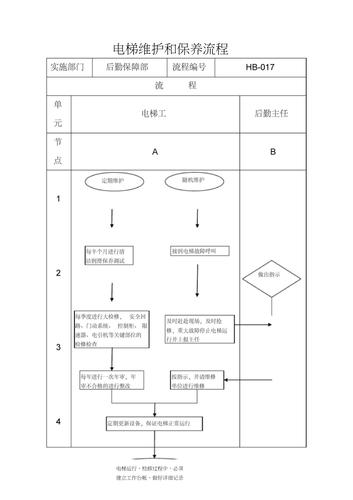
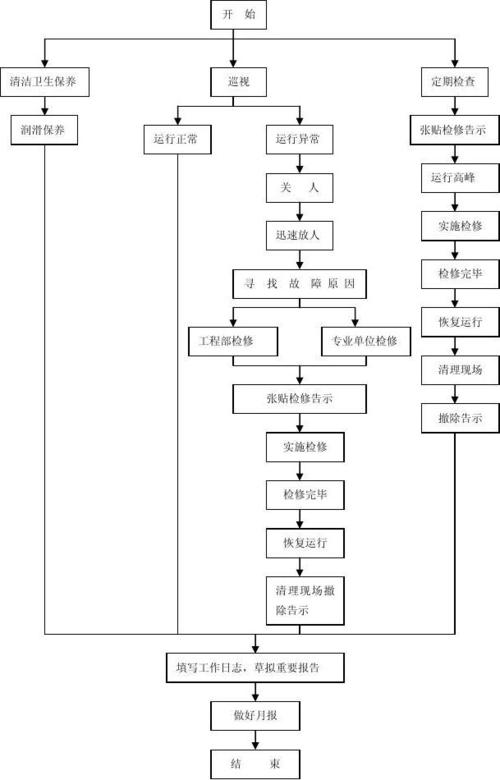
Protection operations are carried out systematically according to elevator protection cycles (e. G., semi-monthly, monthly, quarterly, annual) and corresponding protection lists. The operation should follow a sequence from the engine room to the wellway, from the top to the bottom, from mechanical to electrical, to ensure that it is not missed。
1. Inspection and maintenance of machinery:
*tracker: checks whether the tractor operates with acoustic and abnormal vibrations; checks the tar table, oil, as required, and adds or replaces lubricating oil; checks whether the wheel, steering wheel, cracks, rotor grindings, the wheel is fixed and the wheel is fixed; checks whether the tug is in place within the rope line, with jumper, thread break, corrosive, flaring, flaring, flaccid, corrosive, etc.; checks whether the braker works properly, the brake gap is in conformity with requirements, the brakes wear, flexibility in the movement of the electromagnetic iron and no card resistance。
:: control cabinets: cleaning of dust, miscellaneous items inside and outside the cabinets; checking of electrical components (e. G. Contactors, relays, breakers, frequency converters, plc, etc.) for incendiary, loose, overheating traces, and the robustness of the end of the line; checking of the normality of the signal lights, instrumentation displays; testing of the breakout of the safe circuit, locking back。
* speed limitrs: check whether the speed limitr is operating with a kinetic sound and whether the rotation is flexible; clean the speed limitr's tank and check for oil stains and foreign objects; check the speed limitr's tightness and wear, and whether the tighter is working properly; manually test the reliability of the speed limitr's movements and ensure that they are functionally integrated with the safety clamp (this is usually done during a specific cycle)。
2. Inspection and maintenance of wellway components:
*guidance and boot: check whether the track is robust, loose, deformed, oily, rusty, scratchy on the working surface of the track; check the wear and tear of the sedan guide boots and the re-guided boots, the adequacy of the gap between the boots, the strength of the tight bolts, and adjust or replace the boot as necessary。
:: heavy and compensatory chains/cables: check if the heavy frame is deformed and fixed against the heavy mass; check if the compensation chain (cable) is resonant, distorted, fractured, the connection is strong and the guidance device is normal。
* cables accompanying them: check whether the cables accompanying them are ageing, damaged, distorted, condensed, fixed or not, or interfere with well-field components in operation。
*in-well signal devices: check whether the locks of the doors (including mechanical hooks and electrical chains) are functioning properly on the various layers, whether the locks are in sufficient depth, whether the contact points of the locks are clean and in good contact; check whether the limit switches, the limit switches, the position of the force-reducing switches are correct and the movement is reliable。
3. Inspection and maintenance of the front door and sedan system:
:: floor doors: check whether the outer surface of the layers is deformed or damaged; manually open the doors (subject to confirmation of safety), check whether the doors are functioning smoothly and without noise; check whether there are any alien objects at the level and whether the slides are clean; check whether the cavities are working properly with the cavities and forced shut-down devices; and check whether the gap between the cavities and the cars is standard。
* sedan doors: check whether the door locks are working properly; check whether the door grounds are worn or loose; check whether the door boards, curtains or photovoltaic protections are functional and reliable。
* door systems: check whether door controllers, electrics are working properly, the tightness and wear of the belt or chain of the door, and whether the various parts connected to the door are loose。
4. Cars and heavy inspection:
:: cars: check whether the steering wheel buttons, command lights, communication devices (e. G., emergency call, talk), lighting, ventilation devices are working properly; check if there is any disfigurement or damage to the car wall, roof, base; check if alarm devices, emergency lighting are effective in the car; check for boot boots (e. G., for roller-guide boots and for wear and lubricants)。
:: safety clamps: check whether the gap between the safety wedges and the guidance tracks is even, the clamp is oily, rusty, the connection is flexible and there are no obstacles。
* overloading and quantification devices: check whether the overloading protection devices (e. G., re-triggers, overloaders, beepers) are functional and accurate。
5. Subpit inspection and maintenance:
:: make sure to be safe before entering the pit. Turn on the bottom pit lighting to check whether the bottom pit has water, miscellaneous items; check whether the buffer ( spring buffer or hydraulic buffer) has been damaged and whether the fluid buffer level, oil quality is normal; check whether the bottom pit is working (if at any time) through a sharp shutdown, a tight wheel switch, and a cord protection switch; check whether the heavy fence is strong; and check the fixation and direction of the compensation chain (cable) in the bottom pit。
6. Cleaning, lubricants and adjustments:
* cleaning: thorough cleaning of the ash, oil stains, miscellaneous items on the surfaces of the various components, in particular electrical contact points, limit switches, sensors, control cabinet interiors, tugs, boot, etc。
*lubrication: as required by the elevator manufacturer, lubricant for components that require lubrication (e. G. Tractor bearings, track, booting boots, door bearings, various chains, wire ropes, etc.) is indicated or replaced for suitable models and quantities. Take care to avoid oil contamination of brake wheels, speed-limiters and safety wedges。
:: adjustments: based on the results of the inspection, necessary adjustments are made to components that do not meet the requirements, such as brake breaks, door parameters, boot gaps, lock-lock depths, speed-restrictors tightening, etc., to ensure coordination and smooth operation of agencies。
Iv. Post-protection testing and functional testing
Upon completion of the protection operation, comprehensive testing and functional testing are required to ensure that elevator performance indicators meet safety standards。
1. Relocation and confirmation of components: check whether all dismantled or adjusted components have been correctly installed, all connection bolts are secured and all safety devices are restored to normal working positions。
2. Clean-up tools and miscellaneous items: ensure that there are no leftover tools, spare parts, waste, etc., in aircraft rooms, wells, cars, pits, etc。
Release of security measures: to confirm the evacuation of all operatives from hazardous areas, and