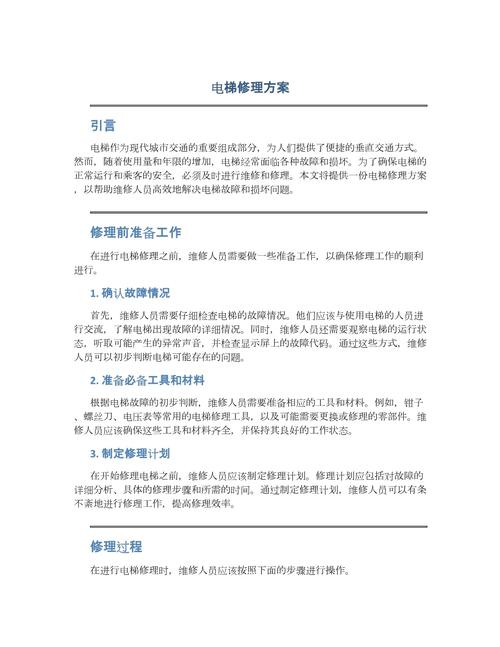
The elevator repair construction programme i and the programme target elevator repair programme are designed to ensure the safe, stable and efficient operation of the elevator while minimizing its impact on the daily lives and work of users. Specific objectives include: 1. Safety: ensure that elevators meet national and industry standards for safety after maintenance. 2. Efficiency: completion of repairs in the shortest possible time to reduce downtime. 3. Cost control: control the cost of maintenance and increase the return on investment, subject to quality assurance. 4. Sustainability: adopt environmentally friendly materials and technologies for the sustainable development of elevators. Ii. The status analysis requires a comprehensive assessment of the operation of the existing elevators prior to the implementation of the elevator repair programme: 1. The type of elevators: an understanding of their brand, model and technical parameters. 2. Failed records: collection of failure records for elevators, including past maintenance history and frequency of failure. 3. Use of the environment: analysis of the environment in which elevators are used (e. G. Type of building, frequency of use, etc.) to assess the impact on elevator performance. 4. User feedback: collect feedback from users on the use of elevators to understand the actual needs of users. Iii. Implementation step 1. The following preparatory work is required prior to elevator repairs: data collection: collection of technical manuals and maintenance records for elevators, understanding of elevator design parameters and historical failures. Training of personnel: training of technicians involved in repairs to ensure that they have maintenance skills and safety protocols for elevators. Tool preparation: prepare the necessary maintenance tools and equipment to ensure their good state. 2. On-site survey of elevators and recording of information on the status of elevator wellways: checking of the flow of wellways, structural integrity, etc. Status of elevator rooms: assessment of the environment and operation of equipment in the room. Elevator component inspection: detailed inspection of the main parts of the elevator (e. G. Electric power, control system, brakes, etc.) to identify the parts that need to be replaced or repaired. 3. Preparation of a repair plan, based on the results of the site survey, with a detailed repair plan, including: repair content: parts that clearly require replacement or repair. Repair time: projected time required for repairs and establishment of a specific construction schedule. Personnel arrangements: assign technical staff tasks and responsibilities. Security measures: development of safety protocols to ensure security during construction. 4. The following steps are to be followed during the construction process: 4. 1 stoppages are prepared for parking notices: the user is informed in advance of the time and reason for the elevator stoppage and the user's right to know. Interception: elevator stoppage in accordance with operating procedures to ensure complete stabilization of the elevator. 4. 2 dismantling and inspection of parts: according to the repair plan, removal of lift parts requiring inspection or replacement. (b) checking the state: the removed parts are examined in detail to determine whether they need to be replaced. 4. 3 maintenance and replacement measures: for reparable components, appropriate maintenance measures. Spare parts replacement: for parts to be replaced, ensure that the spare parts used are in accordance with the original plant standards and replace them. 4. 4 assembly and debugging components: assembly of components according to elevator assembly requirements. System debugging: debugging elevator control systems, brakes, etc. To ensure their proper functioning. Once the elevator repairs have been completed, a full safety test is required: a functional test: tests are performed on the elevator functions, including closing, speed of operation, load, etc. Safety check: check if the elevator safety device is working, including overload protection, locking devices, etc. 6. Training of users following the completion of elevator repairs: instructions on the correct use of elevators and attention. Emergency failure response: to guide users on emergency response measures in the event of elevator failure to ensure their safety. Cost control needs to be focused on cost control throughout the elevator repair process by: 1. Budget formulation: based on the repair plan, a detailed budget, including material, labour, etc. 2. Selection of suppliers: select suppliers with high prices to ensure quality of materials and accessories. 3. Cost review: during the construction process, expenditure is reviewed periodically to ensure that it is within budget. In order to ensure the sustainability of elevators, the following measures are recommended for repair: 1. Environmental materials: priority use of environmentally friendly materials and energy-saving equipment to reduce environmental impacts. 2. Regular maintenance: develop a regular maintenance plan for elevators to extend their useful life. 3. User feedback mechanisms: establish user feedback mechanisms to collect user comments on elevators in a timely manner and continuously improve the quality of services. (vi) summarizing the construction programme for this elevator, through systematic analysis and planning, with a view to ensuring the safe and efficient operation of the elevator. Through detailed implementation steps, cost control, and sustainability considerations, it seeks to provide quality services to users. In implementation, adjustments will need to be made to the actual situation to ensure the effectiveness and viability of the programme. Ultimately, the repair of elevators is not just technical maintenance, but a commitment to user safety and convenience. We need to keep an eye on the status of elevators and to maintain and update them in a timely manner to ensure their long-term safety and reliability。