Training in maintenance of two-wheeled electric vehicles
Course content
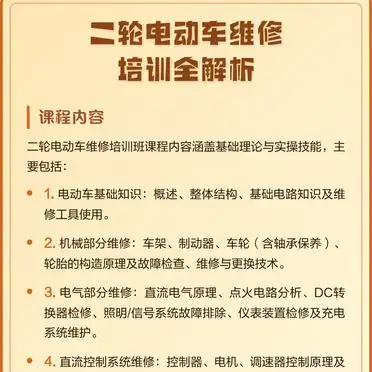
The curriculum of the course on maintenance of two-wheeled electric vehicles usually covers basic theoretical and practical skills, including:
1. Basics of electric vehicles: learning about the overall structure of electric vehicles, basic circuits and the use of maintenance tools。
2. Mechanical partial maintenance: mastery of frame, brakes, wheels (including axle bearing maintenance), tectonic principles of tyres and common malfunction inspection, repair and replacement techniques。
Electrical component maintenance: covers direct flow electrical principles, ignition circuit analysis, dc converter overhaul, lighting/signalling system failure removal, instrumentation device overhaul and recharge system maintenance。
4. Direct flow control system maintenance: focused learning controllers, electrics, speed-receivers control principles and repair and replacement methods。
5. Management service skills (partly included in the curriculum): operational aspects of platform registration, communication skills, professional norms, service protocol, insurance survey, award of damages, customer return visits and spare parts management。
School qualifications
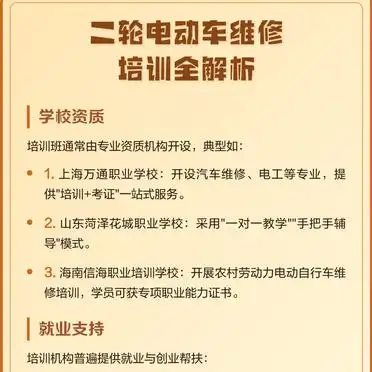
Training courses are usually offered by institutions with professional qualifications, such as:
The wantung vocational school in shanghai, which is part of the eastern education group of china, has more than 30 years of experience in vocational skills education, offers a variety of specializations such as auto maintenance and electricians, and offers a one-stop service of “training + certification”。
The shandong city vocational school: the team of professional lecturers, including assessors and members of the association of electric vehicles, uses the “one-on-one teaching” “hand-to-hand” model, which focuses on practical teaching and is suitable for rapid entry for zero basic students。
3. The shinhai vocational training school in hainan (part of rural training applicable): training for rural workers in the maintenance of electric bicycles, with a special vocational competency certificate and a government subsidy policy。
Employment support
Employment and entrepreneurship support is generally provided by training institutions:
1. Recommendations for employment: co-organisation with car companies and repair companies to provide a wide range of employment space for trainees, with some schools employing more than 90 per cent of the workforce, including the first enterprises in the biadi and ninde era。
2. Guidance on entrepreneurship: training on entrepreneurship qualifications and competencies, technical guidance on the planning of the entire course, support for the purchase of spare parts, and support for self-employment of trainees。
3. Validation services: assistance to students in obtaining low-voltage electrician certificates, certification of professional competencies in new energy vehicle testing and maintenance, etc., to enhance the competitiveness of the legal profession and the market。