In the area of home improvement and diy handicrafts, welders have become a necessary tool for many amateurs and professionals. It can easily handle welding of metal doors, assembly of iron fences and even repair of small furniture. However, one of the most painful problems in the process of use is “electricity without fire”. The machine, which plugged in the power supply and showed the light on, was unable to produce an arc and did not react when the welders touched the works. This is not only a delay in the work schedule, but may also create security risks。
I. The working principles of welders: the “back-of-the-scenes” of failed fire
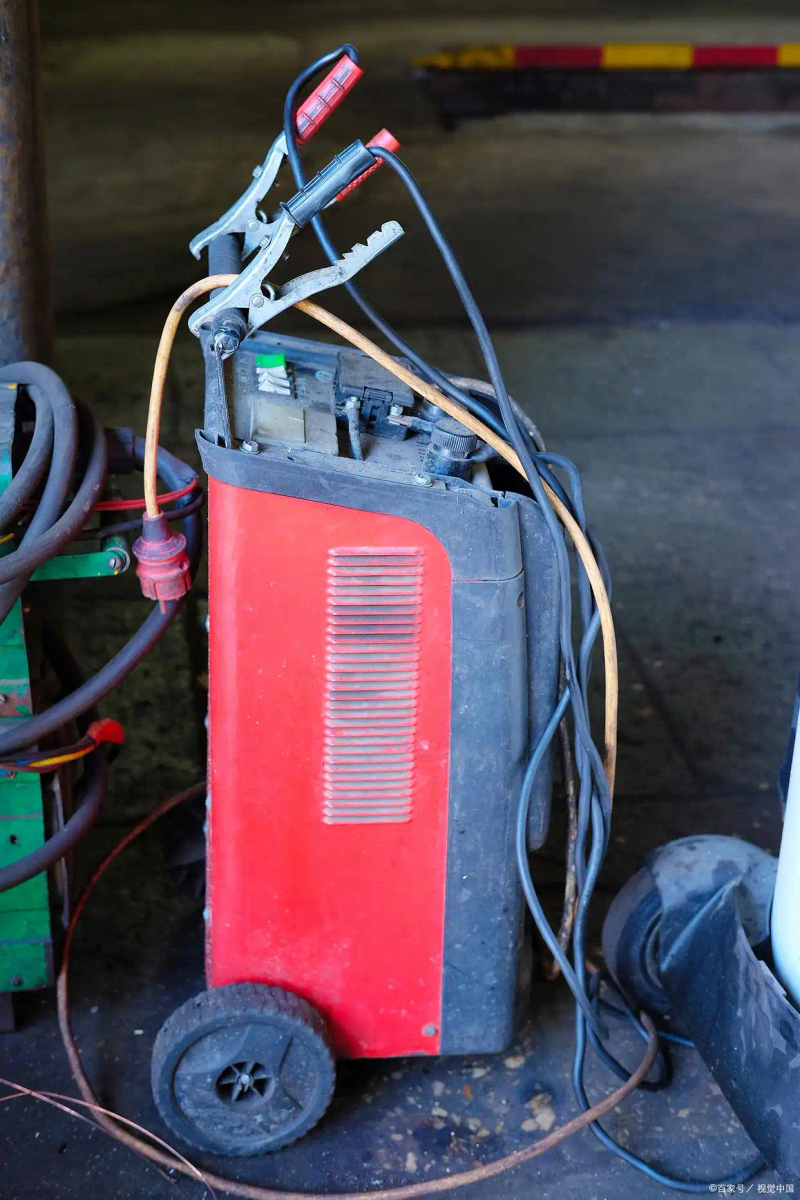
In essence, welders are a device for the conversion of household communication (220v) into high-intensity direct currents, divided mainly into traditional transformers and modern reverses. Inverted welders, which are more common in households and small workshops, transform low voltage power efficiently into controlled welding currents (usually 50-200a) through whole-stream bridges, reverse circuits and high-frequency transformers。
At the heart of the firing process is the "quakers": when the tungsten pole or the drug core welds approach the works, the circuits produce a high voltage pulse (hundred volts), piercing the air gap and forming a stable arc. The arc temperature is above 6,000°c and can melt metals in an instant. This relies on precision collaboration in arc circuits, including capacitating, trigger switches and protection modules. If anything goes wrong, it's like a fire。
Welders are mostly domestic in size, and the working environment is often damp and dusty, and lines are ageing or poorly operated to cause malfunctions. According to relevant technical forums and maintenance experience, the incidence of electricity non-fire is as high as 30 per cent。
Ii. Common causes: electricity without fire, 4 patterns common
Power supply instability, current “shell”
The power supply problem is the most common source of electricity without fire, accounting for about 40 per cent. The domestic voltage standard is 220 v, but the actual grid is highly volatile, especially in rural areas or in old sub-districts, and the voltage may hover between 190 and 240 v. Welders require large currents (with a peak of up to 30a) at short notice, and if the power is insufficient, the machine cannot drive the arc circuit。
Specific expression: plug-in exposure is poor, the plug is loose, or the length of the extension line (over 10 m) leads to pressure-down. In the winter, the north is dry and electrostatic interference may also interfere with the circuit. More subtle is the fact that the domestic air switch (failure) passes the protection of the wrong jumper, the machine appears to be electrified and does not have a stable current supply。
In addition, the ageing of internal power lines is another hazard. Welders in the market are often based on the use of pvc cords, used over the years in high-temperature workshops or wet garages, insulated tortoises, and short circuits. The data show that power failure doubled for equipment over five years of age。
Quoted arc circuit failure, pulse “failure”
The arc circuit is the “heart” of fire, with a failure rate of about 25 per cent. It includes high pressure packs, capacitors and trigger plates. If the electrical capacity is ageing (capacity decay), it is not possible to store sufficient charge, to strike through insufficient voltage and to create an arc. The problem is further exacerbated by the humid climate in the south, which accelerates the leakage of electricity, and the dust-clogged circuit boards in the north。
The wear and tear that triggers the switch (welder button) is also an imminent offence. Frequent pressure, contact oxidation or spring fatigue, resulting in the transmission of signals. In the reverse machine, the igbt module (insulation grid bipolar transistor) is activated with overheating protection, cutting off the pulse output, in the form of electrical power but without response. More seriously, the circuit boards are welded off and the vibrations are relaxed, often in the form of frequent transport sites。
Welders and electrodes, contact “disconnection”
Weld guns are “outposts” for fire, with 20 per cent failure. Electrical poles (carbon rods or welders) are contaminated or oxidized and cannot effectively transmit currents. Users often ignore cleaning, weld residue or water penetration, leading to increased electrical resistance. Weld-gun cables are over-crushed, the internal copper cord is fractured and, although intact, the signal is blocked。
The decomposition of the line is equally deadly. Welds require good grounding, and if the clamp is not well exposed or the work surface is rusty, circuits are closed and fires fail naturally. At the site of the renovation, the metal works were heavily oily, neglecting grinding to create a hazard。
Damage to internal components, “paralysis” of systems
Deep faults, which account for 15 per cent, are due mostly to chronic overloading. The transformer wires are short-circuited or burned, and the output voltage is deformed; fan jams cause heat dissipation, temperature sensors trigger protection, machine “strikes”. Welder standards (gb/t 15598) require overload protection, but cheap machine-type thresholds are low and easily miscalculated。
Lineboard corrosion is invisible killer. Salt mist or chemical gas (e. G. Welding of dust) erosion elements in a wet environment, with relays stuck, followed by no pulse. The data show that the lifetime of an indoor utility aircraft can be up to eight years, with only four years outside。
Iii. Diagnostic steps: step by step, efficient positioning
Don't rush down the machine in the face of electricity. Systematic diagnosis saves time, following the “table and in-the-table” principle。
• preparation tools: universal watches, screwdrivers, cleaning cloths and insulation gloves (security first)。
Step 1: check power links (5 minutes)
Plug the power source to ensure that the plug-in voltage is stable (measured at 220 v (1)(10%) using a universal meter). Replace the extension test and see if the light is fully activated. If the lights flash, the power is unstable。
Step 2: weld guns and landing (10 minutes)
Press the welding gun button and listen to the sound of the "tip" (trigger normal). Welding gun to fuselage
Step 3: test arc circuit (15 minutes)
Air-borne, welders approaching work (2-3mm) to observe sparks. If not, open the welding gun to examine contact oxidation (swipe with alcohol). Further, gauge high pressure output (cautionful high pressure!), normal >300v。
Step 4: internal inspection (20 minutes)
When power is out, the case is turned on and the visual circuit is dusted (blowed with compressed gas). Check the electric drum packs or leaks, and the fan moves smoothly. Over five years of age, it is recommended that transformers be professionally tested。
The total diagnosis does not exceed one hour, and 90 per cent of the problems can be self-examined。
Iv. Solutions: purpose purpose, rehability
After diagnosis, the symptoms are drugged. The following methods are common and safety-oriented: power outage operations, glasses, and avoiding short-linking。
1. For power: steady pressure upgrading
If the voltage fluctuates, the pressure stabilizer (capacity > 2000va) is added at a cost of up to $100. Replacement of plugs (5a level of copper cores) or upgrading of household distribution tanks. Extension of line limit 2. 5 mm2. It's not a day to avoid sharing circuits with large power appliances。
2. Restoration of the arc circuit: component for new
Capability decay is common and replaced with the same specification (10 μf/400v)
3. Optimization of welders and electrodes: clean maintenance
The electrodes are flatted with sandpaper and wiped every half hour. Welding cables are entangled with insulation glue at bends, and severe wiring is followed by the removal of heavily welded copper heads. The ground is rusted and painted after 10 minutes of ablution. In the selection, priority is given to silica-gel-protected cables, resistant to bends。
4. Handling of internal damage: professional intervention
The transformer is short-circuited and has to be rewired (us$ 200). The fan jams, the scrubbing bearings. Lineboards are badly corroded and the whole panel is replaced (us$ 150). The market has a large number of electrical repair points。
Most of these methods are diy and cost-controlled at $50-500. Reversible machine repair rate > 80%, traditional machine easier。
Preventive measures: daily maintenance, extended life
“preventive” is the key to the longevity of the electric welders. Users are mostly used during peak renovation periods and are easy to ignore. Recommendations:
1. Environmental control: placement in dry ventilation, humidity
2. Operational specifications: aerial launch
3. Periodical overhaul: monthly cleaning of the interior and quarterly electrical charge. The power is cut when stored and the cables are not tight。
4. Spare parts update: electrodes are exchanged every 100 hours and welding head checks are conducted annually。
The failure of electricity to fire is difficult but mostly reversible. Through theoretical cognition, detailed diagnostics and targeted repairs, welders can be easily harnessed, making home projects more productive. Remember, welding is more than technical, it's safer: wearing protective clothing, ventilation. If you're in trouble, call a professional technician