0552 information and communications
I. Information and disappearanceMaster's degreeBackground of the degree
Public information disseminationLearning is a very practical social science. It corresponds to the flourishing socialist journalism in our country and the growing media industry。
The establishment of a master's degree in journalism and communications, which addresses three main social needs:
First, to build our modern communication system and to improve domestic and international communication capacity
Our socialist journalism and media industry have grown considerably since the opening up of the reforms and are now facing new challenges and new development opportunities. General secretary hu jintao pointed out that it was necessary to adapt to developments at home and abroad, to actively build modern communication systems, to further improve domestic and international communication capacity and to create a favourable climate of public opinion and society. The media are the central component of modern communication systems. It is therefore a matter of urgency to accelerate the development of a high-level pool of highly applied specialists who are of good political quality, mastery of internal and external news dissemination patterns and adaptation to new media environments such as the internet。
Second, to revitalize the cultural industry and accelerate the development of the media industry
The media industry has a prominent industrial identity and is an important component of the cultural industry. In 2009, the cultural industry had been defined as a national development strategy, marking a period of rapid growth in china's media industry in the form of autonomous innovation, industrial upgrading, restructuring and diversification. The development of a large number of new content-producing and media-business managers adapted to the upgrading of the media industry is both a need to enhance the competitiveness and influence of the media in china and a need to revitalize the cultural industry。
Third, improving professionalism and strengthening the capacity of information and communication practitioners
With the development of modern media and the acceleration of the flow of social information, the number of information and communication professionals in the country has rapidly expanded, but the overall quality of those involved is still a little short of what is required for social development. The development of a high level of in-service professional education is urgently needed to address the ageing of the knowledge of some practitioners, to address the issue of retraining from front-line operations to managers, and to address the professional training of practitioners in non-public information and communication disciplines。
Ii. Development objectives
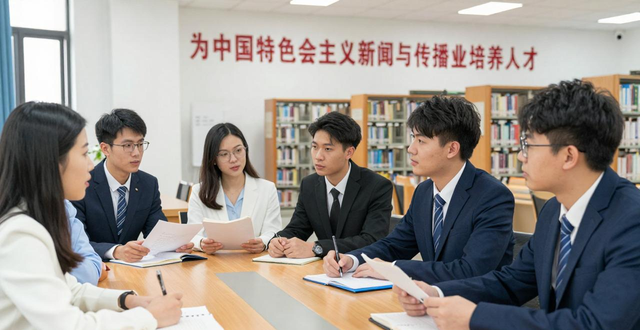
The socialist news and communication industry, which is unique to china, has developed a combination of merit, modern communication concepts and internationalized visions, an understanding of china's basic national conditions, and a highly applied, high-level expertise in information and communication skills and methods. Specifically:
1. Mastering the fundamentals of the marxist idea of the dissemination of information; having a good political literacy and policy level; having the rule of law in the press and a sense of professional ethics。
2. The basic philosophy of journalism; the ability to use newer communication technologies; the ability to mobilize teams to work together; and the ability to make the right immediate judgement and further analysis of the various situations that occur in the communications practice。
3. Better command of a foreign language。
Iii. Qualifications
1. Examination subjects:
Political, english (1 or 2), combined capacity, expertise
2. Form of examination:
The political theory uses the same national political theoretical test as the academic profession, with 100 points。
The foreign language is divided into 100 points in english (1 or 2)。
The comprehensive competency examination is built by the respective intake units on the basis of the outline of the guidance examination presented by the steering committee for master's education in public information and communication. The national unified time examination is divided into 150 points。
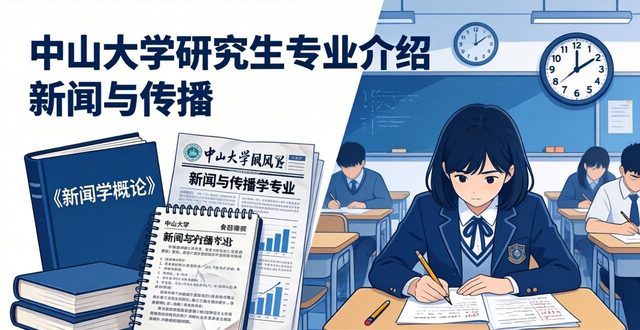
Examination for expertise. It's up to the intake units themselves. The national unified time examination was divided into 150 points。
Iv. Presentation
The target audience for this specialty degree is in-service staff with a university degree in the undergraduate sciences, as well as current undergraduate graduates. (encourages students from different disciplines and professional backgrounds to take the master's degree in journalism and communication.) this is developed in the form of both full-time and part-time learning, with study periods of two and three years, respectively. Specific training features are:
1. The curriculum is primarily taught, but in the course of its teaching it is useful to be closely linked to the practical problems of the country's information and communications industry and its international counterparts, with emphasis on the development of students'substantive information and communication skills。
2. To strengthen the links and exchanges between the information and communication institutes and the substantive and management departments of the information and communications services, and to involve experts from the information and communication services and managers of the relevant departments in postgraduate teaching and training。
The curriculum examination is divided into two forms: examination and examination. The methodology is flexible and diverse, focusing on the ability of students to identify, analyse and resolve practical problems using the expertise they have learned。
V. Ma's degree in journalism and communicationCurriculumAnd degree awards
(i) a credit system is applied to the curriculum。
Full-time gross credits are not less than 34 credits (including internships) and part-time gross credits are not less than 30 credits. The curriculum is structured according to the subject and professional orientation at the level of journalism and communication and is structured into compulsory public and professional courses. Specialized courses include compulsory and optional courses。
The types of courses and credits are distributed as follows:
Public compulsory courses (15 credits)
Two credits in political theory
3 credits in foreign languages
2 points in social science research method
2 credits in journalism theory (in accordance with professional orientation, and in communication theory)
2 credits in the theory of communication (in accordance with professional orientation and with journalism)
Two credits in the history of information dissemination in china and abroad
Public information, rule of law and ethics studies min
2 credits for new media research
Specialized courses (15 credits)
Professional courses are compulsory and optional。
Postgraduate training units for master's degree in journalism and communication may set their own professional orientations based on the special characteristics of the school and organize their own compulsory and optional courses。
3. Professional internship (4 credits)
Full-time students work in the substantive information and communication departments. The internship period is not less than three months。
4. Degree thesis (4 credits)

The selection of a degree thesis should be based on the practical principle of theoretical linkage and its content should be mainly linked to practical issues in the news and communications industry. Demonstrated the ability of students to use the relevant expertise in the theory of communication of information they have learned to address practical problems in an integrated manner。
Each institution with a master's degree education in journalism and communication may set up a group of academic dissertation mentors, which is guided by a combination of group training and individual responsibility。
The steering group should be composed primarily of teachers with master's degree qualifications, and could also include experts from the substantive information and communications units with the corresponding mentoring skills, who could share the task of postgraduate guidance. The steering group shall identify specific mentors who will be responsible for the direction of their papers, depending on the student's choice of theme。
Master's degree papers in journalism and communication should be closely linked to information dissemination practices and could take many forms, including theoretical research, investigation reports and case analysis。
(ii) degree award
The evaluation and award of degree dissertations for postgraduate degree degrees in journalism and communication is carried out strictly in accordance with the relevant procedures. A degree thesis must be evaluated by at least three specialists of high professional title, at least one of whom is an out-of-school expert or scholar; two or more experts, including two experts, may submit a defence only upon their approval。
The committee for the defence of academic dissertations is composed of five experts with high-level professional titles, at least one of whom should be an expert in the field of public information and communications or management. Three or more of the members of the commission agreed to award their degrees through the commission. In principle, the chairman of the respondent committee shall have a proper high title。
Completed course studies and practical courses, obtained the required credits and, through the dissertation respondents, awarded a master's degree in journalism and communications, subject to the approval of the unit degree assessment board。
School management and treatment
The school will make a uniform arrangement for accommodation and grant grants for some students in accordance with the school's policy of sponsorship。
Establishment of the programme
1. Improving information and communication in order to respond to the urgent need to develop information and communication skills in the countryTalent development(b) systemic, innovative information and communication skills development models to improve the quality of information and communication skills development, with a master's degree in journalism and communications。
2 master's degree in journalism and communication, english title “master of journalism and communication”, abbreviation: mjc。
3. The objectives of the master's degree in journalism and communication are to develop a high-level, applied information and communication expertise with a sound political ideology and professional ethics, a modern information and communication concept and an internationalized perspective, an in-depth understanding of china's basic national conditions, and a good knowledge of information and communication skills and methods。
4. The master of information and communication programme should fully reflect the knowledge and quality of expertise in the field of journalism and communication practice, master basic research methods and focus on the development of substantive information and communication skills and creative solutions to practical problems. Pedagogical methods focus on the use of such methods as team learning, case studies, field research and simulation training。
5. The master's degree in information and communication must be developed in such a way as to emphasize the practical orientation of information and communication and to enhance practical teaching, which must last no less than six months。
6. The full-time teacher of the master of information and communication is required to have a strong professional practical competence and education. Emphasis is placed on the inclusion of professionals from the field of journalism and communication practice in the teaching of specialized courses and the construction of a “two-teacher” teacher structure。
7. Degree papers need to be closely integrated with news and communication practices, reflecting students ' ability to use the theory, knowledge and methodological analysis of journalism and communication and related disciplines to address practical problems in the field of information and communication. Thesis types can be theoretical research, research reports, case analysis, graduation design, etc. The form of defence of a degree thesis can take is varied, and among the respondents is an expert with a technical professional position in the field of journalism and communication practice。
Awarded a master's degree in journalism and communications through the respondent of dissertation。
9. Actively promote the effective interface between the master's degree in journalism and communication and the examination for professional qualifications in journalism and communication。
10. The master's degree in journalism and communication is awarded by the state-approved postgraduate training unit for master's degree in journalism and communications。
11. The master's degree certificate in journalism and communication is produced centrally by the office of the state council degrees committee。