
Hello, everyone! Welcome to the old days! In recent days, a news story has caused many memories:VictorySold。
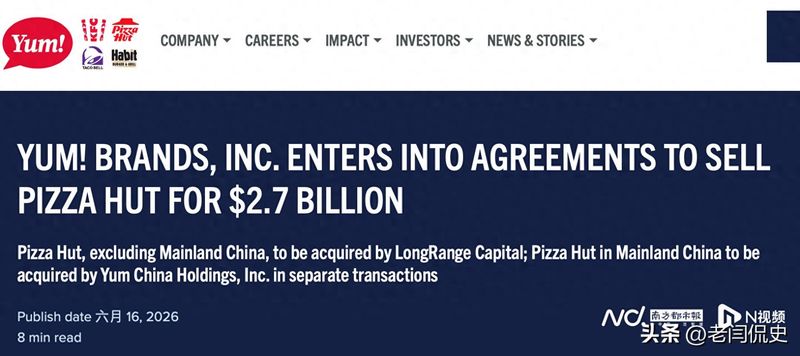
On june 16th, the united states universal winning company announced that it would sell its main winnings in china in two transactions at a total price of $2. 7 billion. A private equity company had acquired operations outside mainland china, while the hundredth of china had taken over from the mainland。
For many of the words after 80, 70 and even 90, it is not just a meal, but a unique collective memory。
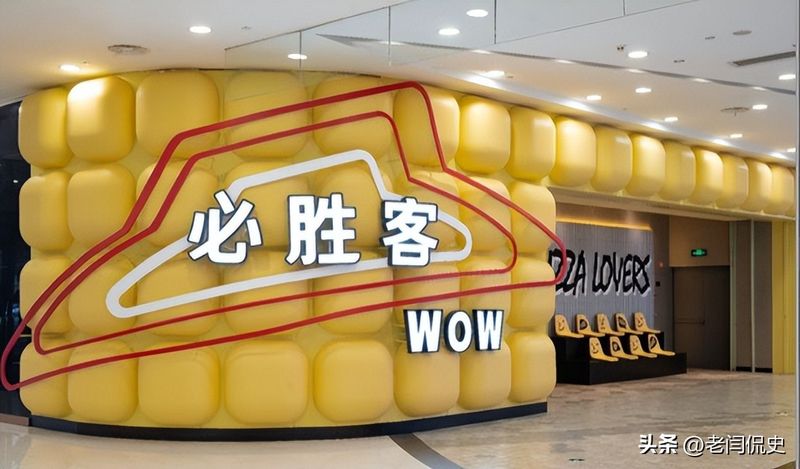
At the time of the brethren's salata
It may be hard for young people today to imagine that it would take a "good-thinking" to go to a winner。
The core of the game is the self-help salad. The rule is that each person may only take it once. So, in this "single once" opportunity, using that small salad bowl, as much food as possible, became a "civic."。
In the same year, there was a variety of "stacks of salad" in forums like the school web and the happy net。
The core technique is to use hard foods, such as cucumber chips and peppers, to build up a high “wall” along a bowl of barriers, and then to fill it with raw vegetables, corn grains, bread paste and millishima sauce。
It's amazing that the masters are able to build the amazing "salats" and pile them up. Although it may be possible to attract a different view of shopkeepers, it is an admirable “behavioural art” among the same-age eaters。
Why would a plate of free salad work so hard? Because in that age of modest monthly income per capita, the winners were relatively “high-end” consumption. A 2013 poster shows, “saving breakfast at $49”。
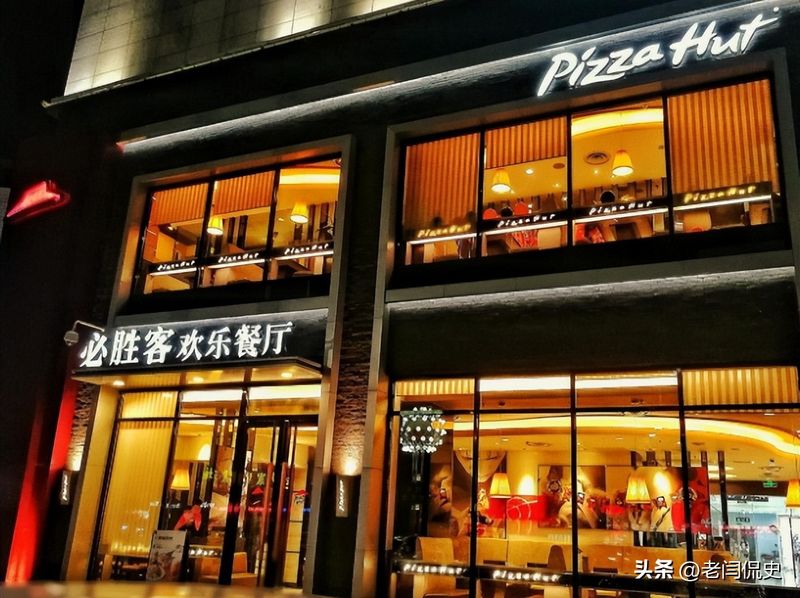
It might work today, but at that time this breakfast was not cheap. Every penny is spent on a blade, and the "infinite possibility" salad is a perfect expression of value for money. It was a time when the substance was beginning to be rich, but consumption still had to be counted。
Why is there a "seller" going on
Back to this sale. In fact, this is not the first foreign food giant to sell chinese business to local capital。

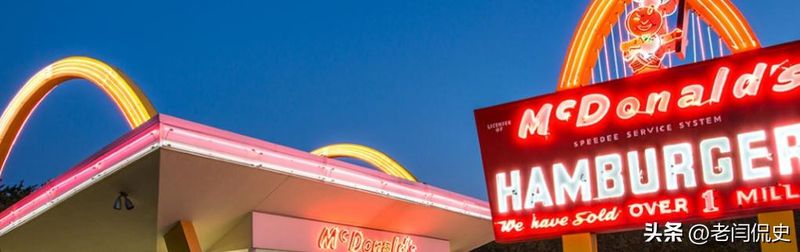
In the past, mcdonald's sold business concessions from mainland china and hong kong to chinese capital and became our familiar “gold arch”. Starbucks also transferred ownership of his chinese operations to joint venture partners. Now it's 35 years of winning。
Many people attribute the cause to the fact that “business is bad and can't go on.” this is true, for example, in the local united states market, where the sales of the same shop have been declining for several consecutive quarters, facing fierce competition from brands such as dame。
But it's hard to stand. Like mcdonald’s, net profits have stabilized at over $1 billion a year; starbucks is still one of the highest global markets。
Even this time, even the winner of the sale made a profit in the chinese market last year, albeit at a slower rate。
Is that because of the difficulty of getting out of foreign investment, you have to sell it? This factor exists, but it does not explain the most critical point of time: why not use it when consumption is hotter in 2019 and choose it now
A cruel truth: they may think it's the highest price they can sell in the next decade
The first principle of all commercial behaviour is always profit. The collective choice of the foreign capital giants to leave this node may be behind a more fundamental and cruel judgment: they believe that the price is now the highest that can be sold in the next decade。
Behind this point is a fact that many people are feeling but do not want to fully acknowledge:Consumption in chinaThe long-term fundamentals of the conflict have been fundamentally and irreversibly reversed。
In the short term, the recovery in consumption remains weak. The recent growth in total retail sales of social consumer goods has slowed down, with a marked drop in the volume of alternative consumption such as automobiles and household building materials. The cooling of food consumption is more subtle and sustainable。
More lethal than short-term data is long-termPopulation structureProblem. The demographic dividend that we used to rely on is retreating rapidly, and deep ageing and a fall in the birth rate are immediate realities。
The consumption capacity and willingness of older persons are already low, spending is highly concentrated in the area of health care, and contributions to non-essential consumption, such as catering and recreation, are limited。

The continuing decline in the number of newborns means that the main consumer force of the future is shrinking at a rate of one million quantities per year. The logic of consumer behaviour in society as a whole has changed with current employment pressures and the need to repair the population's balance sheets。
All people are moving from the “maximum profit” of the past to “minimum liability”. Prioritizing debt repayment, trying to save money and cutting off all non-essential expenses became the dominant mindset。

Such a change in mindset would not be possible in one or two years, but could take five or even ten years. But the question is, five or ten years later, is there any chance of reversing the basic stock of consumption -- the demographic structure
Fdi giants must be critical of long-term trends, as their entry and exit costs are much higher than those of local firms. They won't be confused by a month or two of short-term data fluctuations, nor will they believe in the myth of “reprisal consumption”。

In their perspective, they see a large trend in the next decade or two: a declining consumer population, declining consumption capacity, and the story of “consumer escalation” being replaced by the reality of “consumption downgraded”。
Since future profit growth already had a view of the ceiling, it would be better to leave the room when the valuation was relatively high。

The end of an era
Many domestic investors are still waiting for a recovery in consumption and expect a bottom-up consumption block. However, foreign investment has been voted on by foot. They're leaving at the top of what they think。
As for the winner of the 100-win chinese takeover, there would certainly be some improvement in performance in the short term。
It is likely that future winners will produce more 9. 9 yuan and 19. 9 yuan in affordable products, accelerating their sinking down to cities on the 3rd and 4th lines, cutting off high-end non-profit lines. These tactical adjustments are sufficient to keep it alive for many more years。
However, these are only details and cannot change the general trend. In fact, no single enterprise has been able to counter large industry-wide trends。
The golden age of mcdonald’s and starbucks, with china’s rapid economic growth, population dividends, and consumption escalation, has slowed down。
The age when we used to drain our brains, smoke and computing for a free salad, the time when foreign brands could make money while they were lying down, could never be returned。
Reference information:
![新闻资讯APP排行,手机新闻APP排行榜前十名,手机看新闻哪个软件好[2026]](https://www.3z0.cn/file/upload/202608/26/1787681122214_lit.jpg)