Google's core business, the search engine, is facing major challenges posed by ai technology. Elon mask's idea of "ai will replace search" is gaining industry acceptance. This shift is affecting the entire digital marketing ecology, particularly the tens of billions of dollars worth of seos (search engine optimization). Traditional seos rely mainly on technology such as keyword optimization, reverse link building and web ranking, which are losing its original effects as ai technology develops。
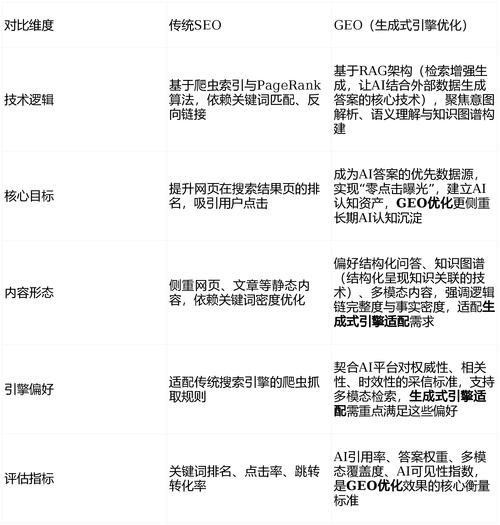
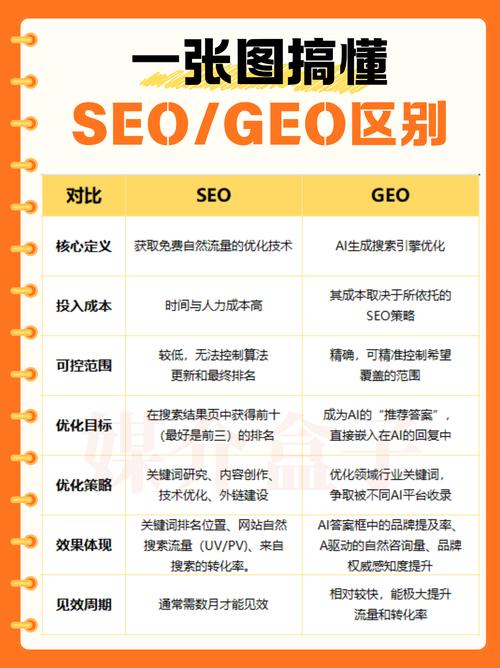
At the same time, a new type of optimization technology, geo, is emerging. This technology is mainly geared towards optimizing the content generation and presentation of the large language model (llm). Unlike seo, geo focuses more on content structure, semantic linkages and context understanding to adapt to the content approach of ai. This shift is not only changing the way digital marketing takes place, but is also reshaping the entire internet content ecology. And can geo become the mainstream of the new era of digital marketing when traditional seos are gradually subdued
From "seeing" to "thinking": the bottom of marketing logic
A16z rewrites search rules in generating engine optimization: the core competition for marketing is moving from "search ranking" to "ai quotes"。
The core strategy of the traditional seos revolves around four key elements: precision keyword matching, large volume of content production, high-quality reverse link access and longer time for user pages. These methods are essentially designed to obtain better representation on the search engine results page (serp). The entire digital marketing industry has established a complete industrial chain for this purpose, from content farms to off-chain trading platforms, which are serving to upgrade the ranking of web pages。
However, with the proliferation of generating ai, there has been a fundamental change in user behaviour patterns. More and more people are choosing to ask questions directly to ai assistants such as chatgpt, claude or gemini instead of using traditional search engines. These ai systems generate complete answers immediately and users no longer need to filter information by clicking multiple links。
But this shift poses a very serious question: even if the corporate website is designed so well and its content so well, it would be tantamount to being invisible in the digital world if it were not “remembered” in the ai system and quoted voluntarily. Can brands remain present in the ai era? The question is whether its information is part of the "memory" of the ai model。
The change is reshaping the rules of the traditional digital marketing game, just as smartphones have completely changed the way we get information, and ai is redefining the digital rule of "there is and there is a perception." but what follows is an alarming digital darwinism: brands that cannot be remembered by the ai system are going through a silent disappearance。
Content and reality: the law of survival in the geo era
In the geo era, the logic of content creation and realization is undergoing fundamental change. The traditional keyword-stacking strategy has failed, and the ai model prefers structured and well-documented content. Far more “reference value” than an intense keyword with vague semantics。
The saearch engineering land study shows that the content references in the generator engine follow the triple logic of knowledge authority, structural readability, and position credibility. The three-part structure of “problem-evidence-conclusion” is consistent with the llm's “link-of-think” reasoning, which increases the structural readability of content and thus the probability of being quoted by ai. This shift requires that creators increase the knowledge density and logic of content, with at least three to five verifiable independent views per 1,000 words, in order to enter the training screening of the mainstream ai model。
At the same time, the pattern of realization is changing dramatically. Google's “shaking money tree”, which relies on advertising, is being replaced by a realization based on knowledge values. In new ecosystems dominated by llm, such as chatgpt, the exposure of content depends on its own intellectual value and credibility. Studies have shown that the commercial transformation of professional content, which is commonly cited in several mainstream ai models, is significantly better than traditional advertising models。
This change has given rise to a new trend towards "securing knowledge", with high-quality content benefiting from continuous knowledge use through the api interface。
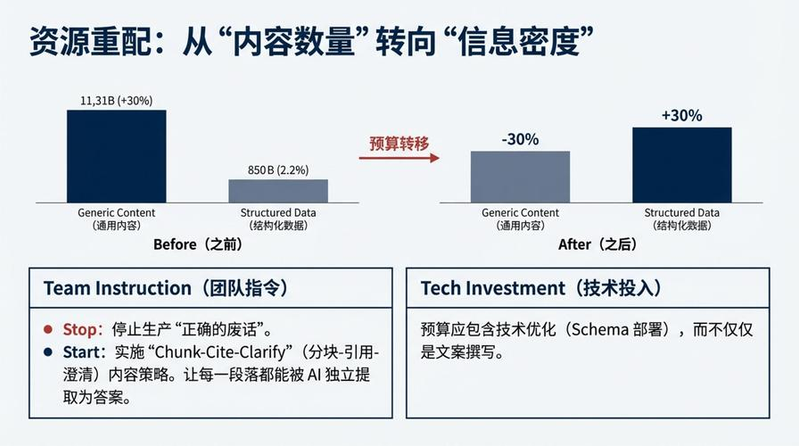
In the face of the changes of the new era, advertisers and content creators need to develop an entirely new system of competence, starting with structured expression skills and, to a lesser extent, continuous knowledge updating mechanisms and, finally, enhanced content credibility through authoritative certification. Only by meeting these three dimensions simultaneously can the value of content be maximized in the geo era。
Marketing of new poles: referencing instead of hits
Marketing success has changed completely. In the seo era, it's up to who can be ranked first in the search results, and in the geo era, it's better than ai whether or not to mention and recommend you. It's like making friends, you used to be a business card all over the place, and now it's up to ai to see if you're worth introducing to its users。
Sniffing players have started to act:
Canada goose no longer focuses solely on the functional term “heating” and uses new tools to track how chatgpt describes it from brand dimensions — and every reference is a silent endorsement. Semrush and ahrefs, among others, quickly overlap and introduce a new feature to monitor the "presence" of the brand in the ai response。
A number of emerging technology companies focusing on the optimization of ai, including platforms such as profound, goodie and daydream, are emerging as key enablers of branding in the production economy (geo) competition through core technologies such as megamodel optimization, hinting, emotional analysis and citation tracking. These "digital ai providers" provide brand names with a full set of solutions to raise their sense of presence and influence in the ai dialogue scene, helping enterprises to build new competitive advantages in the age of intellectual interaction。
Geo's not just an optimisation, it's a platform war
The geo area is at a brutal growth stage, as chaotic as it was when seo first appeared. It's possible for each model to have a full shuffle of the card rule. Do big models favour news over media? How can training data updates change content priorities? Part of the policy is valid (e. G. To ensure reference to source documents cited by llm) and more assumptions are still validated。
Geo competition is more than just technological upgrading of simple tools. As in the early days of google adwords and facebook, both were arbitrage windows for the platform's dividend period, with early users earning the first barrel of gold. And now geo represents a greater opportunity — it determines what future content, products and services will be more readily visible to users. This is essentially a struggle for control over internet traffic。
Unlike the decentralized tool markets of the seo era (semrush, ahrefs, etc. Providing only functionality), geo requires control over the entire ai marketing chain: continuous optimization of the model's “dialogue” logic, extraction of hidden demand from vertical areas, real-time marketing strategies with differentiated technologies and adjustments based on llm feedback dynamics. A platform that captures geo traffic will be a key hub for linking brands and ai to fully document user behaviour, track consumption paths and enable transactional transformation. The user viscosity, data assets and market influence of this new infrastructure are beyond the reach of traditional marketing tools。
Concluding remarks
When ai “knows” a product more than humans, the brand is either fully adapted to ai's decision-making logic and is either re-engineered or marginalized in algorithmic hierarchies. As a market-aware arbiter, the ai big model is slowly rewriting the rules of competition for brand marketing -- the only leverage for survival is your story, your value and your existence, deep enough to be remembered by ai
Otherwise, when the user asks, the silent ai is the motto of your brand。