3. Problem detection
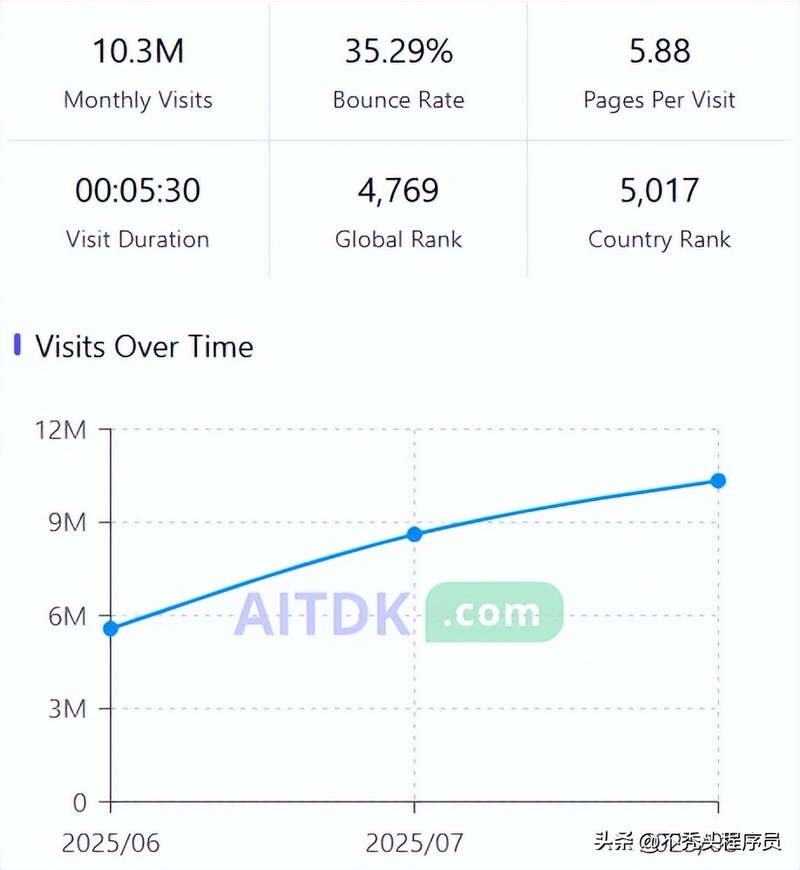
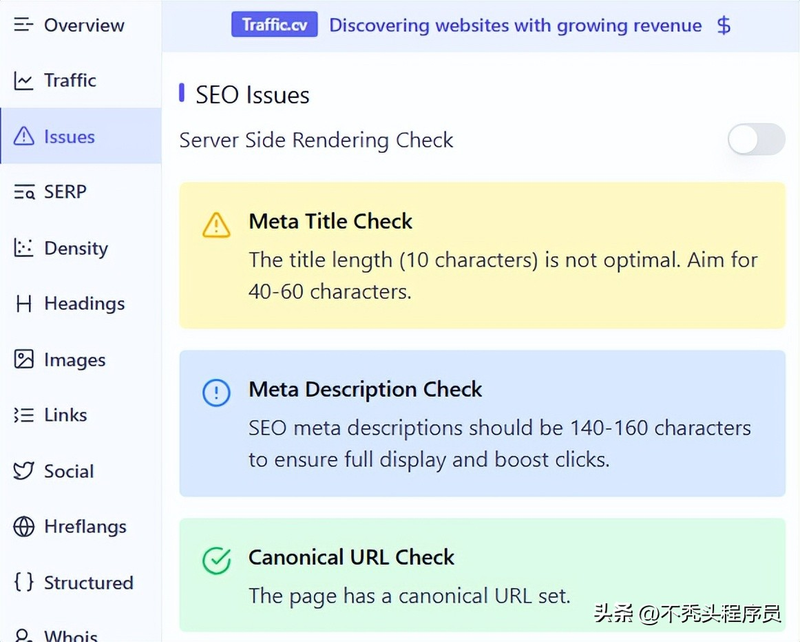
It's a list of issues, and it'll tell you where it's notEta describes unwritten and labeled。
4. Search results preview (serp)
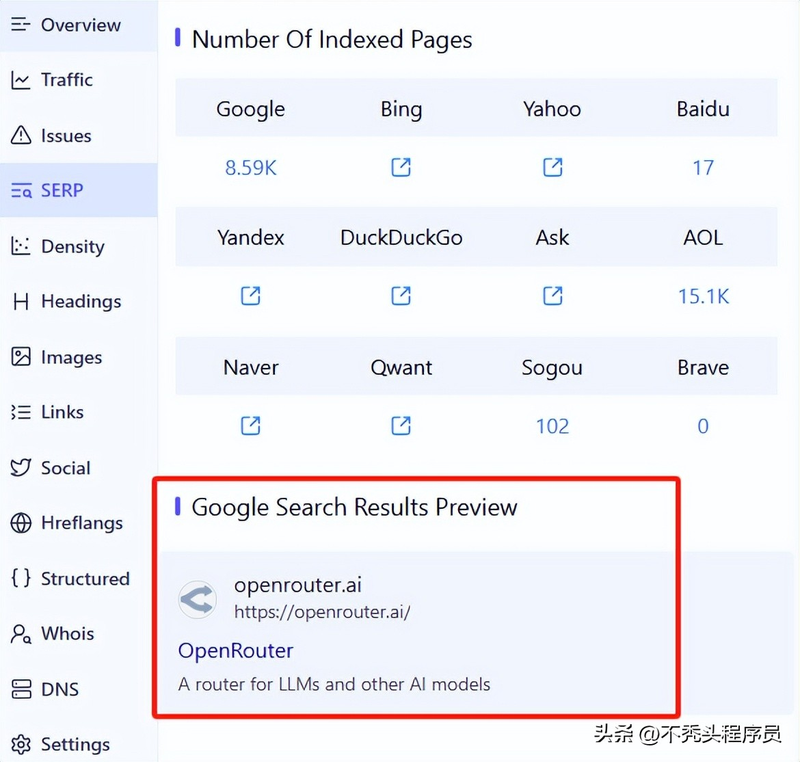
It simulates google's search results so you can see in advance how your title and description will be shown. There's nothing cut off that you can tell at once。
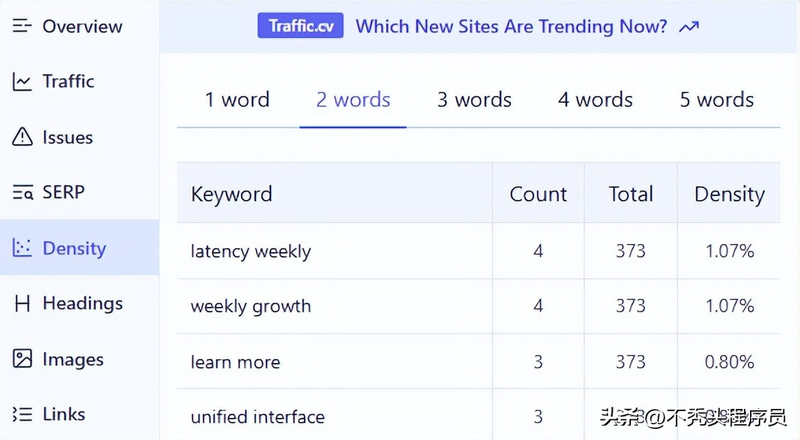
5. Density
Helps you measure the number and proportion of keyword appearances. It is easy for people who write either to write too little or to pile too much, preferably to talk about a barance。
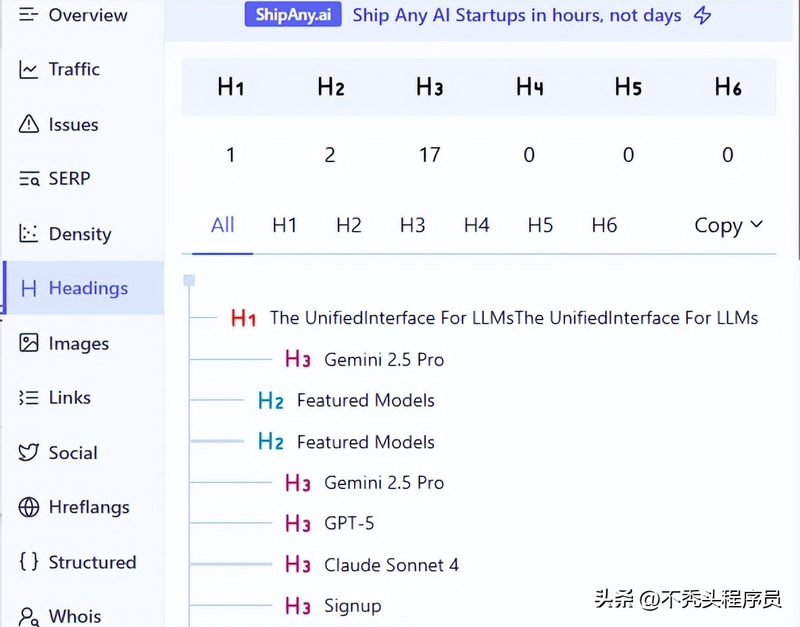
6. Headings
The main thing is to see if h1, h2, h3 is right. It's like writing an article with an outline, the structure of the web page is clear, and the search engine can read it。
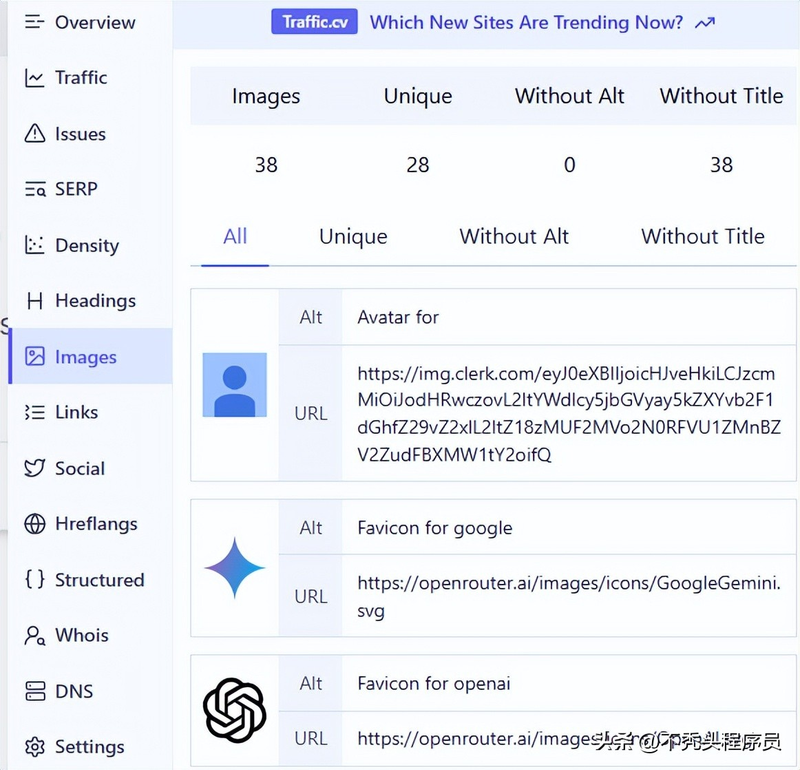
7. Images
It's particularly important for content chiefs, and it lists all the pictures, and there's no alt description. The fact that many of the articles are only graphic and not alt is a waste of access。
By the way, alt properties (alternative text), its role is mainly to: 1. Help search engines understand the image content; 2. Enhance the seo entries on the website; 3. Improve web accessibility; 4. Replace display text when loading failed
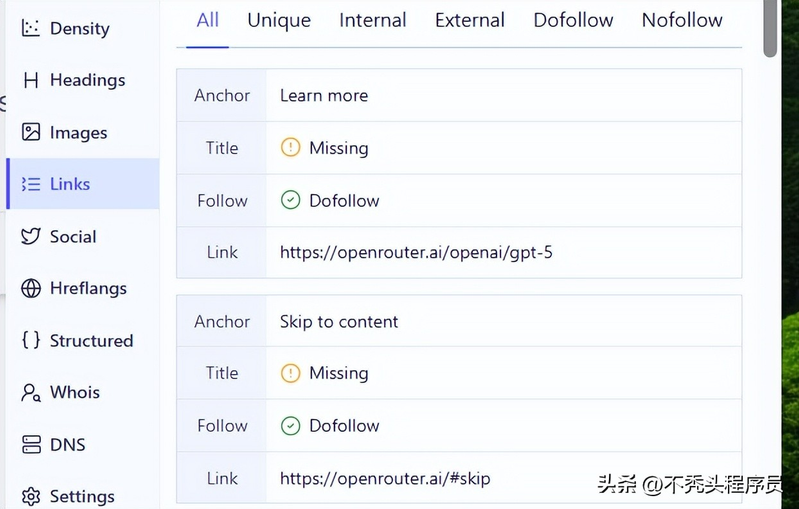
8. Link analysis (l)Inks)
You can see how many inner and outer chains are in the page, which are dowork and which are nowork. It is useful for intra-station weighting and outward chain management。
9. Social information
Here's to check if you've added open graph, twitter card these social labels. In short, if you can show the cover and description when your articles are shared in the circle of friends or twitter。
10. Multilingual labels (hreflangs)
Those who make cross-border websites focus on. It will test if your multilingual version is properly bound to ensure that users in different countries see the corresponding language pages。
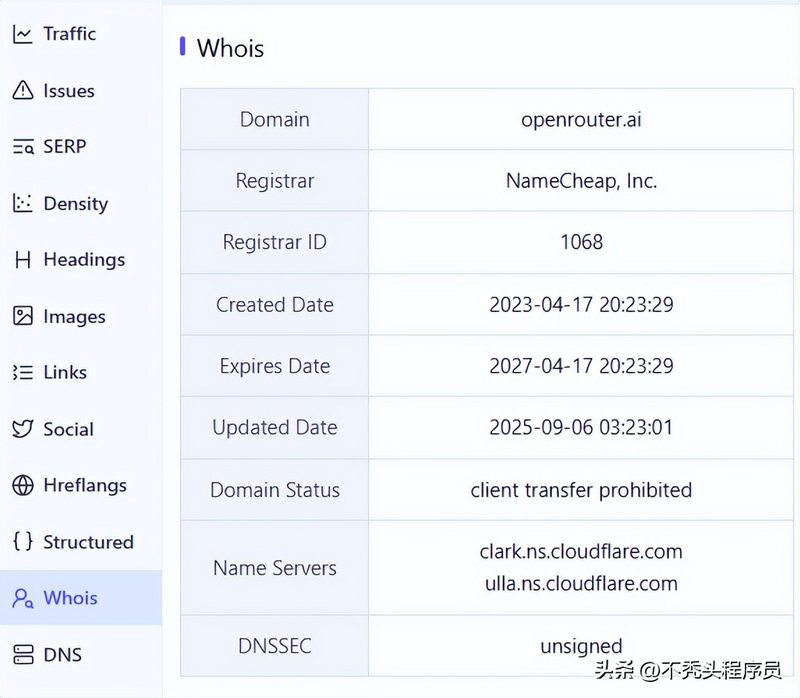
11. Domain name information (whois)
It's kind of like a gossip tool to check domain name registrations, servers. It's interesting to do a competitive analysis. You can look at your opponent's background。
For those who make sea and independent development, this free-of-charge tool is wonderful. You don't have to pay hundreds of dollars to buy a big platform, you don't have to put in a bunch of plugs, you can do a quick check of your website。
Of course, it also has limitations, such as traffic data being an estimate and not a substitute for a professional seo platform. But as a daily workflow tool, i think it's enough, especially for start-ups or people who want to quickly verify page quality。
If you're working on a website, especially a sea project, aitdk is basically a hand-held plugin, and it'll be useful early。