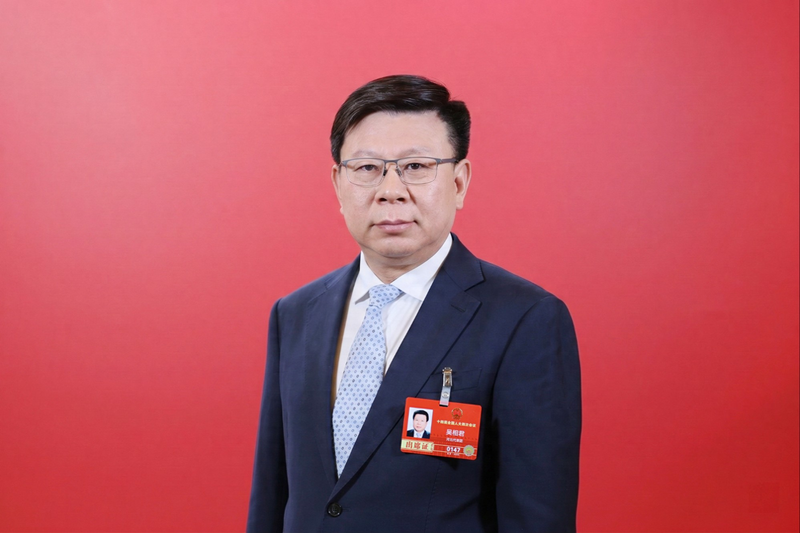
U sang-jun, representative of the national people's congress and chairman of the board of directors of the yin medicine industry. Source: respondents
The coverage of basic public health services in china has continued to expand and the filing rate of health files for the population has steadily increased, but many challenges remain. For example, small and incomplete coverage of service lines remains; some service lines remain poorly implemented; and disparities in the distribution of services resources between urban and rural areas, regions and populations remain unresolved。
According to information received from the yin medicine industry (002603. Sz), during the course of this year's national congress, u sang-jun, the president of the yin medicine industry, made recommendations for the construction of basic public health services. The basic public health service programme, which has been in operation for many years since its launch in 2009, has continued to improve the service system and to expand its coverage. It now includes 14 types of free services, effectively establishing the first line of defence for public health and significantly improving the health of the entire population。
Public data reveal that, with regard to public health services, vaccinations in china are advancing in an orderly manner, with the national immunization plan for children of appropriate age reaching over 90 per cent. In addition, health management coverage has gradually increased among the focus groups, i. E. 65 years and older, maternal, hypertension and type 2 diabetes patients。
Policy documents such as the “health china 2030” programme and the national basic public health services code are supporting basic public health services with a view to improving their quality and promoting their development。
On the financial front, xinhua reported that in mid-2025, the national commission on health and health had indicated that the per capita financial subsidy for basic public health services would reach 99 yuan in 2025, an increase of 5 yuan over the previous year. This cost focuses on chronic diseases such as “old and small” and hypertension, type 2 diabetes, chronic obstructive pulmonary disease, and is combined with the focus of the “year of weight management” for paediatric and mental health services。
“in the light of the current supply of basic public health services, however, there are still problems with the narrowness and incomplete coverage of services, some of which are closely related to the life and health of the population, which are not yet included, and which are not in line with the growing health expectations of the population.” in addition, as shown by the practice of basic public health services, some of the services still lack implementation in relation to the requirements of the national service code, and the standardization, standardization and cost-effectiveness of services need further improvement. In areas where the resources of public health services, such as rural areas, are relatively weak, services guarantee mechanisms still need to be improved。
In this regard, u sang-goon makes three recommendations. The first is to expand the coverage of services to meet the health needs of the population; the second is to improve the quality and quality of services and improve the health of the population; and the third is to accelerate the filling of weaknesses and increase the level of service parity。
With regard to the expansion of services, wu sang-jun stated that basic public health services should be steadily expanded, taking into account the health needs of the population and the financial support capacities at all levels, with dynamic adjustments to optimize the content of basic public health services, including through national project coverage, local project supplementation, and the extension of the lives of people。
“first, the health management of primary and secondary school children could be integrated into the service category, and services such as mental health, weight management, oral health and protection of the eyesight of primary and secondary school students could be gradually introduced; second, in vaccination services, non-state immunization programmes with high clinical application value and high vaccination demand could be gradually integrated into the coverage of free vaccination; and third, in health management services for older persons, the health examination of older persons could gradually be expanded from 65 to 60 years of age, with new guidance on semi-incapacitating care for older persons, screening and management of slow diseases such as tumours, osteoporosis, etc.; and fourth, in the health management services of medium medicine and medicine, the health management services could be extended from older persons, children aged 0-36 months to chronically ill persons, pregnant women, adolescents, and so forth。