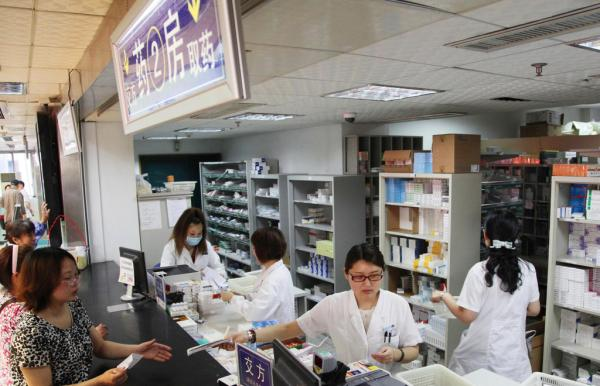
With effect from 1 june, china will abolish most of the government pricing of medicines, and future prices for drug transactions will be largely guided by market supply and demand. Eastern ic information
On 5 may, cdi, together with the national commission for health and family planning, the ministry of human resources and social security and others, issued a circular on the publication of opinions on the advancement of drug price reform, which decided to eliminate most government pricing of medicines from 1 june, and that future prices for drug transactions would be guided mainly by market demand and supply。
The opinion on promoting drug price reform (hereinafter referred to as the opinion) states that all drugs originally priced by the government, except for narcotic drugs, group i psychotropic substances, which are still subject to maximum retail price management by the national commission for development and development, are removed from the maximum retail price management。
Professor chen, dean of the college of public health, university of jordan, told qin in the news (www. Thepaper. Cn), the government has liberalized the maximum price of medicines, without fear of excessive volatility in the short term, and in the long run, the prices of medicines will become more reasonable, as will the treatment and use of medicines in medical institutions, “in the interest of reducing the cost to the population”。
I. How does the price of medicines form
According to the opinion, the de-pricing of medicines by the government, the improvement of mechanisms for the procurement of medicines and the functioning of health-care fees, with the exception of narcotic drugs and the first category of psychotropic drugs, are largely market competitive。
Among them, the medical insurance fund pays for medicines and explores mechanisms to guide the pricing of medicines through the establishment of health insurance payment standards; patented medicines, exclusive production of medicines, and prices through the establishment of transparent and participatory negotiation mechanisms
Blood products outside the health insurance catalogue, nationally procured generic immunization drugs, free national antiretroviral drugs and contraceptives are procured or negotiated through tenders。
Other medicines that were originally market-adjusted continue to be priced autonomously by producers based on the cost of production operations and market supply and demand。
Ii. No more price limits on health insurance catalogues
According to previous news reports, under the current regime of drug management, prices are regulated for medicines that are included in the basic health insurance reimbursement catalogue and for a small number of products that are produced and run under a monopoly. Among them, government pricing is applied for medicines that are freely distributed to specific groups by means of financial purchases, while other medicines are subject to government-directed prices, as shown by the maximum retail price。
Approximately 100 drugs are priced by the government, with a maximum price of around 2,600, both of which account for about 23 per cent of all listed drugs, mainly those entering health care; the remaining 77 per cent have always been independently priced。
Thus, liberalizing the maximum price of medicines means that at least the vast majority of health-care catalogue drugs will be released。
Iii. Will the price of drugs rise
According to chen, the government's maximum price management does not determine the price of the drug directly traded, the price of the drug traded is determined by the tender procurement, and the price of the drug does not fluctuate significantly, despite the elimination of the maximum price management, the procurement of the tender and the functioning of the existing health insurance fee mechanism。
The deputy director of economics and director of the centre for public policy research of the chinese institute of social sciences also considered that the government's liberalization of drug price control was only the first step in the marketability of drug prices, which would remain stable and that “it would not be possible to increase or reduce prices substantially because of the liberalization of drug prices, otherwise it would be contrary to market rules”。
Cheap medicine is cheaper, expensive
The president of the chinese association for the management of pharmaceutical enterprises believes that removing the maximum price of medicines would allow pharmaceutical companies to compete in a sound market environment, that prices would be determined by market supply and demand, that most of the medicines in the health-care catalogue would be generic, and that “similar medicines are generally severely oversupply”, and that it would be impossible to raise prices unilaterally。
According to chen, previously cheap medicines may be more reasonable because of the increasingly inexpensive nature of competition, and whether expensive medicines (such as original patented medicines) are more expensive depends on the control mechanisms of health insurance, negotiation mechanisms and the monitoring and operation of drug prices。
V. How does the standard of payment of health insurance operate
The opinion states that by the end of september, the relevant departments, such as the ministry of human rights and social welfare and the national board of health and safety, will need to introduce rules on the standard of payment of medically insured medicines, which will lead to a reasonable price paid by the health insurance fund。
In an interview with the media, the director of the faculty of medicine, beijing university of medicine, described the principle of establishing reasonable payment criteria for different medicines, depending on the size of the health-care fund, as clear, subject to budgetary control, but the development of health-care payment standards is closely linked to the health-care system, such as “the level of reasonable clinical use”, so that the payment criteria for health-care coverage may appear in the form of prices for specific medicines, not necessarily directly related to the price of tender purchases。
The vice-president of the chinese medical insurance research society and secretary-general, kuang jun, for his part, stated that china had three different levels of health-care coverage, which made it difficult to establish a consistent price, and that health-care payment criteria could also be those for the inclusion of medicines in health-care coverage。
For example, in the case of medical treatment for a disease, “the cost of medicines to be covered by health insurance can be established, the cost of sub-standard medicines is included in the health insurance reimbursement, and more than part of the health insurance is not reimbursed or paid to hospitals”. On this basis, the ratio of health-care coverage to patients is reasonably established。
Negotiated with highly patented medicines
According to the views, following the liberalization of the maximum price, the price of generic and exclusive medicines without competition will be negotiated, which were previously represented by high prices。
According to a public report by news retrieval, the provinces of zhejiang and jiangsu have in the past negotiated the introduction of drug prices for foreign patented medicines such as heseidine and gravie。
According to chen, in the past, there had been more local exploration, the outcome of the negotiations might be slightly different, the negotiating mechanisms to be established by the state would be more consistent and the local differences could be narrowed in the practical implementation of the negotiations。
The pilot work programme for the establishment of a drug price negotiating mechanism (advisory draft) drafted by the national commission for the defence of the rights of the child, which concluded at the end of march, indicated that the state would establish a committee for price negotiation, which would focus on price negotiations for oncological drugs, cardiovascular drugs, children's medicines and unique chinese medicines. Transnational pharmacies, primarily patented medicines, may be affected。
However, according to the historic notes, the most important aspect of negotiating pricing is the implementation of lead purchases, price combinations and, crucially, post-negotiation actual usage, “if one million boxes were committed at the beginning of the year and half a million boxes were actually used at the end of the year, it would be difficult to enforce negotiated pricing”。
How can cheap “disappeared” medicines return to the market
In recent years, a number of media have reported the gradual “disappearance” of clinical life-saving drugs, most of which are common drugs at low cost, as well as the “cut-off” of aluminum acetate and the “life-saving” `life-saving' fish protein shortage throughout the country”。
The reason for the “disappearance” of the cheap medicine, as analysed by mingde, is related to the limited price of the government's bid, which is “under the cost line for the drug, the enterprise will not produce it if it pays for it”. In his view, the elimination of the maximum price and the return of cheap medicines to the market was “no problem”。
According to the text, there had been a number of previous liberalization policies that had led to a supply of low-priced medicines in the market and the elimination of the maximum price, which would have facilitated the supply of those low-cost medicines through market-driven competition mechanisms, and a balance between supply and demand, which should have been a pro-price supply。
Viii. The drug company will face the odds and the odds
Lifting the maximum price of medicines and leaving the price of medicines to the market is, according to ming de, the more competitive the market will be, the greater it will be。
Chen also agrees that market demand- and supply-led drug prices will indirectly guide pharmaceutical enterprises, and that, in the long run, pharmaceutical companies will need to demonstrate the value of their medicines, which will directly encourage the development of medicines. “if only competitive drugs are produced, the value of the enterprise's products can only be reflected in market competition, and if patented, more clinically effective and clinically valuable products are developed, they may gain a more favourable position in competition.”
Ix. Which price violations can be monitored
In response to a question from a journalist on the reform of the price of medicines, the national commission for development and reform (cnd) stated that, following the reform of the price of medicines, the price authorities would seriously investigate and punish price irregularities and price monopolies, in accordance with laws and regulations such as the price act and the antimonopoly act。
These include, inter alia:
(b) the fabrication of information on price increases, price increases and disruption of market order
Complicity and manipulation of market prices
Abuse of a dominant position in the market to sell medicines at unfair prices
(a) price fraud such as false prices, false pricing, price increases and discounts, misleading price indications and concealment of conditions attached to prices
(b) unauthorized price increases or disguised price increases in the centralized procurement of drugs into the envelope
(b) the failure to implement the prescribed zero-disparities policy in primary health-care institutions and in the pilot public hospitals
(b) the failure of public health institutions to implement the prescribed drug price increase policy
(b) the failure of pharmaceutical production enterprises and medical institutions to implement the prescribed low-price price management policy and to exceed the daily average cost standard for low-priced medicines
(b) government pricing of medicines that go beyond sales at maximum retail prices
Failure to comply with the required system of public disclosure of price and fee。
X. Uncertainty about reform of drug prices
In chen's view, the elimination of the maximum price will not change significantly in the prices of medicines in hospital pharmacies, which are still being procured in accordance with existing tenders, but external controls on health insurance and the regulation of medical behaviour will be strengthened. According to chen, the rational use of medication and treatment will be the direction of the development of medical institutions and will need to be strengthened through its internal management。
However, as the reform of drug prices is a holistic view, the accompanying programme for the relevant sectors has not yet been put in place, and chen has stated frankly that there is indeed “some uncertainty”. For example, the elimination of medical remedies and the establishment of compensation mechanisms for health-care institutions, as well as better and more rational use of medication and treatment in health-care institutions, require a parallel process of reform of public hospitals。
“reforms need to be coordinated in many ways, not to say that a policy can solve all problems.” the text goes on。