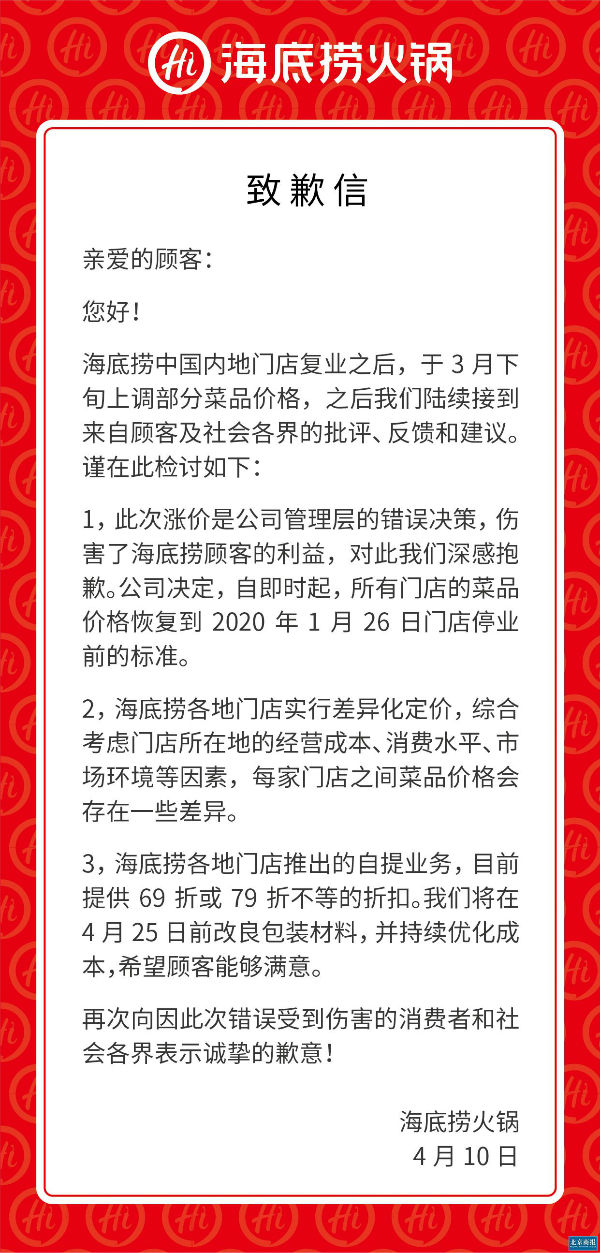
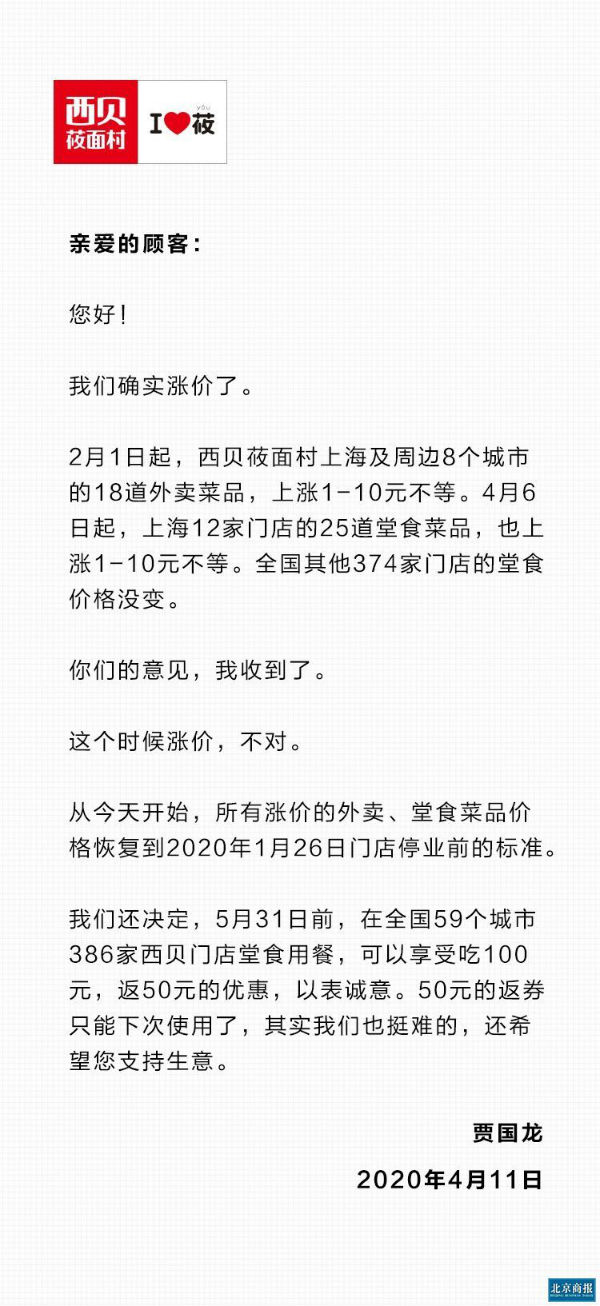
It is also these two letters of apology that have led to the discussion of higher food prices. There are a variety of views on the purpose of the price increase, whether it should be raised, and whether it should be used for marketing purposes。
In conclusion, the current views on the rise in the price of bottom fishing and west bey are divided into the following: the view that a catering enterprise should not “loan” an increase in prices at the beginning of the rehabilitation phase of a catering enterprise; the view that a catering enterprise is affected by the epidemic, that its operations are still severely damaged and that at this stage it is still unable to fully resume normal operations, leading to an increase in the cost of the enterprise and that the increase in the price of the enterprise is impracticable; the view is also expressed that an increase in the price of the bottom fishing and the sea bey are not temporary, but rather a subsequent apology and a reduction in the price, combined with their own preferential activities, and that the two tend to gain attention and capture the flow of customers; and the view that there is a real increase in the value of the catering enterprise at this time, which is not an ad hoc initiative, but rather an incentive to raise the single price of the company。
With regard to the discussions and views following the “high price boom”, the beijing business journal correspondent contacted seabed and west bei, which, after issuing an apology, chose to remain silent and refrain from responding publicly. For its part, sybé expressed the wish to apologize to the consumer and remained busy saving himself, and denied that the increase in prices had been made. It is noteworthy that, in an interview with the media, vice-president of sybekshimura chu said that, in the medium to long term, price increases were an inevitable trend, and that cost controls could not be kept to a minimum unless there was a significant reduction in costs and the size of meals was less favourable than fast food。
According to chu alumni, the increase in the price of meals is a general trend, as raw materials, labour and rents all show an upward trend, and these costs are not reduced and price declines are limited. In other words, the most fundamental reason for the increase in the prices of catering enterprises is the increase in costs。
Consumers: the epidemic has become more sensitive to prices
It is the consumers who contribute most to the issue of rising prices in catering enterprises. “220+ per capita, half of blood rose from 16 to 23 yuan, eight small pieces; half a potato slice of 13, one potato at 1. 5 and a self-help cook at 10 yuan; seven rice at a bowl; and 50 soufflé at a plate ...” a consumer's consumption bill for a canteen at the bottom of the sea served as a trigger to raise the price of the restaurant。

So what do consumers think about higher prices in catering companies? To that end, journalists from beijing business also sent a questionnaire to consumers。
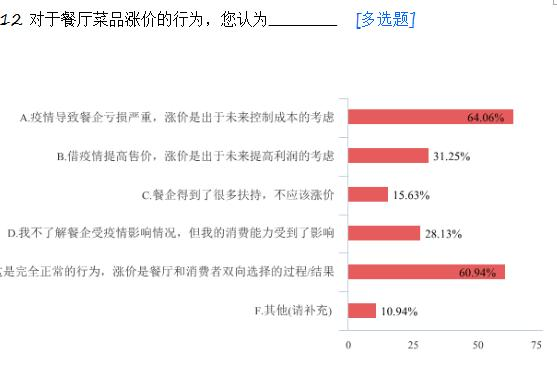
According to feedback data, 64. 06 per cent of respondents considered the increase in food prices to be a loss to contain costs as a result of the epidemic, and 60. 94 per cent considered the increase to be a perfectly normal behaviour and the increase was the result of a two-way choice between restaurants and consumers。
In addition, 65. 52 per cent (1-6 points) of the respondents did not notice an increase in the food prices of restaurants over the past two years; only 17. 19 per cent (9-10 points) of the respondents felt the increase in food prices over the past two years. In addition, 59. 4 per cent (1-6 points) of respondents indicated that they could not accept an increase in the price of the restaurant; only 20. 32 per cent (9-10 points) of respondents indicated that they could accept an increase in the price of the restaurant。
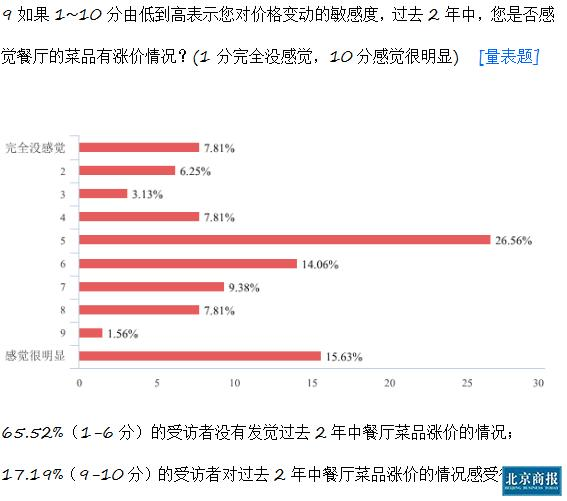
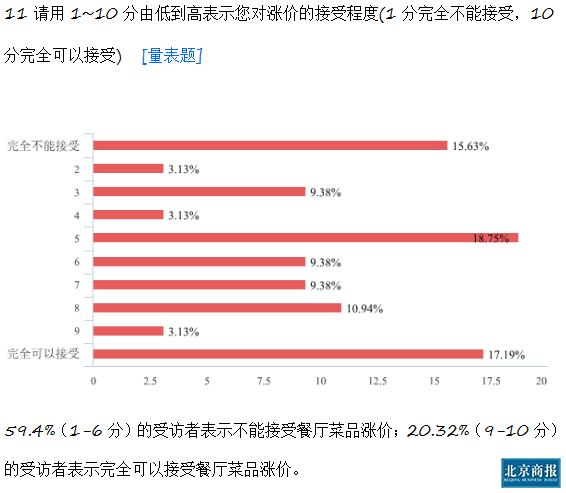
This set of data compares to the fact that the consumers interviewed were not very sensitive to the previous increases in the prices of restaurants, but that the consumers who could not accept the increase now are close to 60 per cent. It is also worth noting that 28. 13 per cent of respondents said that they were not aware of the impact of the epidemic on restaurants but that their own consumption capacity was affected. This also means that consumers have become more sensitive to the price of food consumption as a result of the epidemic。
In an interview with the beijing business journal, the consumer, mr. Deng, stated that the price per passenger prior to bottom fishing was not low, but that the perception of price at the time of consumption was not clear, but that since the price increase was at the point when the outbreak was initially brought under control and restored, his ability to consume was affected by the epidemic, which caused concern over the price increase。
In addition, journalists in the questionnaire noted that consumers also had different perceptions and views about the increase in the prices of catering enterprises. Some considered that, “under the pretext of the epidemic, the increase in the prices of restaurants would be tantamount to killing chickens for eggs”; others considered that, at the current stage, the increase in rent, food and logistics costs for catering enterprises could be understood, and that consumers were more concerned about whether the increase in prices for catering enterprises was temporary or long-term, indicating that the latter were supported by various policies during the epidemic and were therefore unable to accept the long-term increase。
Food companies: unsuspecting to implement price increases
At present, the bottom of the sea and the sea, which are being pushed to the top of public opinion, are temporarily no longer explaining and responding to price increases. But, as chu said, the most fundamental and direct reason for the increase in the prices of catering enterprises is the increase in costs, so has the increase in costs since the start-up? Where did it go? As a result, journalists have contacted many restaurants。
Different catering enterprises gave different answers to the magnitude of the cost escalation。
According to some of the restaurant directors to the beijing business press, the cost of operating the canteens is currently significantly higher than before the outbreak. According to the managing director of the three gorge fish chains of the beijing dragon habitat, seven stores under the banner of the dragon habitat are now open for food in the canteens, and at this stage the prevention of disease remains the focus of the restaurant operation, and a great deal of effort has been devoted to disease prevention。
In day-to-day operations, the problem facing the restaurant is that it will not be possible to return to its pre-epidemic state within a short period of time. The need for closed dining places, for controlling the flow of canteens, for providing chopsticks, for providing the necessary digestive services and for the elimination of doors in strict compliance with the relevant regulations are among the factors that are currently facing cost escalation in catering enterprises。
In addition, the head of the chain of catering brands for the main porridge products told beijing merchants that the restoration of food in the canteens was far from alleviating the damage caused by the outbreak to catering enterprises. Because sales are difficult to upscale, the costs remain at various levels and are the root cause of the current difficulty for catering enterprises。
“on the one hand, as a chain restaurant, many stores do not enjoy much rent relief benefits, and many landlords do not receive rent relief even throughout the epidemic; and, on the other hand, the current policy of social security relief is a water truck for small-scale catering enterprises, which is currently under pressure from almost all those with a certain size of chain. Referring to this “high price boom”, the head of the brand stated that before the “high price boom”, the brand had developed a corresponding price increase plan, but that the current “high price boom” had put some pressure on the firm to raise it。
The beijing business journal interviewed the beijing city business bureau on issues related to the implementation of the policy mentioned by the above-mentioned official, but no response was received by the time the draft was sent。
In an interview with a reporter in beijing, the founder of the ka and one also said that the pressure on the cost of food was felt, but that there were no plans to raise the price. On the other hand, wang sung-kung indicated that the increase in the cost of raw materials had not been felt after the return to work。
It is noteworthy that in the course of their interviews, journalists noted that there are many catering enterprises that reflect that part of the current cost pressure of the enterprise comes from commission from the delivery platform and hope that the platform will be able to reduce the commission to an appropriate level in order to alleviate the current operating difficulties of the catering enterprise。
Upstream: reduced demand leads to lower food prices
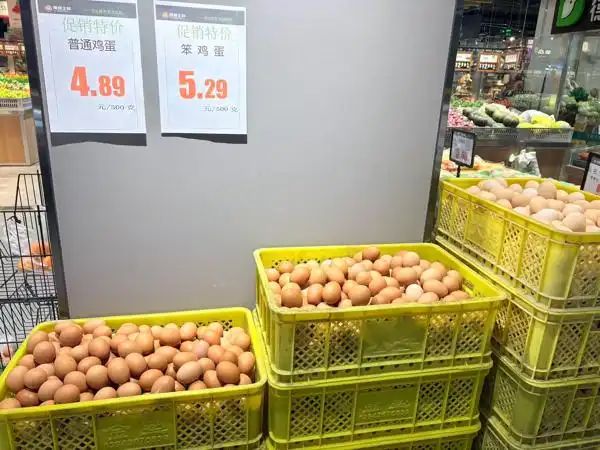
With regard to the increase in the cost of raw materials reflected by some catering enterprises, journalists from the beijing journal of commerce have been informed of the current trend in food prices from beijing. According to the beijing news reporter qin yongjun, the overall price of vegetables is slightly higher this year than in previous years, mainly because of climate-induced fluctuations in different types of vegetables。
According to the most recent disclosure (3. 28-4. 03) of the trend in vegetable prices, the beijing journal of commerce has learned that the weighted average vegetable prices in the new market have continued to fluctuate. On 3 april, the market-weighted average vegetable price was 2. 38 yuan/kg, a decrease of 3. 64 per cent compared with 2. 47 yuan/kg at the end of last week (27 march); and 18. 21 per cent compared with the same period last year。
It is understood that the price of vegetables has fallen this week, still seasonally. The main factor driving down prices is the continued decline in the prices of leafy vegetables, as well as the decline in the prices of eggplant vegetables; the price of winter-storage vegetables has also been pushed down, with a relatively marked decline, following the large number of new vegetables on the market。
Currently, some vegetable prices are still volatile, with bean-fruits and peppers rising and falling, and those in the southern producing region gradually retreating from the market, the northern producing region is not yet fully occupying the northern market, and prices have fluctuated during the handover. Vegetables that have been handed over have fallen relatively significantly. It is expected that the price of late-stage vegetables will continue to decline, and the price will continue to decline once the vegetables produced in cold sheds have completely replaced those in warm sheds, and once the vegetables produced in open areas have completely replaced those in large sheds。
In addition, the main reason for the entry of pork prices into the lower road is the recovery of the production capacity of the pig and the steady increase in listings, which results in the loss of momentum for price increases. At the same time, the recent decline in meat prices is also due to insufficient demand and a backlog of pigs in the ring。
Beijing journalist journalists have learned from new sources that another reason why vegetable prices are significantly lower than in the same period last year is that consumption has not returned to normal and has been affected by the epidemic, that most restaurants in the beijing region are not yet operational, and that most of them are non-sellers, and that their purchases from wholesale markets are clearly insufficient. This has also led to prices of vegetables in the recent past being below average or relatively reasonable in the same period of almost five years。
With further improvements in the prevention and control of the epidemic in the country, full re-entry of catering enterprises is expected, the supply of individual varieties of vegetables above demand will be eased and the pace at which prices will continue to decline slowly。
Expert: "close with you."
In the view of liu an, a doctor of theoretical economics at the pudong institute of human resources in china, the catering industry offers highly competitive goods and services with high price elasticity, generally unable to establish a monopoly, catering enterprises adjust prices to their own profit needs, and consumers have thousands of alternative options。
“if price increases are not acceptable to consumers, markets will soon force traders to lower prices. So there is no judgment that should be made, and the catering industry is taken for granted.” liu an said。
Liu an did not consider it appropriate to make a normative assessment of the increase in the price of a fully competitive catering industry. “the supply side of an industry that relies entirely on its will to carry out the transaction is driven by a situation in which prices are increased, and there are no problems of immorality, so that the market can better evaluate.”
“increased prices will not become a widespread phenomenon in the catering industry after the resumption of work”, according to the restaurant chain consultant wang toming, the anticipated retaliatory consumption in the industry will not last long, and the epidemic will affect the whole industry more than the catering industry, and consumers will naturally be reluctant to raise the prices of catering enterprises. In wang's view, higher prices for catering enterprises have been a very sensitive topic, and most enterprises have therefore shown great caution in raising prices. In the run-up to the end of the epidemic, there is also a suspicion of “high bets” on food prices, and non-price increases may endanger the survival of the enterprise。
Instead of considering how to get through this through price increases, it is better to accelerate reflection on how to upgrade the industry. The impact of the epidemic on restaurants is self-evident in the eyes of another unrenowned restaurant, but it also directly exposes the pain in the current development of the catering industry。
In his view, the epidemic was exposed to widespread risk resistance, constraints on out-of-sale platforms, inadequate multi-channel layouts and lack of marketing capacity. While the domestic catering industry had experienced a rapid growth in recent years, compared to previous supply-side reforms, and a transition through the internet, it was not hard to see that low-technology, labour-intensive and rent-intensive problems were still prevalent in the domestic catering industry, which could even be considered fatal for small-scale catering enterprises or single-body restaurants. Thus, the issues that are urgently needed by catering enterprises today are how to truly upgrade their industries, how to improve their overall resilience to risk, how to make greater use of technological means to solve their dependence on labour, how to rely on door shops, and how to establish supply systems that support the diversification of their enterprises, which are far more useful and important than price increases。
Zhao zhiqiang, the founder of big pisa, also interviewed journalists and said that since the outbreak, catering enterprises had begun to rescue themselves in various ways, and various governments had successively introduced support policies for the industry to ease the pressure on catering enterprises. These approaches, however, can only help to address the immediate survival problems of some catering enterprises, and the underlying problem of domestic catering enterprises is how to address efficiency and cost. For its part, the catering industry in china should reflect on the cost structure and human costs of enterprises. Optimizing the upgrading of restaurants and creating high-quality profit models are key to coping with the crisis and contributing to the long-term sustainability of catering enterprises。