I. Breaklines:
1. First needle breaker. Breaker head cut
Output cause: air needles are retrofitted or needles are not fully fitted, resulting in low needles. Sutures are rigid, needles are thin or pressured。
Method of handling: check if the needles are installed and the pins link the screws loose. Replace the needle or adjust the pressure on the foot。
2. Sutures are curly at both ends of the end of the head, with short beards
Output cause: overstretching or stitching occurs when sewing. The sutures were squeezed into the shuttle-guided slot. The sutures are corrosive, of poor quality, and have thorns in the cross-line。
Method of handling: switching the wire pressure and checking the line lines to remove the fusion. Check the wear and tear of the shuttles and, if necessary, replace them. Sand light across the line and replace the stitches。
3. Thrust weight below the suture, unable to form a needle distance and break the line
Output cause: low delivery of teeth and cut-off of sutures. The delivery and the choreography were punctured. The pressure on the feet, loose needles, hinders the operation of sutures。
Method of handling: lifting of teeth, adjusting of the position of the cam, tightening of the foot pressure and pin screws。
Four, there's a sudden break in sewing and a curved surface
Reason for product: the shuttle position is not covered by a line. The end-of-the-carb is locked or suddenly moved in sewing. The quality of the shuttle is too long or the elliptical of the heart。
Method of treatment: repositioning of the shuttle, re-installation of the shuttle and re-loading of the cabbage。
5 - the bottom line suddenly breaks in sewing. Irregular entourage, i. D. Elliptical
Output cause: consorture failure, an ellipse of inner diameter, resulting in a failure of the persorption. Snails are too tight, so the skin pressure is too small. The shuttles were over-filled or too loose. The bottom line is coarse and has knots that prevent the bottom from passing through the heart spring。
Method of disposal: replacement of holsters, corrosive screws, re-routing of the rimline, replacement of bottom lines。
Ii. Jump lines:
One, no bottom line
Reason for the product: too short a line, too high a line, too high a needle, and too low to connect the loop。
Method of handling: stretching the line, checking whether the bottom line is stuck and excluding it. The needle connects the axis to a solid screw to move up the pin, which should be down the pin, reset the needle, and tighten the nail tight。
Two, a needle
Output causes: needle holes, needles worn, needles attached to bolts loosely, needles moved。
Method of treatment: switching needles, or selecting new needles and re-reading them; and tightening the screws。
Three, a few needles and a needle
Output cause: rotation wear, too sharp, too high or too low。
Method of disposal: swing, adjusting the height of the needle or the height of the needle, re-reading the needle。
There's no way to sew it
Output cause: poor or distorted needles do not produce normal thread rings. The needles are too high to fit the threads and the stitches are not properly matched. The spare parts, such as swinging beds, are severely worn out or folded on a permanent basis。
Method of processing: replacement of qualified needles or calibration needles. Adjusts the height of the needle or needle. As a general rule, swinging or shuttle beds can be replaced and overhauled as necessary。
Five. Threads don't jump. Threads are thick
Output cause: insufficient pressure on feet, too thin a needle, severe wear and tear of parts such as wired structures。
Treatment: adjustment of foot pressure, exchange of needles, replacement of spare parts and repair。
Six. Threads thick. Threads thin
Reason for the product: the perforation of the plate is too large, the perforation is too thick, the pressure on the base of the foot is worn or the pressure on the foot is too small。
Method of treatment: replace needle plates, change needles, switch feet, switch feet, or adjust feet pressure。
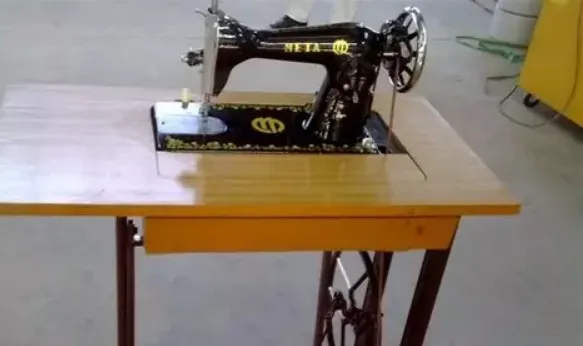
Extension
Break needle
1. Thread breakers
Reason for the product: the needles are too thin or bent, the suture thickness is uneven and the needles move too much。
Treatment: new needles, adapted to slow-down stitches and hand help delivery, new needles or needles。
2. Short-range continuous needle, long-distance break
Reasons for the product: delay in delivering the teeth, inadequate delivery of the teeth, needles to the back end of the teeth and broken needles。
Method of treatment: the positioning of the cams should be repositioned to reduce the length of needles or change new cams。
Three, under the pin
Reasons for the product: low position of needles, percussion of needles, unequipped shuttle beds, percussion needles, too small or too large to fit between the end of the pins, and percussion of the pins or loss of their protective needles。
Method of treatment: repositioning needles or needles, re-loading, adjusting the faults between the end of the liner and the needle。
Four. The needle is on the pinboard
Reason for the product: too much hand-punching suture caused the needle to bend, the snail to fall loose, the slashing of the ankle to the slash needle, the transfer of the cam position led to the suture to pull out the needle, and the hardness in the suture caused the needle to break。
Method of handling: enhance operational practice, correct the pressure on the feet and tighten the screws and adjust the position of the cam screws。