Low pressure control circuit detection maintenance。
To share a dry product with you today, how can we check if there is a problem with the main plate of the ptc heater low voltage circuit? First, when the master plate is taken, the working conditions are low pressure and high pressure, and only the linear steady voltage and switch segments of the low pressure are tested today。
2. At this point, the low pressure control end needs to be supplied with electricity and iron for 12 volts, and after 12 volts, it can be seen that several spots on the control plate have been lighted。
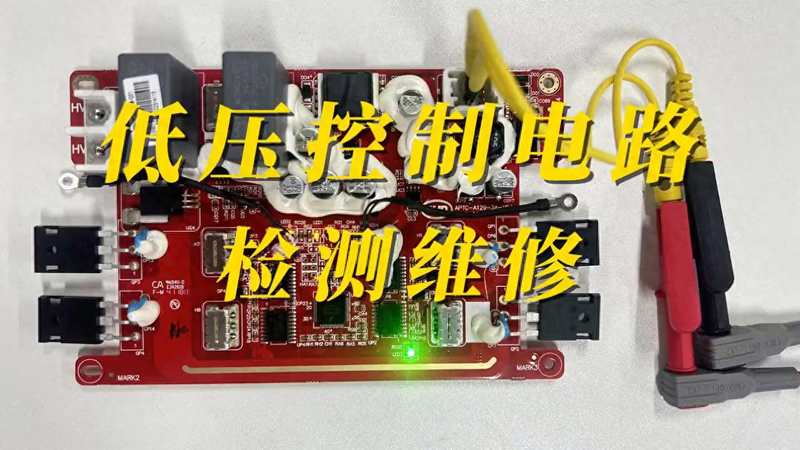
- the first is the led light, which lights up the power part。
- the second is the led light, which represents a low-pressure linear power, which is fine。
- the twinkling light represents the master chip, which is currently not fully communicated, so that only the good or bad of the two circuits can be judged。
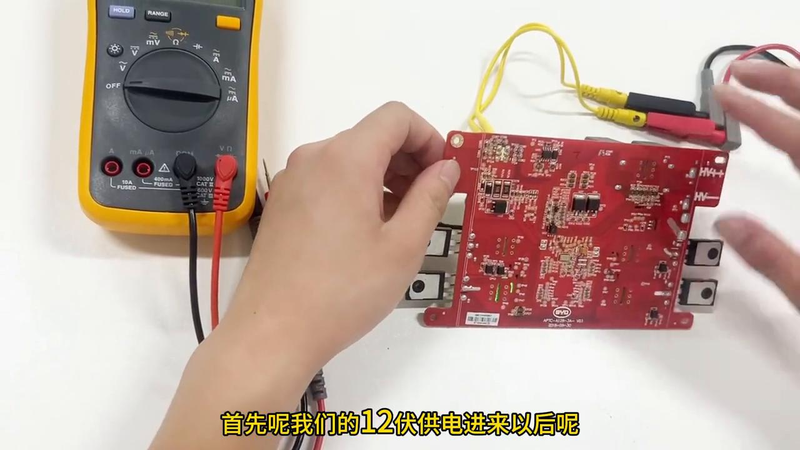
3. To test both circuits, circuit boards will need to be reversed。
- first, 12 volt electricity comes in and reaches the steady primary control chip, measuring its input voltage, the red counter entry end, and the black pen to the ground, at which point 12 volts to the input voltage, and then to the output voltage, which is 5 volts to the output end, i. E. The main control chip functions to transform the 12 volts into 5 volts used by the linear power unit。
- look at the switch power component, where the switch power is measured on a case-by-case basis using two line core steady pressure chips。
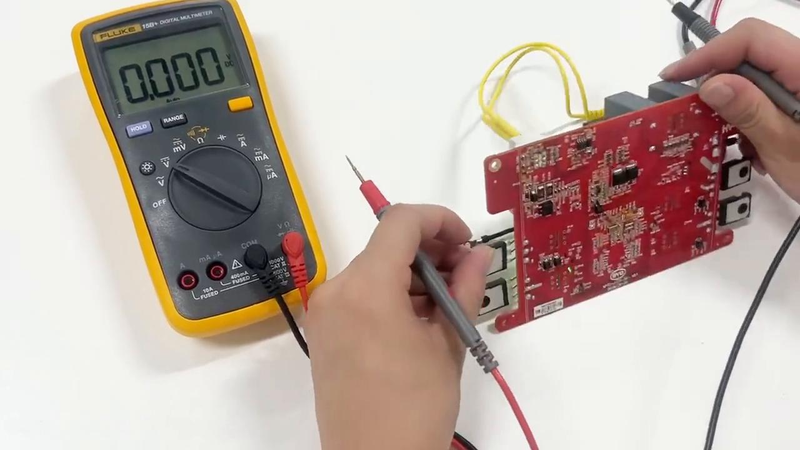
First, the low pressure input end is normally 18 volts. Why 18 volts? It's because there's a transformer here that pulls up the voltage。
Sees an input end with an input source around 18 volts, then an output of 15 volts, which is a level 1 pressure。
The secondary pressure is measured and the output end of the secondary pressure, i. E. The first pressure, is also 15 volts. This is the input 15 volts and then the output is 5 volts. The method basically determines that the entire low voltage circuit in the low pressurized area is fine, and this is the low pressure component。
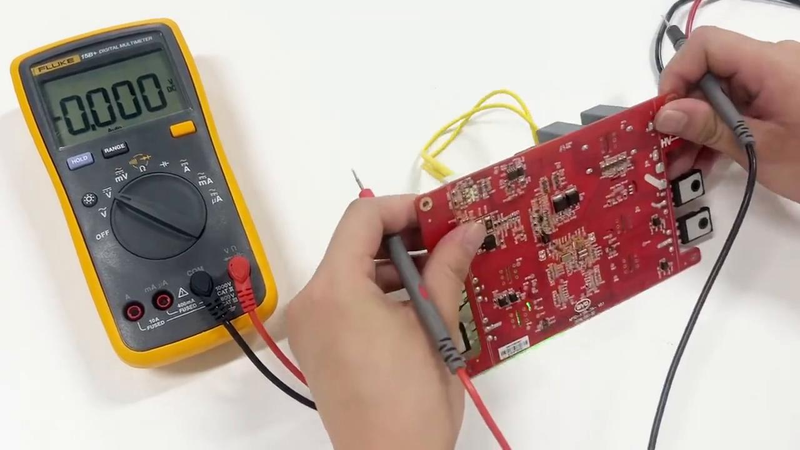
4. What if problems arise in the high-pressure segment? If you have any known comments, please leave a message in the comment area。