There are a number of maintenance techniques for switching power, which are often combined with the following:
Short-term succession
Short-linking is also a common overhaul technique when power is maintained。
This is done by artificially short-linking certain circuit nodes, forcibly changing the circuits, observing the power response and identifying the fault areas。
Using this method, there is a need to master the workings of the circuits, to prevent mishandling and to increase failure。
Using this method, it is often used in conjunction with a chain of light bulbs to ensure the safety of circuits。
Using this method, it is advisable to disconnect load circuits and try them briefly。
Short circuits should be used for as short a time as possible to avoid further malfunctioning。
Short-link approaches are often applied in the following areas:
1 to determine if the switch chip is working
+vcc. Land
See if the power is responding and if not, the power chip may be bad。
2 short-link light output end
When the power output from the switch is abnormal, it usually uses short-link photo-sensitivity receivers with two feet, simulated light-column guidance, to see if the power output changes。
If there is no change, this means that the fault is followed by a circuit, i. E. A side circuit for the switch transformer。
In the event of a change, the circuit prior to the radium, i. E., the comparison with the sampling circuit。
3 simulated protected circuits to determine if protected circuits are normal
4 secondary output short circuit method (practised)
Many switch power sources are protected by secondary output short circuits, so when artificial short circuits are created, the switch is used to protect circuit movements and stop output。
In the case of artificial short circuits, the switch is still in operation, indicating abnormality in the protection of the circuit。
Ii. A series of light bulbs
The method is to remove the input back-to-back tube and to bind the light bulb。
Light bulbs remain bright when electricity is available, indicating short circuit failure。
Light bulb selection:
Incandescent light bulbs shall be used and energy-saving lamps and led lamps shall be disabled
2 light bulb power should be moderate, not too small or too large, with a switch power of up to 300 w, and a selection of incandescent light bulb power of 60 w to 100 w。
When the light bulb is light or the power source is not output-free, the +5v or +12v output end is connected to 10w load resistance (e. G. 5/5w) to exclude light-protected output from the power load。
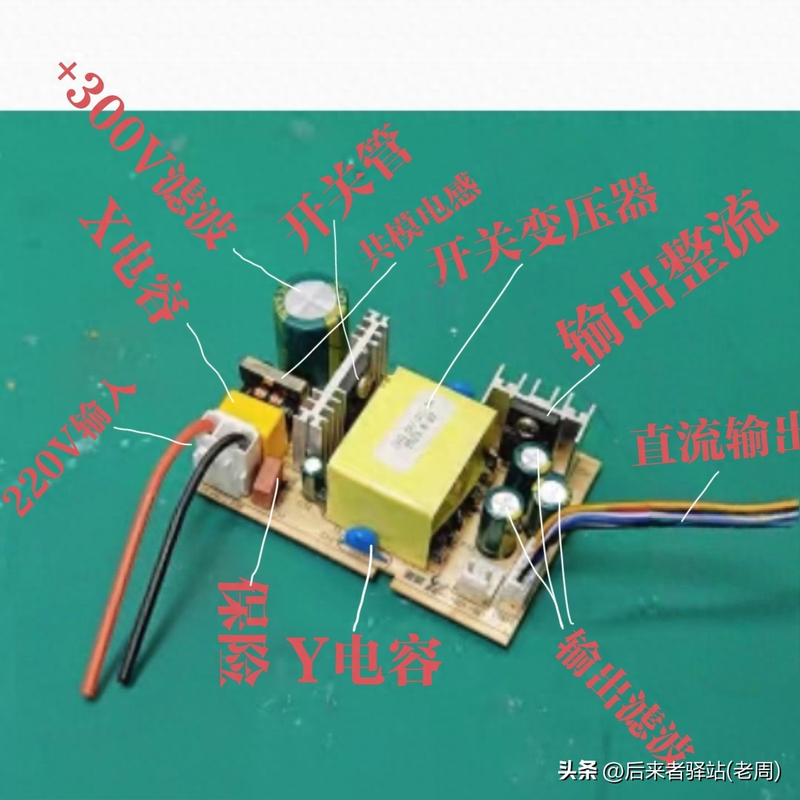
In using this method, care is taken to remove the +300v filtering capacitor after it is discharged。
Iii. Substitution
Substitution is also a common method of repairing power from a switch, often once and for all, when a component is suspected of having poor performance, such as electrolytic capacitors, current tubes, switches, power chips, etc。
You know, there are parts that you measure with a watch, and it's good, but when you load up the circuit, it's not normal。
In addition, there is a plate-level replacement, which can be replaced by a whole panel to improve the efficiency of maintenance when there is extensive damage to the circuit boards or when there is serious complications。
Iv. Heated cooling
The switch sometimes works normally when the power is on, and after a certain period of work it produces abnormalities or even does not work。
Most of these failures are due to the heat stability differential of the power supply with the metaware。
The maintenance technique is to heat the suspected elements with iron or wind so that the failure occurs earlier to determine the malfunctioning element。
When a malfunction occurs, a mechanism is found to cool off a suspect device and make the failure disappear in order to determine the suspect device。
The technique is a skill. It has to be mastery of the principles
Be careful. Safety first