The problem of installation of household electricity, although minor, is relevant to every household and consumer. This is why the improvement of services in this micro-area is a source of social concern。
Really free
If you need to buy a water heater, do you go to any mall, a special store, or an electrician, and almost all the merchants promise “free” delivery, but is “free” really free
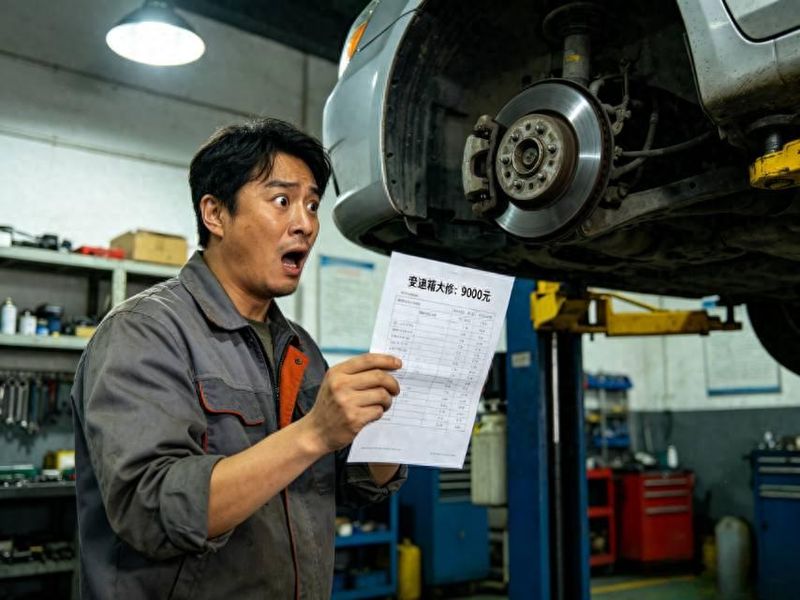
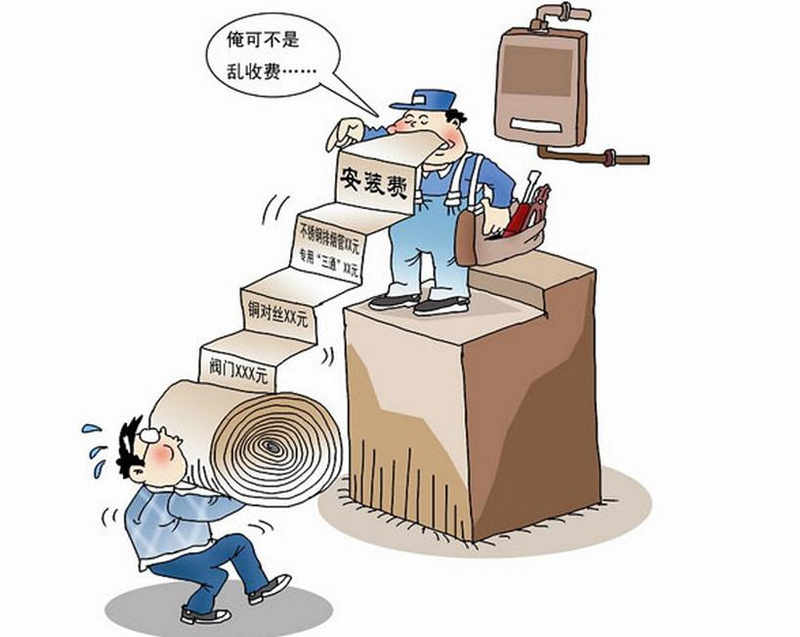
3. 15 shortly after consumer rights day, the issue of after-sale services for household electricity became the focus of attention for consumers in general. According to the acad complaints report, the rate of complaints from the industry regarding installation, maintenance, etc. Remains high, particularly in the water heaters sector. Starting in march, the fire in the home-dressing season triggered an increasing number of low sales of household electricity, such as the installation of water heaters to charge for materials, and caused consumer dissatisfaction. A short while ago, ms. Liu, a friend of the internet, responded that she had purchased over 1,000 electric water heaters and that the sales staff had repeatedly promised to send them home free of charge and install them. The following day, however, staff members were told of the need to charge $336 for materials. The so-called “free installation” merely exempts the installation of the installation staff from the cost of working hours, while the cost of the materials required for the installation remains to be borne by the consumer. In the face of such false propaganda and mischaracteristic fees, many consumers are forced to eat “mute losses”。
In fact, ms. Liu is not an example of such a problem. Three feet of ice is not a day cold. The installation of water heaters has been accompanied by three tumour-type “industry sub-rules”。
First, “free installation is not free”! Most brands claim to be free of charge for the installation of machine users, but during the installation they will be required to pay for materials (including fittings and drills); if during the installation the consumer chooses to purchase the spare parts himself, the response is “water heater failure caused by the purchase of the spare parts itself, not covered by warranty”。
Second, while “conservation is not equivalent to free” in the current industry often labels water heaters as “inner guts three-year warranty” and “in-house six-year warranty”, in fact the warranty is not equivalent to free, and maintenance costs are also to be paid by users。
Third, free delivery is available: when buying water heaters, the merchants undertake to deliver the goods and install them free of charge, but users indicate that some merchants do not pre-notify the delivery of the goods only to a certain extent, and that more than that amount is subject to “overflight fees”。
We need to break it
It is clear that such water heaters carry a very damaging user experience. Over the years, however, such “submarine rules” have never improved。
There are several reasons for the development of water-scaling delivery services. One, the cost. The wool comes out of the sheep, and long-term price competition in the field of household electricity is constrained by the cost of making it, in exchange for profit at the expense of service and user experience; and, secondly, products. There is little technological innovation in all products, and there is no guarantee of a “three-year-in-one” and “six-year-out-of-one” commitment, and the final cost of maintenance continues to be passed on to consumers; and, thirdly, systems. Lack of system support. There is no standardized service system。
In fact, the age of mobile internet, the age of the internet, and the age of the internet, the relationship between users and businesses has changed dramatically, and some enterprises that cannot wake up with hammers are destined to be eliminated by markets and times。
We find that some changes are taking place:
Whether water heaters or other domestic appliances, their role is no longer just a hardware product, but a medium that, once established, is a service relationship between the brand and the consumer, with only user-centred services and operations. The poor service is filmed by users on mobile phones and shared with the media and social networks。
Good services can easily be multiplied by geometric layers, creating marketing capacity. An equally bad reputation directly affects the effects of product sales and marketing。
In other words, brands and businesses are the real levers for leveraging markets only if they insist on “good faith-for-all”. When an enterprise places greater emphasis on the construction and management of after-sales services, it not only directly reaps the economic benefits, but also helps to improve the product, thereby facilitating the development of new products and the branding of enterprises。
The dawn model
It is gratifying to note that some brands and manufacturers are thinking about systemic solutions。
For the time being, the “whole housekeeper” seven-free service for the hailer water heater is remarkable. In particular, consumers who buy a series of three 10 models of water purification in hale are entitled to seven major free services from the time of purchase to the end of their lives. Seven projects, including free design, free delivery of goods, free installation of materials, free labour, free replacement of magnesium sticks, free testing of the electric environment and free testing of water quality, are the first brand of the industry to introduce full service exemption。
Why is it a systemic solution? The core is also to address the issue of “experience” that is of greatest concern to consumers. Imagine, when you buy a heat-hair water washing machine, from delivery to installation and after-sale maintenance, you don't have to worry about making a phone call or even moving your fingers on the app, and then people can come to the door for free, a “forever” way of spending, which will certainly attract a lot of consumers. As far as technology is concerned, its entire purification system can be said to have led to the transformation of bath water from “dirty” to “clean” and to meet consumer health needs from a practical point of view。
It goes from focusing on the extreme user experience to pressing for technological innovation to complement upgraded service systems. The closed circle of users who form product+service+extreme experience is at the heart of the seven-exempt service at haile。
Such examples are still too few in the context of the era of supply-side reforms and escalation of consumption. In all walks of life, technological innovation and model innovation can only be pushed from the point of origin where users experience it. It is only in time that we can be neutral。