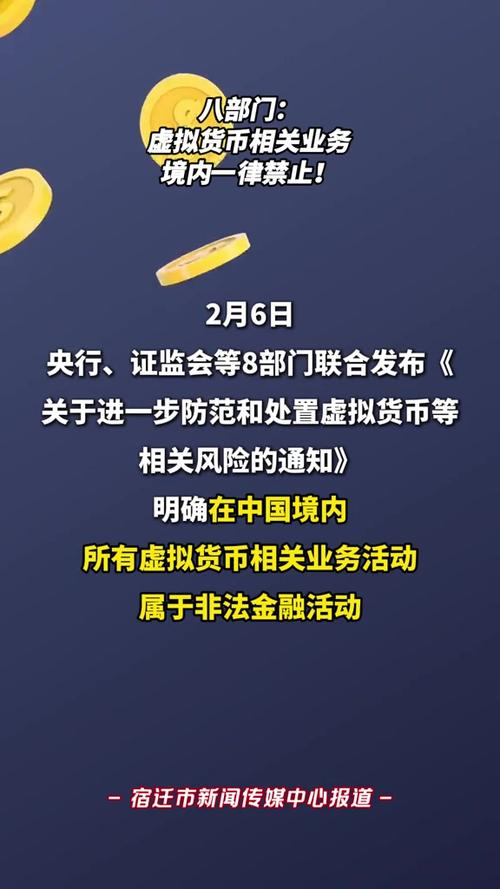
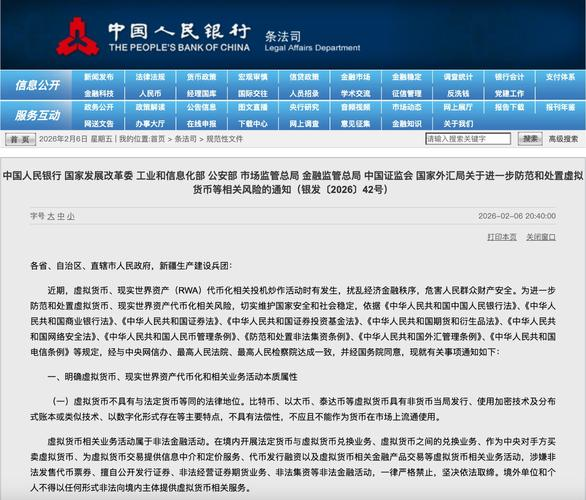
The people's bank of china, the national development and reform commission, the ministry of industry and information technology, the ministry of public security, the general directorate of market supervision, the general directorate of financial supervision, the china securities commission, the state exchange agency and others have recently issued a joint circular on the further prevention and management of risks related to virtual currency (hereinafter referred to as the circular). More recently, the relevant officials of the people's bank of china and the csrc responded to questions from journalists on issues related to the circular。
Issue this notice in conjunction with new risk characteristics
When a journalist asked about the background to the circular, the relevant officials of the two departments replied that in 2021, virtual currency transactions became widespread, seriously disrupting the economic and financial order and endangering the security of the people's property. In accordance with the decisions of the party's central and state council, the people's bank of china issued a circular on further prevention and disposal of risks associated with virtual currency dealings, with a firm determination to combat such speculation and to correct the industry's image, with tangible results。
In the recent past, virtual currency transactions have resumed, influenced by a number of factors, and speculation related to the monetization of real-world assets has been taking place, with new situations and challenges for risk prevention. With a view to further improving the regulatory policy system, preventing the mitigation of the risks involved and ensuring the security and social stability of the country, the eight departments, together with the central network office, the supreme people's court and the supreme people's procuratorate, have revised and refined the original document, taking into account the new risk characteristics。
First clear definition of “real world asset monetization”
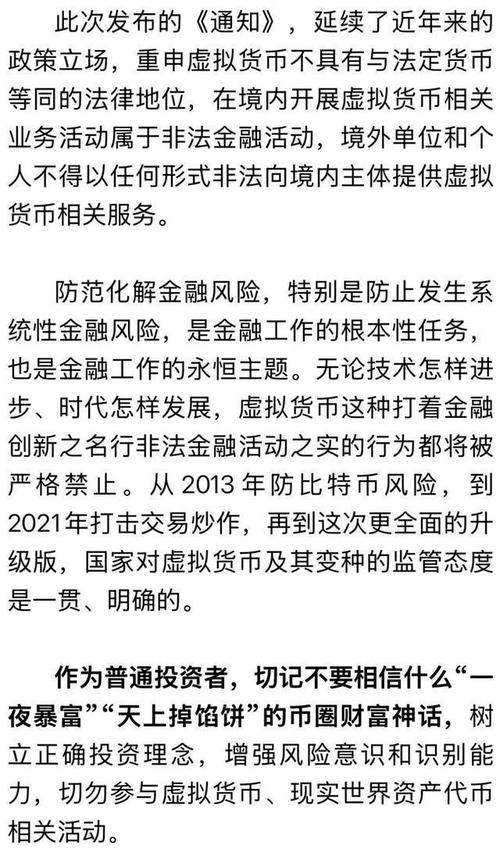
Journalists asked what the circular clearly defines virtual currency, real-world asset monetization and related operations. The relevant heads of the two departments stated that, with regard to virtual currency, our country has long maintained a ban on regulation. In 2013, the joint communication of the five departments made it clear that bitcoin was a specific virtual commodity and could not be circulated as a currency; the circular of 2021 further clarified that stable currencies such as bitcoin, tatacos and tadacos did not have legal monetary status and that related operations in the country were illegal financial activities. The circular continues this policy orientation by reaffirming that virtual currency does not have the legal equivalent of a legal currency, that the carrying out of virtual currency exchange, transactions and the financing of currency issuances in the country is illegal and is strictly prohibited; and that entities and individuals abroad are not allowed to provide virtual currency-related services in any form illegally to subjects in the country。
Of concern is the fact that, for the first time, with regard to the monetization of real-world assets, the circular clearly defines the conversion of ownership of assets, rights to proceeds, etc., through encryption techniques, distributed books or similar technologies, into tokens (circulations) or equity rights with similar characteristics, bond vouchers and the conduct of issuance transactions. The circular stresses that the carrying out of real-world asset monetization activities or the provision of related intermediaries, information technology services in the territory without the legal consent of the competent operational authorities, and the suspected illegal financial activities such as the illegal issuance of token vouchers and unauthorized public issuance of securities, shall be prohibited, with the exception of compliance operations based solely on a specific financial infrastructure. An offshore unit or individual may also not illegally provide relevant services to a subject within its territory。
Three regulatory measures for virtual currency
Journalists asked what specific regulatory requirements were set out in the circular for virtual currency, and the relevant officials in both sectors replied that the first was to adhere to the domestic ban. Virtual currency does not meet the regulatory requirements of customer identification, money-laundering, etc., and is highly vulnerable to illegal activities such as money-laundering, fund-raising fraud and irregular cross-border transfer of funds. The circular clearly establishes a restrictive policy on virtual currency-related operations in the country and firmly prohibits all types of illegal business activities by law。
The second is the closure of cross-border regulatory gaps. Virtual currency delivery points based on block-chain technology, with strong cross-border transfer of risk and caution on the part of international financial organizations and central banks. The circular makes it clear that subjects within the territory and subjects under its control outside the country may not issue virtual currency abroad without the consent of the relevant authorities。
Third is the preservation of monetary sovereign security. A stable currency pegged to a statutory currency is a currency function in circulation and is a matter of national monetary sovereignty. The circular emphasizes that no unit or individual, within or outside the country, may issue a fixed currency peg outside the country without the consent of the relevant authorities in accordance with the law。
Strict regulation of offshore activities
Some journalists asked what regulatory requirements existed for the circular regarding the movement of domestic subjects abroad to undertake operations related to the monetization of real world assets. The relevant heads of the two departments stated that the first was the strict regulation of the conduct of foreign trades. In accordance with the principle of “the same business, the same risks, the same rules”, subjects in the territory directly or indirectly travel abroad to carry out real-world asset monetization operations in the form of external debt, or to carry out operations of a securitization and equity nature based on, inter alia, the ownership of assets in the country, the right to return, etc., under strict supervision by the national development and reform commission, the csrc, the state foreign exchange office, etc., and other forms of foreign-related operations carried out by subjects in the territory on the basis of interests in the country, under the supervision of the csrc and the relevant authorities. All such operations are subject to the consent or filing of the relevant department and may not be carried out without authorization。
The second is to strengthen the relevant institutional compliance management. The offshore subsidiaries and branches of domestic financial institutions that provide related services abroad need to be integrated into the domestic parent company compliance control system, and customer access, proper management, anti-money laundering, etc. Requirements are strictly enforced. Intermediaries and information technology services that provide services for related operations within and outside the country are required to establish robust internal controls for compliance, strengthen risk control and report to the licensing or exhibition industry as required。
Ensuring that policies are on the ground requires strong teamwork bureau
In response to a question from journalists, “what specific working measures have been proposed to ensure that policies are put on the ground”, the respective heads of the two departments replied that the first was to create a collaborative working pattern. At the central level, the people's bank of china and the csrc, respectively, work with the relevant departments to improve the virtual currency, the real world asset monetization risk prevention and disposal mechanism, and at the local level, the provincial people's governments coordinate their efforts within their administrative regions, with local financial administrations taking the lead in establishing normality mechanisms, effectively linking them with the central sector's working mechanisms and strengthening their territorial responsibilities。
Second is multi-dimensional enhanced risk control. (b) to consolidate cross-sectoral regulatory efforts, combining risk monitoring, financial flows and information flow management, registration and advertising of market owners, management of the virtual currency “drilling”, combating crime and regulating the export of domestic agents; and to strengthen self-regulatory management by industry associations, working together to establish risk lines。
Third is the refinement of long-term implementation mechanisms. Strengthening organizational leadership and coherence, clarifying responsibilities across sectors and regions, and creating a central, integrated, territorial and jointly responsible working mechanism. At the same time, extensive awareness-raising campaigns have been conducted to increase public risk awareness and recognition through policy interpretation, case profiling, investment risk alerts, and to steer the public away from related speculative activities。