10 positions lying around making money: the boss's summary guide to passive income
In this era of soaring prices and changing jobs, “living on one salary” is no longer a safe financial strategy. More and more people are beginning to focus on a very moving concept — passive income。
What's passive income? In simple terms, it is “the income that can be obtained automatically without much time and effort or care”. There's also a better-looking term for economics: "sleeping income" — money on the ground and income on the job。
That sounds like "getting out of it"? It's not. Often long periods of labour and accumulation are required before passive earnings can be obtained. As the classic saying goes: two water operators, one day hard-working, and the other three years to build a pipe, which eventually becomes a pipe, which automatically flows into the village, the waterman loses his job, while the man who fixes the pipe achieves “breathing money”。
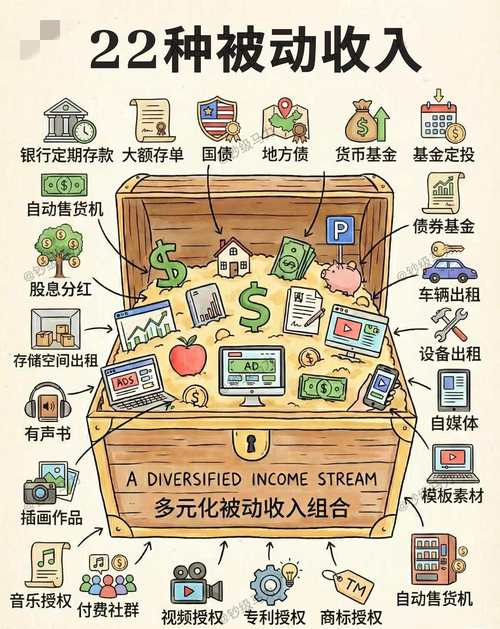
Today, we're going to comb out the 10 passive ways of earning money, and see which pipe suits you。
I. Financial investment category: producing money
1. Interest on term deposits
This is the most basic and least risky passive income method. The corresponding interest is available only if the inactive funds are deposited in the bank for a certain period of time. The interest rate is currently set at approximately 1. 7 per cent per year and 1,700 dollars per year for $100,000. The advantage is that the threshold is low and almost risk-free; the disadvantage is that the returns are low and are difficult to withstand inflation. It is appropriate for idle funds that will not be used in the short term。
2. Investments in equities
Shares are purchased to become shareholders of the company, and the proceeds come from increases in stock prices and dividends. The advantage is that potential returns are high and liquidity is good; the disadvantage is that there is a need for stronger stock selection capacity, high price volatility and higher risk. They are suitable for people with some investment experience and can withstand fluctuations。
3. Investments in etf
The etf (transaction open index fund) purchases multiple targets at a time, which can spread the risk. Data show an average annual return of 9. 2 per cent on interest-rate equities over the past 50 years in the standard 500 index. The advantages are low entry thresholds, suitability for long-term investment and high liquidity; the disadvantages are relatively stable but low rates of remuneration. It's good to invest in starters and people who don't have time to study a unit。
4. Investment bonds
Bonds are “borrowed” from governments or companies and receive fixed interest. The advantages are stable returns, relatively low risk; the disadvantages are lower interest rates and subject to changes in market interest rates. Suits conservative investors。
Reits (real estate investment trust funds)
The investment housing fund receives rent dividends and does not need to manage the property in person. Reits are required by law to allocate at least 90 per cent of taxable income to investors as dividends. Data show that the annualized total rits return since 1972 averaged 12. 6 per cent. The advantages are that the threshold is low and physical properties need not be managed; the disadvantages are affected by fluctuations in the real estate market。
Category of physical assets: making assets work for you
6. Real estate rental
Property is purchased and rented, with stable monthly rent. The advantages are stable cash flows and counter-inflation; the disadvantages are high initial financial needs (first-payment, renovation, taxes, etc.), housing maintenance costs and tenants. Someone with a certain financial power。
7. Rental of equipment
The purchase of equipment (e. G., photocopying machines, photographic equipment, camping equipment, etc.) generates revenue from external rental. The advantage is that the threshold of entry is lower than that of the property; the disadvantage entails equipment obsolescence and maintenance risks, and income is affected by location and market demand. Suitable for people with knowledge of equipment in a particular industry。
8. Establishment of a self-mobilization platform
Operation of vending machines, laundries or no-man noodle shops, etc. Advantages are 24-hour automatic service and a simple business model; disadvantages are intense competition, and profits are highly influenced by location and rent. They are suitable for people who are willing to spend their time choosing points and resupplying。
Iii. Digital creative category: know-making
9. Operation of the media
There is an accumulation of traffic through platforms such as youtube, blogs, facebook, etc., which is realized through advertising, marketing, etc. The advantage is that the door is low and the cost is low; the disadvantage is that the initial accumulation is long, stable and subject to platform algorithms. It's for people who have a passion for content creation and are willing to work long-term。
Digital product creation
These include self-publication of e-books, online courses, development of uda sales, etc. One creation, long-term sale. The advantages are high freedom of creation and global circulation; the disadvantages are the need for quality content to underpin it, the competitive nature of the market and the reliance on publicity and seo optimization. Suitable for people with expertise or creative abilities。
The truth about passive income: tilling, then harvesting
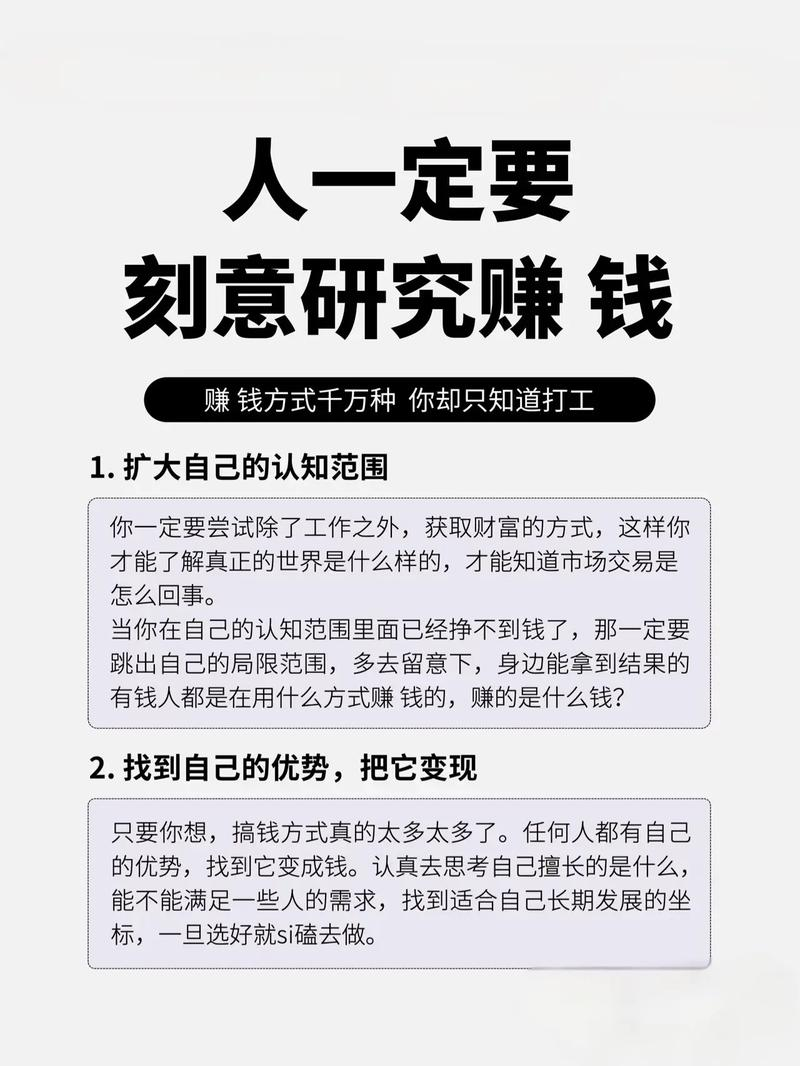
By combing these 10 passive income methods, one common denominator can be found: no passive income is really “taken without labour”。
Financial investment requires the prior accumulation of funds and, more importantly, the learning of investment knowledge; the investment and day-to-day maintenance of physical assets; and the continuous export of time and talent for digital creation. As robert kiyozaki said, “save is all a loser's strategy, and you need to be financially free as soon as possible”. The path to financial freedom, however, is to accumulate assets with the active income of the preceding period, which in turn supports the rest of life with the passive income generated by those assets。
For young people, it may be appropriate to devote much of their energy to personal growth and professional accumulation before the age of 35. Work is done to maximize professional value by doing its job properly and by creating its own “bottom capacity” before gradually establishing channels for passive income。
The charm of passive income is not to give people “no effort”, but to change from time to time to assets. When your passive income is sufficient to cover ordinary expenses, you achieve the most basic financial freedom. By that time, work would no longer be a means of earning a living, but a stage of achievement。
Are you building your own pipe now